Table of Contents
Quick summary
Training more effectively as an entrepreneur is about systematic progress with measurable milestones — not spending more hours in the gym. Entrepreneurs who want to build strength faster get the best results by combining shorter, focused sessions with a phased plan and expert coaching. At District-S, trainers consistently see business owners achieve 20–35% faster strength gains with a structured approach than with standard gym routines.
- Progressive overload with weekly adjustments to weight and reps keeps your body adapting
- 2–3 sessions per week of 45–60 minutes outperform 5 rushed workouts
- Compound lifts (deadlift, squat, bench press) train more muscle groups at once
- Measurable 4-week goals sharpen focus and make progress visible
- Recovery tracking helps prevent overtraining and fine-tune training frequency
Introduction
An entrepreneur in Eindhoven trains five times a week for three months at a regular gym. He follows online workout plans, tries different exercises, and puts in serious effort. After three months, the result is disappointing: barely any increase in strength, frustration, and doubts about whether he is doing the right thing. Meanwhile, another entrepreneur sees major progress in the same time frame with just two coached sessions per week.
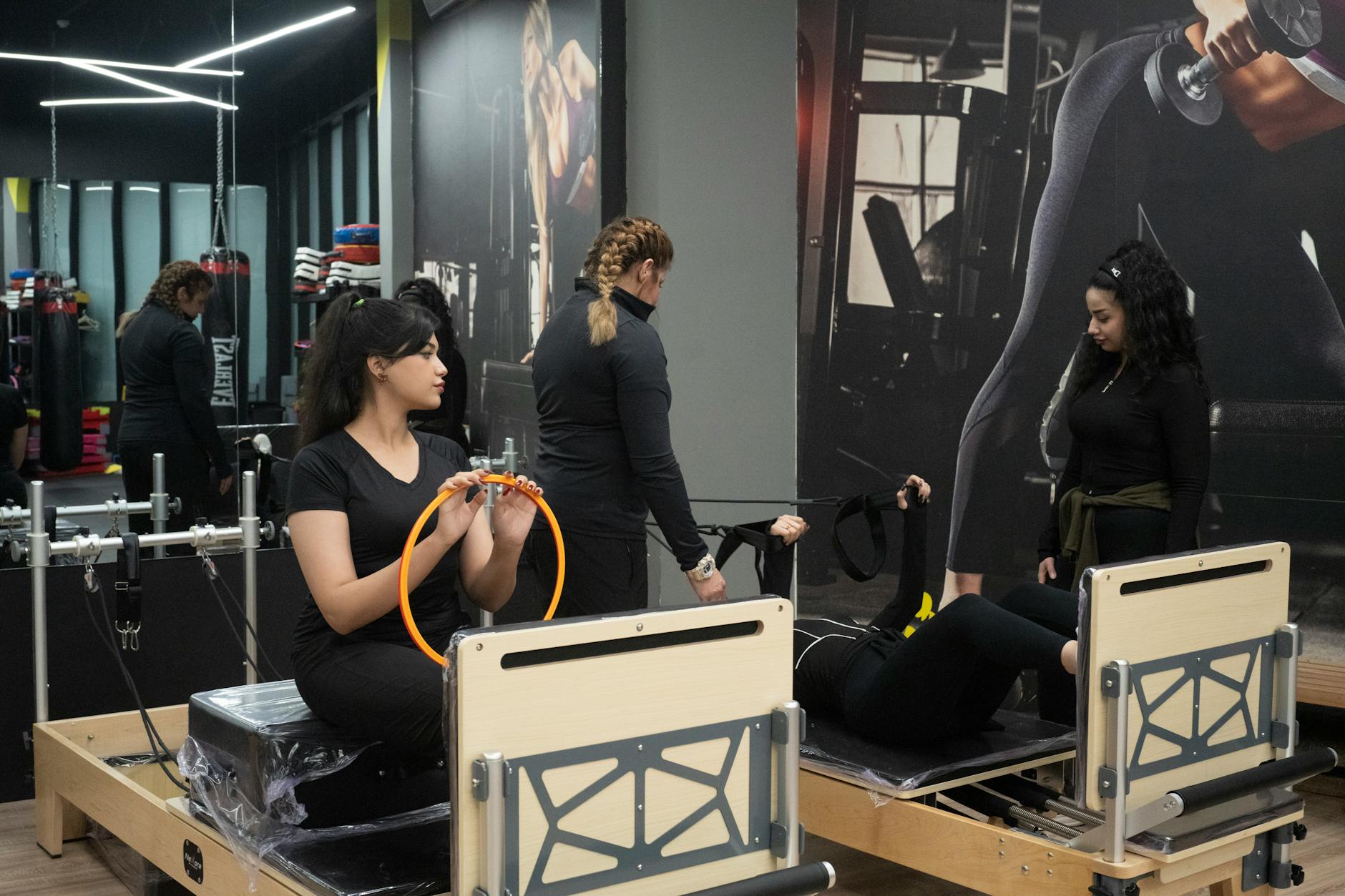
The difference is not time spent — it is structure. Many entrepreneurs approach strength training the same way they attack a new business project: full of drive, but without clear milestones or a system for measuring progress. In practice, that works against them. Strength gains follow physiological rules, and those rules reward consistency, progression, and tracking.
District-S sees this pattern all the time when new members switch from training alone to coached sessions. The breakthrough usually comes around weeks 6 to 8, when a structured progression plan starts to pay off. Entrepreneurs tend to recognize the pattern quickly: just like in business, the best results come from focus, consistency, and measurable progress — not from working harder without a strategy.
This article was generated with LaunchMind — try it free
Get startedUnderstanding the foundation of faster strength gains
Progressive overload is the starting point
Progressive overload means gradually increasing the challenge each week by adjusting weight, reps, or sets. A common mistake is using the same weight every workout, which gives the body no reason to get stronger. In practice, you need to make a small step forward every 7 to 14 days.
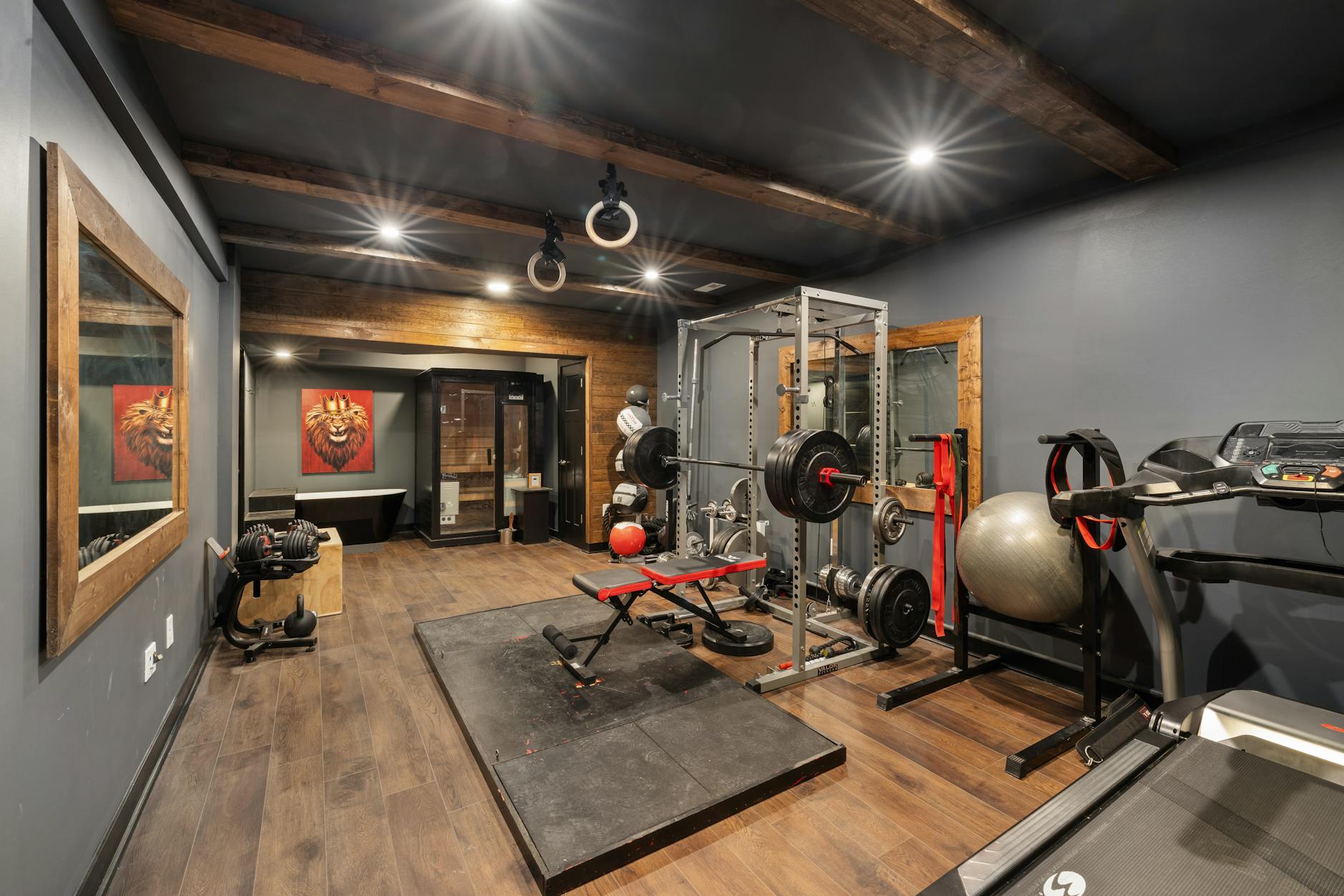
An operations manager at a tech company in Eindhoven started with deadlifts at 60 kg for 3 sets of 8 reps. By adding 2.5 kg each week, he reached 90 kg for the same sets after 12 weeks — a 50% increase in strength. Without that step-by-step progression, he likely would have stayed stuck for months.
Compound lifts deliver the best return on your time
Entrepreneurs are short on time, so every session needs to count. Compound lifts such as squats, deadlifts, and the bench press train multiple muscle groups at once, which makes them far more effective for building total-body strength. They also reflect real-world movement patterns you use every day.
If the choice is between 30 minutes of isolation work like biceps curls and triceps extensions or 30 minutes of compound lifting, the better option is obvious. Compound lifts stimulate more muscle mass, elevate your metabolism for longer after training, and build practical strength you can actually feel in daily life.
Balancing frequency and intensity
More is not always better. Entrepreneurs who lift every day often make less progress than those who train hard 2 to 3 times per week and recover properly in between. Muscle growth and strength adaptation happen during recovery, not during the workout itself. Training provides the stimulus; the improvement happens in the 24 to 48 hours afterward.
For many entrepreneurs, the sweet spot is 3 sessions per week with at least one rest day between demanding workouts. It also fits a busy calendar better than trying to squeeze in short daily sessions that cost more planning and mental energy.
Try this yourself:
- Write down your current working weights for 3 key lifts: squat, deadlift, and bench press
- Plan a weekly increase of 1–2.5 kg for upper-body lifts and 2.5–5 kg for lower-body lifts
- Limit each workout to 6 exercises, with 4 of them being compound lifts
- Schedule 3 fixed training slots per week with at least 24 hours of rest between them
Modern training methods vs. traditional gym routines
Data-driven training beats training by feel
A lot of people still train based on instinct: “I’ll go a bit heavier today” or “I’ll do a few more reps.” That can work at first, but after a few months it usually leads to a plateau. Modern strength training is data-driven: every set, weight, and rest period serves a purpose and fits into a bigger plan.
the District-S approach uses a system in which every workout is mapped out in advance, including weights, reps, and rest times. After 4 weeks, the data is reviewed and the plan is adjusted. That gives entrepreneurs clarity: they always know whether they are progressing and where changes are needed.
Periodization works better than random variety
A lot of traditional gym programs switch exercises every few weeks to create “muscle confusion.” In reality, that usually gets in the way of strength gains. Periodization means staying focused on the same main lifts for 6 to 12 weeks while adjusting intensity, volume, and rest in a deliberate way.
A consultant in Eindhoven spent months bouncing between different online workout plans, changing exercises every 2 to 3 weeks. His body never had enough time to get truly strong in any specific movement. Once he switched to a programmed plan with 8 weeks of focused work on the same lifts, his bench press went from 70 to 85 kg.
Individual progression beats one-size-fits-all programs
Traditional gyms often rely on standard routines that are the same for everyone. Modern personal training is different. The program is tailored to your starting point, recovery capacity, and available time. A 45-year-old entrepreneur who can train twice a week needs a very different setup from a 30-year-old who can train four times a week.
| Aspect | Modern approach (how District-S works) | Traditional approach |
|---|---|---|
| Planning | Phased 8–12 week blocks | Weekly variation |
| Progression | 1–5% increase per week | Irregular jumps |
| Data tracking | Every set recorded | No structured tracking |
| Adjustments | Every 4 weeks based on results | Intuitive or fixed schedule |
| Results measurement | Monthly strength testing | No consistent testing |
| Flexibility | Built around an entrepreneur’s schedule | Fixed training timetable |
Try this yourself:
- Download a workout log app to track weights and reps
- Choose 3–4 main lifts to focus on for 8 weeks
- Test your 1RM at the start and again after 8 weeks
- Plan your workouts 4 weeks ahead instead of deciding week by week
Practical implementation for busy entrepreneurs
Get more out of your time blocks
Time is the biggest challenge for entrepreneurs who want better training results. The solution is not finding more time — it is using the time you already have more effectively. A focused 45-minute session will do more for your strength than 90 minutes of unstructured training.

One marketing agency owner in Eindhoven blocks off every Tuesday and Thursday from 7:00 to 7:45 for training. In that 45-minute window, he does a warm-up (5 min), 3 main lifts (30 min), and a cool-down (10 min). By sticking to that structure, he gets more out of 90 minutes a week than he used to get from 4 to 5 hours of scattered gym time.
Plan for micro-progress
Small, consistent improvements beat big jumps you cannot sustain. Instead of trying to add 5 kg every week, increase the load by 1 to 2.5 kg in a controlled way. That reduces injury risk and creates steady long-term progress.
District-S applies the principle of improving by around 1% each week. If your deadlift starts at 80 kg, that puts you at roughly 90 kg after 12 weeks — a realistic target that is easy to plan and measure.
Accountability and coaching matter
Entrepreneurs are used to making decisions independently and staying in control. But in strength training, external accountability often works better than relying on self-discipline alone. A personal trainer or training partner helps you stay consistent when motivation dips.
Among entrepreneurs who switch to coached training, average attendance often rises from 1.8 to 2.7 sessions per week. That consistency explains a big part of why coached training produces faster results — not because the exercises are magically different, but because the workouts actually get done.
Try this yourself:
- Block 2–3 fixed workout sessions in your calendar just like important meetings
- Calculate your weekly target using this formula: current weight × 1.01 = next week’s goal
- Find a coach or training partner for weekly check-ins
- Use the “two-day rule”: never skip more than 2 days in a row
Setting measurable goals and tracking progress
Use SMART goals for strength training
Vague goals create vague results. “I want to get stronger” is not a useful target for an entrepreneur who is used to working with numbers. Effective strength goals are specific, measurable, and time-bound: “Add 15 kg to my deadlift in 12 weeks” or “Do 10 perfect pull-ups within 8 weeks.”
An IT entrepreneur in Eindhoven set a goal of taking his bench press from 65 to 80 kg in 10 weeks. By breaking that down into weekly milestones of 1.5 kg, he gave himself a clear target every week. By week 7, he realized he was behind schedule and adjusted his training frequency from 2 to 3 sessions per week.
Track progress the way you track business KPIs
Entrepreneurs already think in dashboards, metrics, and KPIs. Strength training data can be managed the same way: weekly trend lines for your lifts, monthly progress reviews, and quarterly goal evaluations.
At District-S, members use a digital training log where every set, rep, and weight is recorded. That data is turned into progress charts that show whether you are on track. Just like business metrics, it helps you spot trends early and make smarter adjustments.
Break through plateaus with data
Plateaus are a normal part of strength training, but data helps you spot them sooner and respond more effectively. If your numbers have stalled for 3 weeks, it is time to adjust something: more volume, different exercise selection, or a deload week to improve recovery.
A construction company owner noticed that his squat had been stuck at 90 kg for 6 weeks. A review of his training data showed that he was not recovering well enough between sessions. After changing his program from 3 squat sessions per week to 2, he added another 5 kg within 3 weeks.
Try this yourself:
- Set 3 concrete strength goals for the next 12 weeks, such as +20 kg on your deadlift or +10 perfect push-ups
- Divide the gap by the number of weeks to calculate weekly milestones
- Track at least 4 metrics: weight, reps, sets, and energy level on a 1–10 scale
- Schedule a review every 4 weeks and adjust if needed
Which approach fits your situation?
For the beginner entrepreneur
If you have been strength training consistently for less than 6 months, your priority should be learning movement patterns and building a base level of strength. Progress can come quickly at this stage — sometimes 5–10% per week — because your nervous system is learning how to recruit muscle more efficiently.
Start with bodyweight exercises and light weights so you can master technique first. Entrepreneurs who jump straight into heavy lifting often end up with injuries that take them out of training for weeks or even months. At District-S, beginners always go through a 4–6 week technique phase before shifting to a real strength-focused program.
For the experienced lifter who has stalled
If you have 1 to 2 years of training experience but your numbers are no longer moving, the problem is usually missing periodization or too little variation in training stimulus. Your body has adapted to your current routine and needs a new challenge.
You might benefit from changing rep ranges for a while — for example, if you always train in the 8–12 range, try 3–5 reps with heavier loads. You can also use more advanced methods such as drop sets or cluster sets. One distribution manager in Eindhoven broke through a plateau by spending 6 weeks focused on singles at 90–95% of his max.
For the entrepreneur with very limited time
If you have less than 3 hours per week to train, focus on compound lifts and high training intensity. Two 45-minute sessions can be enough if you choose the right exercises and use your time well.
A full-body routine built around squats, deadlifts, the bench press, and pull-ups gives you the best return. Skip most isolation work and avoid wasting time with long rest periods. At District-S, many entrepreneurs in this category follow a 2-day split that still hits all major muscle groups.
Try this yourself:
- Be honest about your training level: less than 6 months = beginner, 6–24 months = intermediate, over 2 years = advanced
- Beginner: spend 6 weeks focused on movement quality before increasing the load
- Intermediate: alternate every 8 weeks between strength phases (3–5 reps) and volume phases (8–12 reps)
- Short on time: stick to a maximum of 4 exercises per workout, all of them compound lifts
Frequently asked questions
How much strength can I realistically gain per month?
Strength gains vary a lot depending on the exercise and your experience level, but for most entrepreneurs, a realistic target is around 3–8% per month. Beginners can sometimes improve by 10–15% per month during the first 6 months, while experienced lifters should be happy with 2–3% monthly progress.
Will I get faster results if I train more often each week?
Training more does not automatically mean faster strength gains. For most entrepreneurs, the ideal range is 2 to 4 strength sessions per week. Going beyond 4 sessions increases injury risk and can lead to overtraining, which usually slows progress instead of accelerating it.
What should I do if my progress stalls after 8 weeks?
Plateaus are normal and usually manageable. The most effective fixes are a deload week at 50% weight, introducing new exercises, changing rep ranges from 8–12 to 3–5, or putting more attention on recovery through sleep and nutrition. District-S generally advises not staying at the same weight for more than 3 weeks without making an adjustment.
How important is nutrition for building strength?
Nutrition accounts for roughly 30–40% of your strength gains, especially getting enough protein (1.6–2.2 g per kg of body weight) and enough calories to recover well. Without solid nutrition, you may only realize 60–70% of your potential progress, no matter how good your training plan is.
Can entrepreneurs over 40 still make significant strength gains?
Age can slow the rate of progress, but it does not stop it. Entrepreneurs over 40 can still achieve 15–25% strength gains per year with the right plan. It simply requires more attention to recovery, warm-ups, and injury prevention than it does for younger lifters.
Conclusion
Training more effectively as an entrepreneur is about structure, not spending more time in the gym. The combination of progressive overload, compound lifts, and measurable goals produces faster and more sustainable strength gains than generic training plans.
At District-S, personal trainers regularly see entrepreneurs notice a clear difference within 12 weeks — not just in the weights they lift, but in their energy during long workdays and their overall physical resilience. The investment in structured coaching pays off in both time saved and better results.
Learn more about District-S Personal Training Eindhoven for a personal approach that fits your schedule. With a free trial session, you can experience how structured strength training can accelerate your results without taking over your workweek.
Sources
- District-S · District-s