Table of Contents
Quick Answer
Field layering is the practice of combining three distinct clothing layers, base, mid, and shell, so each performs a specific thermal and moisture function. The tactical shirt worn against the skin is the most critical piece: it either wicks sweat away and keeps you functional, or it holds moisture and accelerates dangerous heat loss.
- The base layer (your tactical shirt) must wick moisture, not insulate
- Synthetic polyester and Polartec fabrics dry faster than merino wool in high-output scenarios
- The mid layer traps warm air; it should not be bulky enough to restrict a full range of motion
- The shell blocks wind and precipitation while allowing vapor to escape outward
- Cotton at any layer is a liability in cold or wet field conditions
Why the Tactical Shirt Is the Most Underrated Piece in Any Layering System
Most field-ready men spend serious money on their outer shell, waterproof ratings, taped seams, DWR coatings, and then pull on a plain cotton T-shirt underneath. That sequence defeats the entire system.
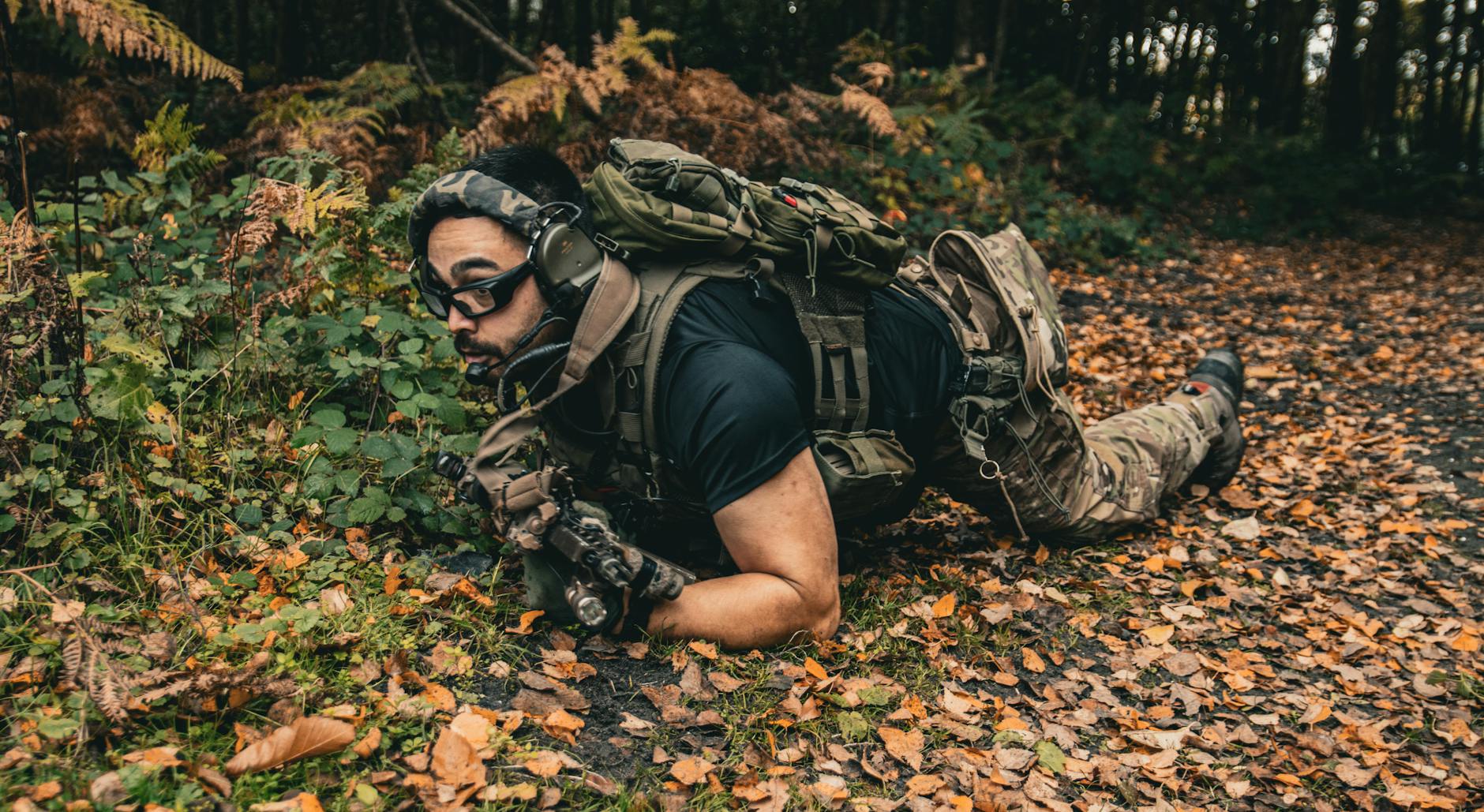
The base layer's only purpose is to transport and wick moisture away from the skin and out to the surface. It is arguably the most important layer because this wicking quality is key to stopping you from getting cold from your own sweat and helping keep you at a comfortable temperature. No outer shell, however technically advanced, can compensate for a wet base layer dragging heat away from your core.
The U.S. Army's field layering doctrine formalizes this in its three-layer system: base, insulating, and shell. The Army explicitly identifies the base layer as performing the critical function of wicking moisture away from the skin to prevent cold-weather casualties. That standard was not written for civilian comfort; it was written because getting the base layer wrong kills soldiers.
Why Cotton Is a Hard No
One universal rule applies across all outdoor layering systems: avoid cotton. Cotton absorbs moisture and dries slowly, which can accelerate heat loss and make it difficult to maintain body temperature when active outdoors. A tactical shirt built from cotton might feel comfortable on a dry morning at camp, but the moment exertion begins, the fabric saturates. In a drop in temperature or a wind shift, that wet shirt becomes a liability.
Synthetic vs. Merino: Which Fabric Works Harder
Synthetic fabrics are typically superior at wicking away moisture. Made from components like polyester, nylon, polypropylene, and rayon, synthetics are form-fitting and breathable. They also dry considerably faster than wool alternatives, which matters in high-output scenarios where a hunter or patrol officer is generating continuous sweat.
Merino wool can absorb up to 30 percent of its own weight in water without feeling wet to the touch, which also makes it effective at wicking away moisture. Although wool fibers take longer to dry than synthetic fabric, wool is naturally resistant to odor-causing bacteria. This makes merino an excellent choice for multi-day operations where laundering is not an option, but for burst-intensity field work, synthetic wins on dry speed.
True Tactical's approach to base layer selection reflects this tradeoff directly: the catalog prioritizes tactical shirts built from performance synthetic blends for operators who need fast-wicking performance under load, with construction quality that holds up across repeated field washes without pilling or delaminating.
Put this into practice:
- If your activity involves sustained high output (hunting, patrolling, hiking with elevation gain), choose a synthetic polyester tactical shirt as your base
- If you are planning multi-day use without a laundry option, lean toward a merino blend for its natural odor resistance
- Check the fabric label: if the material is more than 20 percent cotton, treat it as a mid layer only, never as your moisture-wicking base
- Test fit with arms raised and torso twisted; the shirt should not ride up or bunch under a chest rig or pack harness
This article was generated with LaunchMind — try it free
Get startedHow to Build a Field Layering System Step by Step
A functional field layering system is a three-layer clothing architecture in which each layer performs exactly one job: the base manages moisture, the mid layer traps warmth, and the shell blocks external weather.
Step 1: Start With the Right Tactical Shirt at Skin Level
Choose a tactical shirt made from a moisture-wicking synthetic blend, polyester or a polyester-nylon mix, that fits close to the body without compressing movement. A good base layer should fit snugly, not tight, to sit directly against the skin for effective moisture management. Baggy fabric creates air gaps that slow wicking and pool sweat in folds. True Tactical stocks tactical shirts in sizes from M through 3XL specifically because proper fit at this layer is non-negotiable; an ill-fitting base layer performs like no base layer at all.
Step 2: Select the Mid Layer for Your Temperature Range
The middle layer provides thermal insulation. It keeps you warm by forming air pockets that effectively trap your body heat between multiple layers of clothing. These pockets are able to lock in heat thanks to their thermal insulation filling. For early-season hunting or patrol in cool-but-not-freezing conditions, a lightweight fleece pullover delivers sufficient insulation without bulk. For genuinely cold environments, a grid-fleece or synthetic-insulated layer adds meaningful warmth while still allowing moisture from the base layer to migrate outward.
Step 3: Choose a Shell That Breathes
While base and mid layers manage what is happening inside your clothing system, the shell determines whether harsh weather reaches your body at all. A good outer layer blocks wind and precipitation while remaining breathable enough to let moisture vapor from inner layers escape. This breathability is critical. If your shell traps sweat inside, you will end up wet and cold despite staying dry from external weather.
For the shell, check for a DWR finish, taped or welded seams at the shoulders and hood, and pit-zip venting if the jacket will be worn during strenuous movement. See what makes a tactical jacket actually durable before committing to an outer layer, not all shells labeled "tactical" are built to breathe under load.
Step 4: Regulate Through Ventilation, Not Layer Removal
If you go overboard and put on too many layers, you will bulk up and hamstring yourself, that is really critical in the tactical field where the last thing you want is to lose your ability to move freely. This is where quality, cut, and design of each piece of clothing come into play. Using higher quality garments to form the layers means you can achieve proper protection with minimal bulk.
The correct adjustment when your core temperature rises is to open the shell's zipper, not strip the mid layer. Removing a layer while moving in cold air accelerates cooling faster than most people expect. Train the habit of venting early rather than sweating through the base layer.
Step 5: Adjust the Stack for Conditions and Activity Level
The layering system is adaptable for all weather conditions. In cold weather, use all three layers for warmth and protection. In warmer weather or during high-exertion activities, you can remove layers to avoid overheating, always keeping a base layer for moisture management.
A hunter working hard uphill in 35-degree temperatures may only need the tactical shirt and shell, dropping the mid layer into a pack pocket. That same hunter glassing from a ridge in a wind will add the insulating mid layer back within ten minutes. The system works because layers are added and removed in response to output and conditions, not preset at camp and ignored.
Step 6: Carry a Dry Backup Base Layer
Most people do not get cold from the temperature; they get cold because they are wet. When your base layer is damp, your body loses heat quickly. Keeping your skin dry is essential to stay warm. Always bring a dry base layer. It is one of the simplest ways to stay comfortable outdoors.
Packing a second tactical shirt, compressed into a dry bag inside your pack, costs almost nothing in weight and can be decisive if conditions turn hard. True Tactical's field-tested catalog includes tactical shirts compact enough to compress into a fist-sized roll without compromising fabric integrity after repeated packing and unpacking.
Step 7: Check the Bottom Half With the Same Discipline
Most layering failures occur from the waist down. One part of the body that is often neglected in colder temperatures is the legs. The conventional thinking is "keep the core warm, the rest follows," but that is not always true for everyone. If you are going to be outside for an extended period of time, consider throwing a mid-weight base layer under your tactical pants to add that extra level of warmth and protection.
For the outer leg layer, ripstop versus stretch canvas in field pants is a genuine decision point, ripstop resists tearing during brush contact, while stretch canvas delivers better range of motion on steep terrain. Neither performs well if it is the only layer in sub-freezing conditions.
Put this into practice:
- Before any outing, write down your expected temperature range and output level (high, moderate, low)
- If output is high and temps are above 25°F, consider skipping the mid layer and relying on a breathable shell directly over your tactical shirt
- If output is low and temps are below 20°F, add both mid layer and a vapor-barrier consideration for the feet
- Always pack a dry base layer tactical shirt, even for single-day outings; conditions change faster than forecasts predict
Layer Comparison: Which System Works for Your Field Scenario
| Scenario | Base Layer | Mid Layer | Shell | Key Risk |
|---|---|---|---|---|
| High-output hunting (30-50°F) | Polyester synthetic tactical shirt | Carry only (grid fleece) | Breathable softshell | Overheating, wet base layer |
| Cold-weather patrol (10-30°F) | Polartec Power Dry tactical shirt | Heavyweight fleece or synthetic insulator | Hardshell with DWR | Heat loss during rest stops |
| Multi-day backcountry (variable) | Merino blend tactical shirt | Mid-weight fleece | Waterproof hardshell | Odor buildup, slow drying |
| Glassing/stand hunting (20-40°F) | Merino blend tactical shirt | Insulated puffy vest | Wind-blocking shell | Immobility heat loss |
| Temperate day hike (50-65°F) | Lightweight polyester tactical shirt | None | Packable windshell | Overbuilding, excessive bulk |
The Mistakes That Make a Well-Built System Fail
Buying the right gear in the wrong order is common. Most field-ready buyers invest first in the dramatic outer layer, then underfund the base. In practice, a performance tactical shirt, the layer closest to skin, drives more of the system's success than any other single piece.
Buying Cheap at the Layer That Matters Most
A budget outer shell over a quality tactical shirt generally outperforms an expensive shell over a cotton undershirt. The base layer is doing active work throughout the entire outing; the shell is largely passive except in precipitation. Prioritize fabric quality and fit at the base before spending more on the outer layer.
Ignoring Fit Across the Full Range of Motion
A tactical shirt that fits standing still but binds across the shoulders when reaching overhead creates friction against a chest rig or pack harness, leading to chafing that compounds over an eight-hour outing. True Tactical selects tactical shirts with articulated patterning, pre-bent elbows and underarm gussets, specifically because restriction at the base layer transfers discomfort through every layer above it.
For a full breakdown of how proper fit intersects with EDC readiness, the EDC gear buying guide covers construction checkpoints that apply equally to shirts worn daily and shirts worn in demanding field conditions.
Treating All Three Layers as Interchangeable
A layer is defined by its purpose rather than by what goes into it. A fleece jacket worn as a base layer against bare skin performs poorly because it lacks the capillary structure to move moisture from the skin outward efficiently. A moisture-wicking tactical shirt worn as an outer shell offers no wind or precipitation protection. Each layer must occupy the role it was built for.
Put this into practice:
- Audit your current kit: hold each item and ask "what is this layer's one job?" If you cannot answer clearly, the item may be in the wrong position in your stack
- Replace any cotton-dominant base layer before spending on a new mid or outer layer
- Test the full system at home with simulated exertion (10 minutes of stairs or loaded carries) before taking it into the field
- If budget is constrained, spend down in this order: base layer quality first, then shell, then mid layer
FAQ
What is a tactical shirt and why does it matter for field layering?
A tactical shirt is a performance-grade garment designed to be worn as the base layer in a field clothing system, constructed from moisture-wicking synthetic or merino blends rather than cotton. It matters because the base layer carries the entire moisture-management function of the system: if it fails to move sweat away from skin, no other layer can compensate. The U.S. Army's field layering doctrine identifies the base layer as performing the critical function of wicking moisture to prevent cold-weather casualties, a standard that applies equally to hunters, law enforcement, and serious outdoor users.
How does True Tactical's tactical shirt selection support a three-layer field system?
True Tactical curates tactical shirts that prioritize moisture-wicking construction, articulated fit, and durability across repeated field washes, with sizes from M through 3XL so fit is achievable regardless of build. The catalog at True Tactical's performance apparel lineup focuses on shirts that sit correctly against the skin without excess fabric, which is the single most important variable in base-layer moisture performance. Free shipping across the USA and a 30-day return policy mean testing a shirt's real-world fit carries no financial risk.
Should a tactical shirt be the same in summer and winter field conditions?
Fabric weight is the primary variable that changes between seasons: a lightweight polyester synthetic performs well in warm, high-output conditions, while a heavier Polartec-type blend retains more warmth at rest in sub-freezing temperatures. The fit principle does not change, snug but unrestricted, and neither does the function: moisture management at skin level is required year-round, not just in cold weather. In summer, a good tactical shirt may be the only layer needed, doing the same wicking job a base layer does under winter insulation.
What is the most common layering mistake field-ready men make?
Under-investing in the base layer is the pattern that shows up most consistently in field-gear failures. Men frequently spend on high-spec shells or insulating jackets and then pair them with cotton undershirts, which saturate quickly and hold moisture against the skin. The correct build sequence is base layer quality first, shell second, mid layer third, because moisture management at skin level drives the performance of everything above it.
How many layers are actually needed for a field layering system?
Two layers are sufficient in mild or high-exertion conditions: a moisture-wicking tactical shirt as the base and a breathable shell as the outer layer. Depending on weather and activity, you may not need every layer. In milder conditions, a base layer and outer layer can be enough. The full three-layer system, adding an insulating mid layer, is appropriate for cold temperatures, low-output activity such as glassing or stand hunting, or any scenario where the body is generating minimal heat for extended periods.
Conclusion
The field layering system begins and ends at the tactical shirt against your skin. Spend on that layer first, get the fit right, and choose a fabric that moves moisture outward rather than holding it. The U.S. Army built its cold-weather clothing doctrine around this exact principle, and the logic holds whether the wearer is a soldier, a hunter glassing at first light, or a law enforcement officer pulling a long outdoor shift.
True Tactical's catalog is built around this same bottom-up logic: durable, field-tested apparel that earns its place in a practical layering system without overpriced brand premium. With free shipping across the USA and a 30-day return policy, exploring the full True Tactical field apparel range carries no commitment until the gear proves itself in actual conditions. Build the base first. Everything else follows.
Sources
- U.S. Army's field layering doctrine — Army
- Fight the Freeze — United States Army (army.mil)
- Extended Climate Warfighter Clothing System Gen III — Military.com
- Law Enforcement And Military Clothing Market Report, 2030 — Grand View Research
- Ultimate Guide to Clothes Layering — UF PRO
- The Layering System Guide for Outdoor Clothing — Garphyttan