Table of Contents
Quick summary
You can return to sport after an injury once your capacity increases predictably without a flare-up in symptoms in the 24–48 hours afterwards. That green light has less to do with being “pain-free” and more to do with measurable criteria: what the tissue can handle, what your technique can handle, and what your recovery can handle.
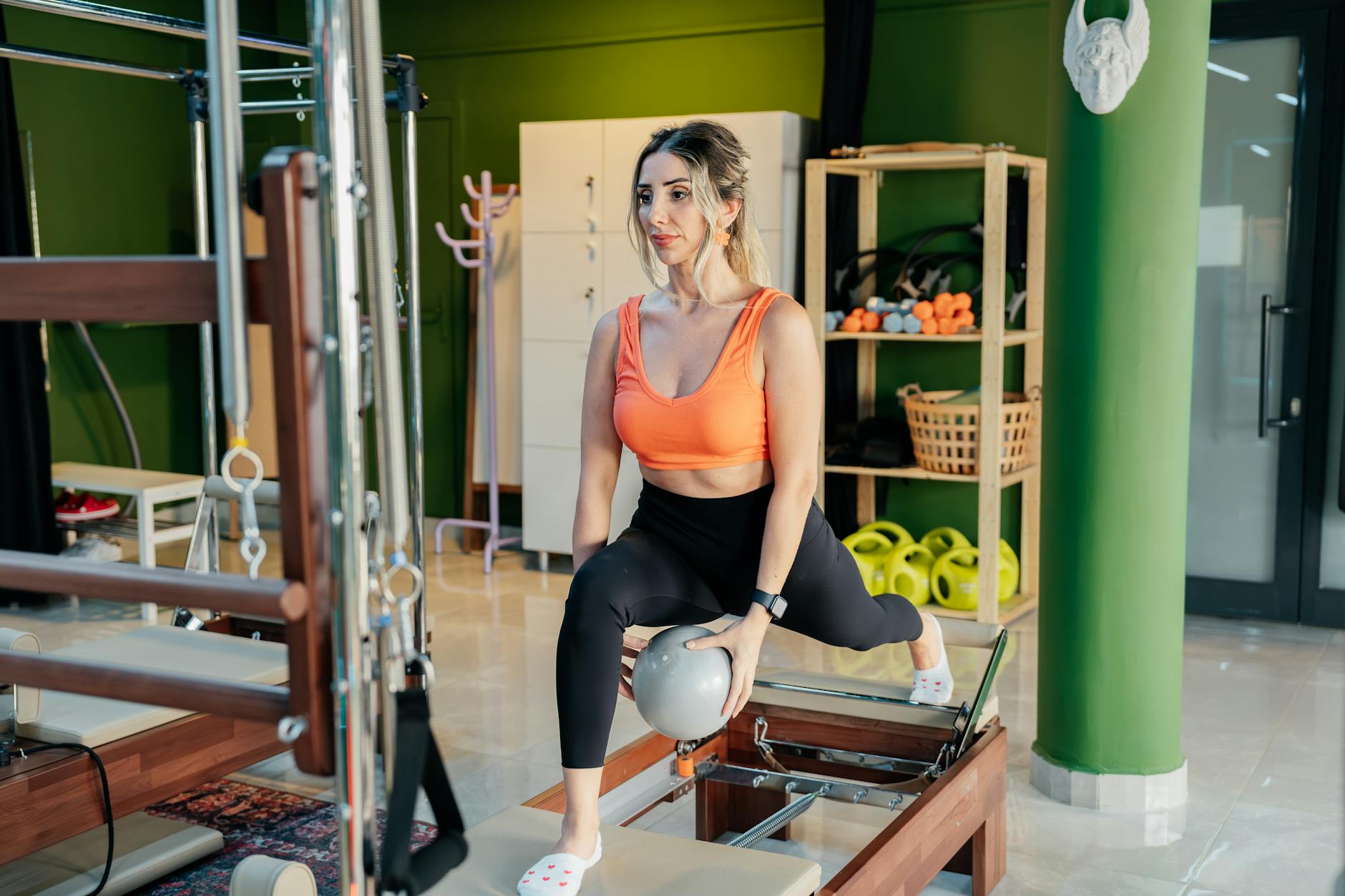
- Use the 24–48 hour rule: if pain or stiffness is clearly worse the next day, the stimulus was too much.
- Build back in 10–20% load increases per week (time, volume, or intensity), not big jumps.
- Look for 3 green lights: (1) daily movement is calm and easy, (2) strength is mostly symmetrical, (3) sport-specific technique stays crisp.
- Don’t confuse “testing” with training: a max sprint or heavy deadlift is often an ego check, not rehab.
- Combine physical progression with mental guardrails (if-then plans, boundaries, a simple log). District-S applies this in Eindhoven through 1-on-1 coaching in a calm private gym.
Introduction
Most setbacks after an injury don’t come from one “wrong” exercise. They come from one wrong decision: trying to train “normally” again too soon. In Eindhoven, we see this especially with busy professionals. The schedule is packed, stress runs high, and training feels like the one area where you can still be “in control.” That’s exactly when the urge to prove you’re fine again kicks in.
District-S is a premium personal training concept with private gyms in Eindhoven (including Strijp-S and Centrum), combining 1-on-1 coaching, rehab-based build-up, nutrition, and mental coaching. In practice, a return-to-sport plan only works if it’s not just physiologically sound, but also psychologically doable. Because even the best program collapses if someone decides to “just test it” on Wednesday night—or ignores recovery completely on a work trip.
So this article tackles two questions at once: when you can train again, and how to build back in a way you can actually stick with.
This article was generated with LaunchMind — try it free
Get startedThe challenge
The problem is that people often confuse “feeling better” with “being ready,” while their capacity hasn’t caught up yet. Pain may drop, but strength, control, and conditioning can still be too low to tolerate real sport demands.
Why “no pain” is a poor starting signal
Pain is information, not a fuel gauge. With some injuries, pain improves faster than strength or tendon capacity. With others, low-grade pain lingers even while your capacity is returning nicely. If you only follow pain, you’ll either push too hard (setback) or stay overly cautious (unnecessary loss of fitness).
Picture a project lead at a tech company in Eindhoven who can walk fine after 3 weeks of ankle symptoms. On Saturday they go for a 5 km run “by feel.” During the run it seems okay, but Sunday the ankle is stiff and Monday stairs hurt again. The injury didn’t magically “come back”—the load simply exceeded current capacity. That difference is the whole game.
A contrarian take: rest is rarely the bottleneck
A pattern District-S sees often in rehab: people rest a lot early on, then ramp up in a messy, unpredictable way. It’s not too little rest, it’s too little well-dosed loading that drags the process out. Your body adapts to stimulus. Without stimulus, tissue doesn’t get stronger; with too much stimulus, it gets irritated again.
The mental piece almost everyone underestimates
Return-to-sport is usually presented as a physical plan—but executed as an emotional one. Fear of pain, embarrassment (“I’m back at square one”), or pure proving-yourself energy (“I can do this”) drives decisions. In a busy week, feelings beat the spreadsheet.
Action point: pick one metric for the next 14 days (for example pain 0–10 and morning stiffness in minutes) and record it daily. Without a log, progression is guesswork.
The solution approach
A safe build-back uses objective criteria, a consistent progression rule, and mental “brakes” that neutralize both overconfidence and fear. In practice, District-S combines screening, structured load progression, and mental coaching—so you don’t just return, you stay back.
Step 1: define “returning to sport” in levels
“Back” isn’t a switch—it’s a ladder. A useful model:
- Daily function: walking, stairs, standing, cycling without next-day flare-up.
- Base conditioning: 20–40 minutes steady, easy endurance (zone-2-ish feel) without rebound.
- Strength and control: key patterns (squat variant, hinge variant, push/pull) with solid form.
- Sport-specific work: accelerate, decelerate, cut, jump, or contact situations.
- Full training: normal sessions including high-intensity peaks.
In a private gym setting, each rung can be progressed in a controlled way—without the chaos and pressure of a busy commercial gym. That’s one reason some professionals in Eindhoven choose 1-on-1 rehab coaching.
Step 2: use a progression rule you can actually sustain
Most plans fail because they’re too ambitious. A practical approach: increase only one variable per week (time, load, or reps) and keep it around 10–20%. It’s not magic—it’s a guardrail.
Example: an entrepreneur with shoulder symptoms can manage week 1 as three sessions of 12 minutes easy cycling plus 2 strength exercises with minimal symptoms. In week 2, only cycling time goes to 15 minutes. In week 3, time stays the same, but one extra set is added to a rowing/pulling variation. Small steps, big consistency.
Step 3: set mental guardrails before the first “good day”
A good day is risky. It creates the thought: “See? I’m fine.” That’s why District-S builds in simple, workable tools:
- If-then plan: if pain is higher than normal tomorrow, the next session drops by 20%.
- Pre-set boundaries: max 2/10 pain during training, and no increase within 24–48 hours.
- Identity shift: not “I’m an athlete again,” but “I’m rebuilding capacity.”
Skip this, and under stress or time pressure you’ll default to old habits: too hard—or not at all.
Action point: choose one clear boundary for the coming week: “During training max 2/10 pain, and the next morning no more than 10 minutes stiffer than normal.”
Case example
Case example: a typical Premium Personal Training & Private Gym Services scenario
Imagine a finance manager in Eindhoven who wants to run again after a knee injury. The physio gave the okay to build gradually, but it’s a busy quarter, sleep is inconsistent, and there’s a strong urge to “make up for lost time.” The first two weeks are up and down: one good session, then a flare-up. Confidence drops.
What a controlled build-back looks like
In a setup like District-S often uses, the focus shifts from running to building capacity:
- Weekly structure: 2x per week 1-on-1 strength training (knee-dominant and hip-dominant patterns) and 2x per week low-impact conditioning (bike/rower) to limit impact.
- Dosed running stimulus: start with, for example, 6–10 blocks of 1 minute jogging, 1 minute walking. Not to “get miles in,” but to reintroduce load to joint and tendon.
- Recovery criteria: pain and stiffness are tracked the next morning. If there’s a clear jump, the next stimulus is reduced or impact is swapped for an alternative.
The mental bottleneck: Friday proving energy
With this group, the trap often appears when work stress drops. Friday afternoon opens up, and the impulse to test returns. Coaching makes it concrete: Friday isn’t a test day—it’s a technique day. The reward is ticking off the process, not forcing performance.
A calm private gym also helps in a very practical way: less comparison, fewer distractions, fewer triggers to “keep up” with someone lifting heavier.
If you want to see how 1-on-1 coaching is structured in that kind of environment, the page on District-S personal training approach gives context without requiring you to commit to a full program upfront.
Action point: identify one “temptation moment” in your week (often Friday or Sunday) and decide in advance which lift or drill you will not max out.
Results and benefits
A good return-to-sport approach mainly gives you predictability: fewer flare-ups, more consecutive training weeks, and faster trust in your body again. That’s what busy people actually need—progress that keeps moving when work and family pull hard.
What changes in a measurable way?
Without making individual promises, rehab build-back does come with clear signals that tend to improve when progression is structured. In practice, these match how (sport) physiotherapists and sports medicine guidelines approach load management: gradual increases and evaluating response (see Royal Dutch Society for Physical Therapy (KNGF), 2018; and the IOC consensus statement on load in sport and risk of injury, 2016).
- Setback frequency: weeks where you have to “step back” often decrease when you apply the 24–48 hour rule and fixed progression steps.
- Training consistency: instead of one big session and 10 days of recovery, you can tolerate 2–4 manageable sessions per week.
- Strength symmetry: left-right differences in split squats, leg press, or hip-hinge patterns shrink. In practice, a common working range is that if you’re roughly within 10–15% of the uninjured side (depending on injury and sport), it’s often a more realistic starting point for sport-specific loading.
- Session tolerance: you can handle more total work without next-day pain scores spiking.
One comparison that captures the point
This matrix shows why returning “by feel” often doesn’t work for people in Eindhoven—especially with a full calendar.
| Approach | Weekly progression step | Monitor 24–48 hours | Setback risk in busy weeks | Time to sport-specific work (typical) |
|---|---|---|---|---|
| Train by feel | 30–50% jumps | ❌ | High | 6–12+ weeks of stop-start |
| Strict rest until pain-free | 0% (no stimulus) | ❌ | Medium (fitness drops) | 8–16+ weeks due to deconditioning |
| Gradual build with criteria | 10–20% | ✅ | Lower | 4–10 weeks depending on injury |
| 1-on-1 rehab + mental coaching | 10–20% + adjustments | ✅ + log | Lowest | 4–10 weeks with fewer setbacks |
These timelines are ranges because injury type, age, sleep, and history matter. The real win is fewer “resets.”
Why District-S often beats a generic gym for this phase
In a big gym, there’s noise: waiting, crowds, and limited technique feedback. District-S works in Eindhoven with private gyms where a personal trainer doesn’t just show exercises—they dose the load and coach the recovery behavior around it. People in rehab rarely need more motivation. They need boundaries that hold.
More context on that calm environment can be found via private gym and coaching at District-S, especially relevant if you know crowds and distractions derail your build-back.
Action point: for the next 2 weeks, track your “recovery response” after every session (pain score and stiffness). If it rises two sessions in a row, reduce the next stimulus by 20%.
Key takeaways
At its core, returning from injury is a behavior problem solved with sports science. Healing isn’t linear, and a busy schedule makes it even less predictable. District-S addresses this with a system that doesn’t depend on willpower.
Takeaway 1: the first mistake is almost always a “test moment”
Many people schedule training—but never schedule their urge to test. Think of a sales manager who joins a padel match after hamstring symptoms. It’s fine for 30 minutes, then one sprint happens. Not because it’s necessary, but because it’s possible. That one sprint sets the tone for the next week.
The fix isn’t “be more careful.” It’s replace test moments with criteria. In practice: don’t add speed work until strength and control are in place, and don’t go maximal until you’ve had weeks without a flare-up.
Takeaway 2: mental coaching is risk management, not a bonus
Mental coaching is often framed as hype or motivation. In injury build-back, it’s decision-making under stress. District-S uses simple formats: a log, if-then plans, and clear boundaries. It’s “mental,” but above all it’s practical.
A useful deep dive on why coaching fit matters is mental match when choosing a personal trainer. It’s not about injuries, but it explains why some programs actually stick.
Takeaway 3: your environment determines whether the plan is realistic
If you’ve got a busy family life and a tight schedule, you don’t have room for detours. A private gym in Eindhoven removes friction: no crowds, no queues, full attention. That makes the build-back simpler—and simplicity is a form of recovery.
District-S combines that environment with weekly adjustments: if sleep is poor or work stress spikes, the stimulus shifts. Not less training—smarter training.
This article follows the E-E-A-T quality guidelines.
Action point: write one rule for next week that always applies: “No max reps until 4 consecutive weeks without a 24–48 hour flare-up.”
Frequently asked questions
When can you work out again after an injury?
Capacity criteria determine timing: you can train again when load can increase without a clear worsening in the next 24–48 hours. A practical guideline is a maximum of 2/10 pain during the session, and no noticeable increase in stiffness the next morning.
How do you build back training safely after an injury?
Gradual progression works best: increase only one variable per week (time, weight, or volume) by roughly 10–20%. Keep a simple log and scale back 20% if symptoms react more strongly two sessions in a row.
What’s a normal flare-up during rehab, and when is it too much?
A mild response like light stiffness that settles within 24 hours is often acceptable. It’s too much if pain or stiffness clearly increases and lasts longer than 48 hours, or if everyday activities like stairs get worse.
How does District-S help you return to sport after an injury?
1-on-1 rehab coaching at District-S combines dosed strength and conditioning progressions with mental coaching and monitoring of the 24–48 hour response. In the private gyms in Eindhoven, technique can be closely supervised and the plan is adjusted weekly around work stress, sleep, and recovery.
What can you do if running or team sports still aren’t possible?
Low-impact options like cycling, rowing, or controlled strength training can maintain fitness without the same peak loads as sprinting or jumping. A useful rule: pick an option that raises your heart rate, but doesn’t worsen next-day symptoms.
Conclusion
Returning to sport after an injury takes less bravery and more precision. The real green light isn’t “it feels fine,” but a predictable recovery response: you train, you reassess 24–48 hours later, and you only increase if things stay green. In Eindhoven, many busy professionals make the biggest gains by replacing test moments with clear criteria—and by using mental guardrails that still hold when work stress rises.
District-S sees in practice that rehab feels calmer and moves faster when strength, conditioning, and mental coaching are built into one system—delivered in a low-distraction private gym. If you want to explore that, more information on rehab-focused personal training is a logical place to start. The next step is simple: track your post-training response for 14 days, and use that as the steering wheel for your build-back.
Sources
- District-S personal training approach · District-s