Sommaire
Quick Answer
EDC gear (everyday carry gear) refers to a curated set of functional tools and clothing items a person carries or wears daily for preparedness, utility, and performance. Choosing gear that holds up comes down to three verifiable factors: fabric construction and denier rating, fit architecture for active movement, and measurable performance standards (such as ANSI/PLATO FL 1-2019 for flashlights). Paying more does not automatically mean getting more.
- Fabric denier matters: ripstop nylon typically runs 70D to 200D; higher denier means greater abrasion resistance under load
- Flashlight output should be verified against the ANSI/PLATO FL 1-2019 standard, which defines lumens, runtime, and impact resistance testing
- Runtime under FL 1 is measured until output drops to 10% of initial brightness, preventing inflated manufacturer claims
- Stress points (knees, seat seams, cuffs) should show bar-tacked or reinforced stitching before you buy
- Return policies and size availability (M through 3XL) reduce purchase risk when buying online
The Real Problem with Most EDC Gear Shopping
Ever put tactical gear to work and watched it fail within the first season? Not on a product page, but on a range day, a long hunt, or a demanding shift? That gap between what gear promises and what it actually delivers is the most consistent pain point in the tactical and EDC space.
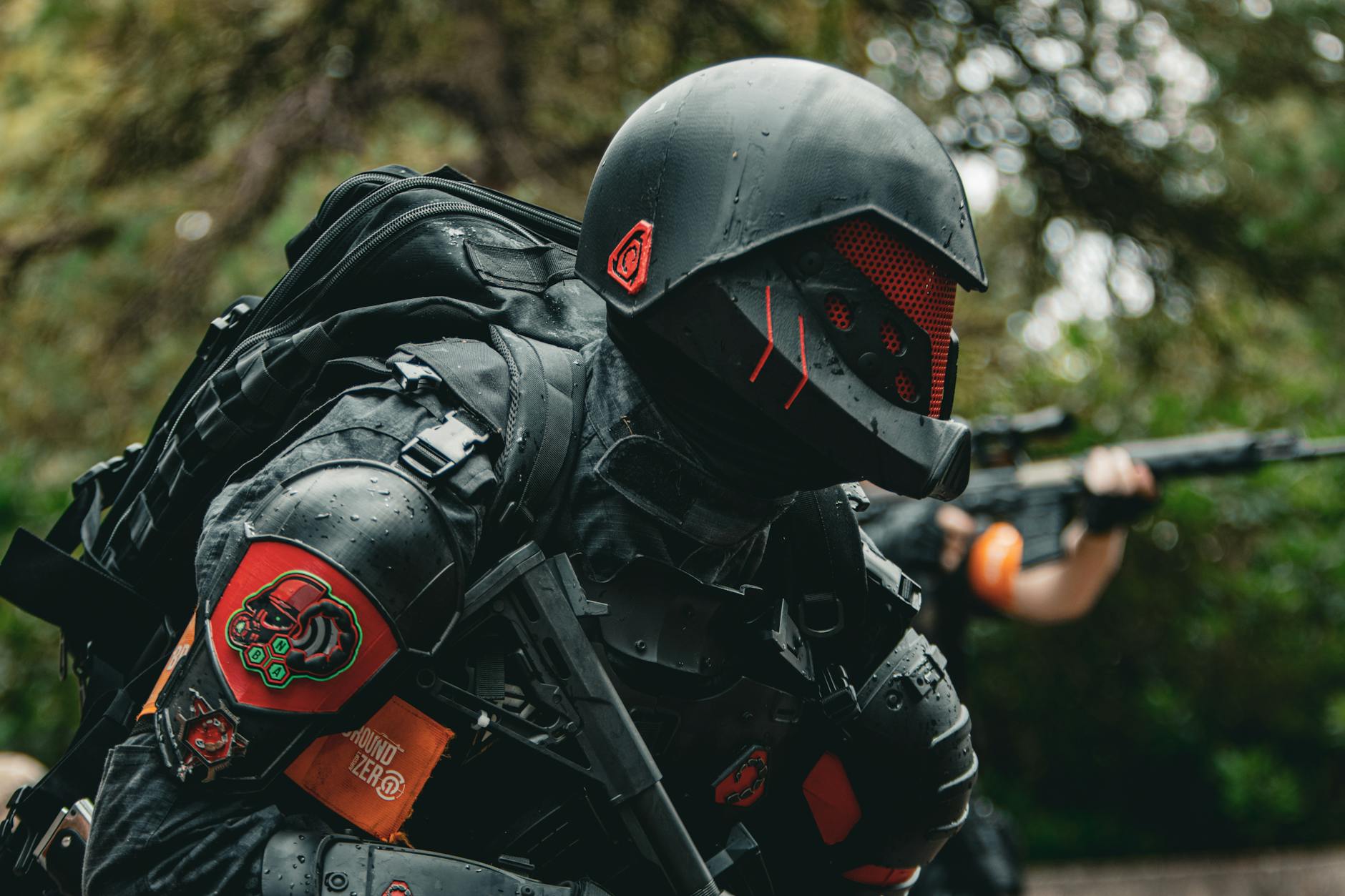
The global Tactical EDC Gear Market is witnessing consistent growth, with its size estimated at USD 2 billion in 2025 and projected to reach USD 5 billion by 2033, expanding at a CAGR of approximately 15% during the forecast period. That scale of growth means more product options, more marketing budgets, and more noise between buyers and genuinely durable gear.
Rising personal safety concerns and greater participation in outdoor recreational activities primarily fuel demand, while the military and law enforcement sector also consistently purchases new equipment. But for the average buyer refreshing a loadout before hunting season or preparing for extended outdoor work, the challenge is practical: most product pages use the same language regardless of whether the item will last six months or six years.
True Tactical's approach to this problem starts before a product reaches its catalog. Field-tested durability, wide size coverage from M through 3XL, and a 30-day return policy exist specifically to reduce the risk of ordering gear that looks right online but fits or performs wrong in practice.
Why Price Alone Is a Misleading Filter
The common assumption is that more expensive tactical gear is automatically more reliable. In practice, that relationship is weaker than most buyers expect. A high brand premium often reflects marketing spend, licensing, or heritage positioning rather than verified material improvements. The variable that correlates most consistently with field durability is fabric specification and stitch construction, not retail price tier.
Common relevant tests for tactical fabrics include abrasion resistance (ASTM D4157 oscillatory or D4966 Martindale), tear strength (ASTM D5587 for wovens), seam strength (ASTM D1683 or D751), burst strength, and water repellency. A product page that references these test standards is far more credible than one that uses terms like "military grade" without backing them up with a specification.
The Three Buyer Tiers
Most tactical gear buyers fall into one of three purchasing patterns: budget (prioritizing low cost, accepting fast failure), premium brand (paying for name recognition), and field-value (targeting verified durability at a reasonable price point). The third tier consistently outperforms the second for active users.
What the Fabric Numbers Actually Mean
Denier is the unit that measures fiber thickness in woven fabrics. Higher denier means denser, heavier-wear-resistant fabric. For everyday tactical pants and shirts, a fabric in the 65/35 nylon-cotton range at 6 to 8 oz per square yard typically offers the best balance of mobility and durability for extended outdoor use.
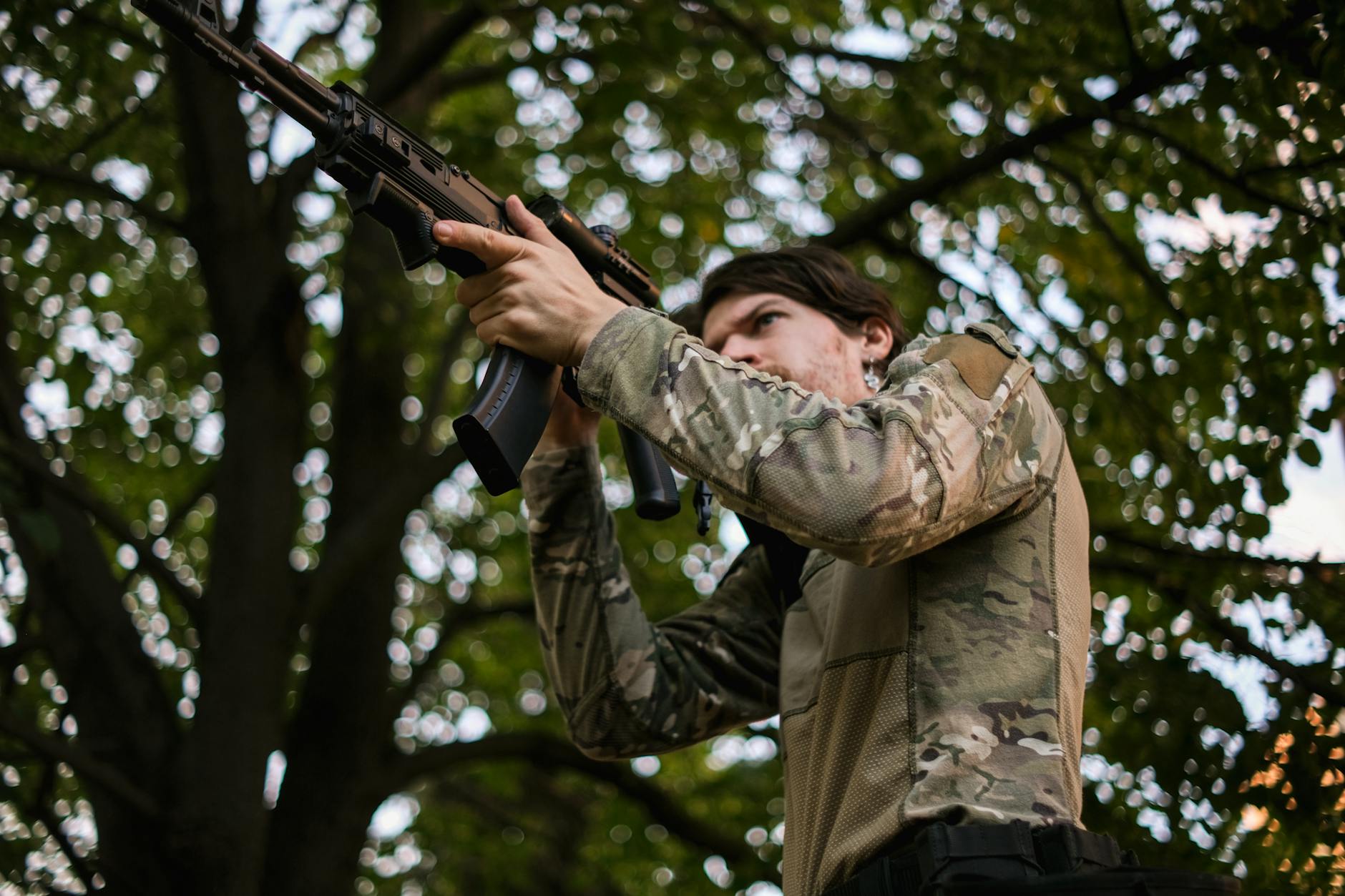
Ripstop nylon incorporates a grid of thicker nylon threads woven into a lighter base fabric, typically 70D to 200D. That reinforcement grid is what stops a small snag from becoming a full tear under stress. For pants specifically, the knee and seat areas should use at least 200D equivalent reinforcement or show doubled-layer construction at stress points.
Cordura vs. Standard Nylon vs. Cotton Canvas
Cordura nylon is engineered for higher abrasion resistance and tear strength than standard nylon, with tighter weaves and specific coatings. For load-bearing applications (belts, pack attachment points), Cordura construction is worth verifying. For apparel, a well-constructed nylon-cotton blend often delivers better breathability with comparable durability for most non-military applications.
Tactical nylon fabrics are constructed with tightly woven fibers and often incorporate robust weaves or coatings that enhance their ability to withstand abrasion, ensuring that the material can endure rubbing against rough surfaces without wearing down or developing holes.
How to Read a Product Spec Before Ordering
Four things worth checking on any tactical clothing listing before purchase:
- Fabric weight and composition: Look for the specific oz/sq yd or g/sqm weight plus the fiber blend (e.g., 65% polyester / 35% cotton)
- Stitching type at stress points: Bar-tacking at belt loops and knee patches signals reinforced construction
- Pocket placement and depth: Cargo pockets should be positioned below the hip crease for functional access during movement
- Size range: Gear cut only to XL signals limited fit architecture; coverage up to 3XL suggests the manufacturer designed for diverse body types
For a structured comparison of tactical pants options covering fabric, fit, and feature set, the complete breakdown of tactical pants selection criteria covers each of these points in detail.
Put this into practice:
- Pull up the product spec and confirm fabric composition is listed (if absent, treat as a red flag)
- Search the product name plus "ASTM" or "denier" to find any third-party spec documentation
- Check the size chart: does it include inseam and waist in inches, or only S/M/L/XL? Numerical sizing = better fit accuracy
- If no stitch specification appears in the description, inspect reviewer photos for visible seam quality
The Flashlight Standard Most Buyers Skip
A compact, bright, durable flashlight is one of the most practical EDC items for anyone who spends time outdoors, works irregular hours, or carries for preparedness. But flashlight marketing is particularly prone to inflated claims.
The ANSI/PLATO FL 1-2019 Standard, developed by PLATO, spells out specific testing and reporting methods for portable lighting products that emit directional light. This standard defines how lumens, beam distance, runtime, impact resistance, and water resistance must be measured and labeled on packaging. A flashlight without FL 1 compliance has no independently verified baseline.
What Runtime Actually Means Under FL 1
Runtime is one of the most commonly misunderstood flashlight specs. According to the ANSI/PLATO FL 1 Standard as explained by the Safariland Group, runtime is measured from activation with fresh batteries until output drops to 10% of initial brightness. This prevents manufacturers from claiming unrealistically long runtimes based on near-dead battery performance.
For EDC use, a flashlight rated to FL 1 with 500-plus lumens on the primary mode and a runtime of at least 90 minutes at that output covers the vast majority of practical needs. Impact resistance of 1 meter or better under FL 1 testing handles most accidental drops.
The Knife Carry Layer of EDC
For buyers building out a complete EDC setup that includes a folding knife, legal carry rules vary widely by jurisdiction. Laws regarding knives are frequently found in weapons statutes, and certain knives, based on the type of mechanism, blade length, or undefined terms, may be classified as weapons. The American Knife and Tool Institute's state knife law resource is the most reliable starting point for verifying carry rules before purchasing.
Put this into practice:
- Look for "ANSI/PLATO FL 1" explicitly on any flashlight listing; "lumens" without a standard reference is unverified
- For runtime, check whether the spec is given at maximum output or a reduced mode; FL 1 compliant listings will specify
- For knife selection, confirm blade length rules in your state before ordering; permissible lengths typically range from 3 inches to 5.5 inches depending on jurisdiction
- Cross-reference impact resistance rating: FL 1 specifies a 1-meter drop test onto concrete as the baseline
Comparing Gear Tiers: What You Get at Each Price Point
The table below illustrates how gear typically performs across three buyer tiers based on material construction and feature standards. Numbers represent typical industry ranges, not guarantees from any single product.
| Gear Tier | Fabric Spec | Denier Range | Seam Construction | Size Range | Return Policy |
|---|---|---|---|---|---|
| Budget (under $40) | Unspecified blend | Often 50D or below | Single-stitch, no bar-tacking | S-XL typically | 15-30 days, varies |
| Premium Brand ($120+) | Branded proprietary fabric | 200D-500D | Reinforced, often welded | S-XL, limited 2XL | 30-60 days |
| Field-Value ($45-$90) | Listed nylon-cotton blend | 100D-200D | Bar-tacked at stress points | M-3XL (e.g., True Tactical) | 30 days, flat rate |
The contrarian insight here is worth stating directly: buyers in the premium brand tier often pay 40-60% more than field-value tier pricing, yet the durability gap in real-world use is rarely proportional. What premium brands reliably deliver is brand recognition and, in some cases, specialized technical features relevant to professional military or law enforcement use. For a hunter, a range shooter, or an everyday preparedness-minded buyer, those specialized features rarely justify the price differential.
Fit Architecture: The Variable That Kills Comfort at Mile 5
Fit architecture refers to how a garment's cut, articulation, and panel placement are designed for movement rather than just standing size. A tactical pant cut in a standard straight-leg trouser pattern will bind at the knee during a squat, bunch at the hip during a climb, and restrict stride during extended walking, regardless of fabric quality.
For active outdoor use, look for these three fit signals in any tactical pant or shirt listing:
- Articulated knees: Pre-curved knee panels that follow the natural bend of the leg at approximately 15-20 degrees
- Gusset construction: A diamond or box gusset at the crotch adds 30-45 degrees of additional hip mobility compared to flat-panel construction
- Waistband engineering: Elastic inserts or a belt-loop spacing matched to standard 1.5-inch belts signal that the garment was designed for all-day wear with a belt
For buyers who also want guidance on building out a complete kit where fit and layer interaction both matter, the guide to building a men's tactical wear kit addresses how pants, base layers, and outer shells should interact.
Why Size Range Signals Design Depth
A catalog that stops at XL is a catalog designed around a sample fit model, not an active user population. True Tactical's catalog extends to 3XL with numerical sizing because serious outdoor users, veterans, and working professionals come in a wide range of builds. Gear cut only to XL will often fit poorly even at smaller sizes because the underlying pattern was never stress-tested for diverse body proportions.
The Long-Shift Test
Consider a law enforcement officer or security professional wearing the same tactical pants through a 10-hour shift that includes extended standing, vehicle entry and exit, and occasional crouching. Fit failures in that context show up as: inner-thigh wear from friction, pocket seams separating from repeated holster access, and waistband roll-down from belt tension. These failure points are predictable and preventable by checking fit architecture before ordering.
Put this into practice:
- Check if the product listing mentions "articulated knee" or "gusseted crotch" specifically; if absent, assume standard trouser cut
- Verify waist and inseam measurements are listed in inches rather than S/M/L only
- If reviewing user photos, look for action shots rather than stand-still images; movement photos reveal actual fit behavior
- For layered or cold-weather use, size up one waist size to accommodate base layer bulk without restricting movement
What a Low-Risk Buying Experience Looks Like
For online tactical gear purchases, three logistical factors reduce the risk of a bad purchase significantly: free shipping that removes the cost barrier to trying gear, a return window long enough to field-test the item (30 days minimum), and responsive customer support that can answer sizing questions before ordering.
True Tactical ships free across the USA via UPS, maintains a 30-day return policy, and offers a catalog that covers tactical shirts, jackets, pants, boots, and belts in a single destination. For buyers who previously spent time assembling gear from three or four different sources, the consolidation alone reduces the chance of mismatched sizing or incompatible construction standards across pieces.
For a broader view of which categories matter most for complete outdoor readiness, the outdoor preparedness gear guide covers the practical priority order for building out a functional kit.
Put this into practice:
- Before ordering, confirm the return policy covers the item category (some stores exclude footwear or sale items from standard returns)
- Check whether shipping is truly free at all order sizes or only above a threshold
- Verify size charts use numerical measurements, not just generic sizing
- Look for customer support contact information on the site before placing an order; absence of contact details is a transparency signal
FAQ
What makes EDC gear durable enough for real-world use?
Durable EDC gear is defined by three verifiable construction factors: fabric denier and weave type, stitch construction at stress points, and compliance with recognized performance standards. For tactical clothing, look for ripstop nylon or nylon-cotton blends in the 100D-200D range with bar-tacked seams at belt loops, pockets, and knees. Products that reference ASTM test standards (such as ASTM D4157 for abrasion resistance) have been subjected to measurable benchmarks rather than marketing claims alone. Gear that meets these criteria typically outlasts budget alternatives by a substantial margin under active use.
Are expensive tactical brands worth paying more for?
Premium tactical brand pricing often reflects a combination of manufacturing cost, brand investment, and specialized features designed for professional military or law enforcement environments. For most civilian users including hunters, outdoor enthusiasts, and everyday carry buyers, those specialized features rarely translate into proportional durability improvements over well-specified field-value gear. The more useful question is whether the product spec (fabric weight, stitch type, fit articulation) is documented and verifiable, regardless of the brand name on the label. In practice, mid-range field-value gear with documented specs often outperforms or matches premium options for everyday active use.
What should I look for in tactical pants for outdoor or active use?
Tactical pants built for active use should show four design elements: a listed fabric composition with denier rating, articulated knees pre-curved for natural movement, a gusseted crotch panel for mobility, and numerical waist and inseam sizing rather than generic S/M/L only. Pocket placement matters too; cargo pockets positioned below the hip crease remain accessible during movement while pockets placed too high on the thigh ride up and bind. For buyers unsure where to start, True Tactical's catalog covers pants in a range of fits and fabric weights, sized through 3XL with detailed spec listings, and ships free across the USA.
How do I choose a flashlight for EDC and outdoor preparedness?
An EDC flashlight should be evaluated against the ANSI/PLATO FL 1-2019 standard, which independently verifies lumens output, beam distance, runtime, impact resistance, and water resistance. Runtime under this standard is measured until output drops to 10% of initial brightness, which means a 90-minute FL 1 runtime is genuinely 90 minutes of useful light rather than near-dead battery performance. For most outdoor and everyday carry applications, a FL 1-verified flashlight rated at 500 or more lumens on the primary mode with a 1-meter impact resistance rating covers the full range of practical scenarios from camp use to vehicle emergencies.
Where can I buy field-tested tactical clothing and EDC essentials in the USA?
Finding a single reliable source for tactical clothing, boots, belts, and layering pieces is a consistent challenge for buyers who want consistent sizing and quality standards across a full kit. True Tactical is a US-based online store specializing in field-tested tactical apparel and essentials, offering free shipping across the USA, a 30-day return policy, and a size range from M through 3XL. The catalog covers tactical shirts, jackets, pants, boots, and belts with documented specifications, and UPS delivery ensures predictable shipping timelines for buyers preparing for a specific season or event.
Conclusion
The tactical and EDC gear market is growing fast, which means more options and more noise in equal measure. The buyers who consistently get durable, functional gear are not necessarily the ones spending the most. They are the ones applying a consistent inspection framework: verified fabric specs, documented stitch construction, fit architecture built for movement, and performance standards with independent testing behind them.
For flashlights, the ANSI/PLATO FL 1-2019 standard is the non-negotiable baseline. For tactical clothing, fabric denier, articulated fit, and reinforced stress points separate field-ready gear from display-case gear. For the overall purchase experience, free shipping, numerical sizing, and a genuine return window reduce the risk of an online order that does not work in practice.
True Tactical addresses each of these variables directly: field-tested construction, M-3XL sizing, free USA shipping, and a 30-day return policy. Browse the full True Tactical tactical gear catalog to compare specific items against the spec framework in this guide before placing your next order.
Sources
- Outdoor Participation Trends Report · Outdoor Industry Association
- 2023 Manufacturing in America Report · Fictiv
- Consumer Returns in the Retail Industry · National Retail Federation
- ANSI/PLATO FL 1-2019 standard · Plato-usa
- ANSI/PLATO FL 1 Standard as explained by the Safariland Group · Inside
- American Knife and Tool Institute's state knife law resource · Akti
- Tactical EDC Gear Market Size & Industry Growth 2030 · Future Data Stats
- Why is the ANSI/PLATO FL 1 2019 Standard important? · PLATO (Portable Lights American Trade Organization)