Table of Contents
At True Tactical, we see the same problem across one clear segment: travelers who rely on tactical clothing but need it to perform just as well in airports and carry-on bags as it does at the range or on the trail. A travel-ready tactical clothing kit solves that by focusing on four principles: compression-friendly fabrics, a footwear strategy that clears TSA screening without friction, a modular layering system that handles temperature swings without bulk, and strict weight discipline that keeps the total loadout within standard carry-on limits. Done right, the same kit that works in the field works equally well coming off a flight.
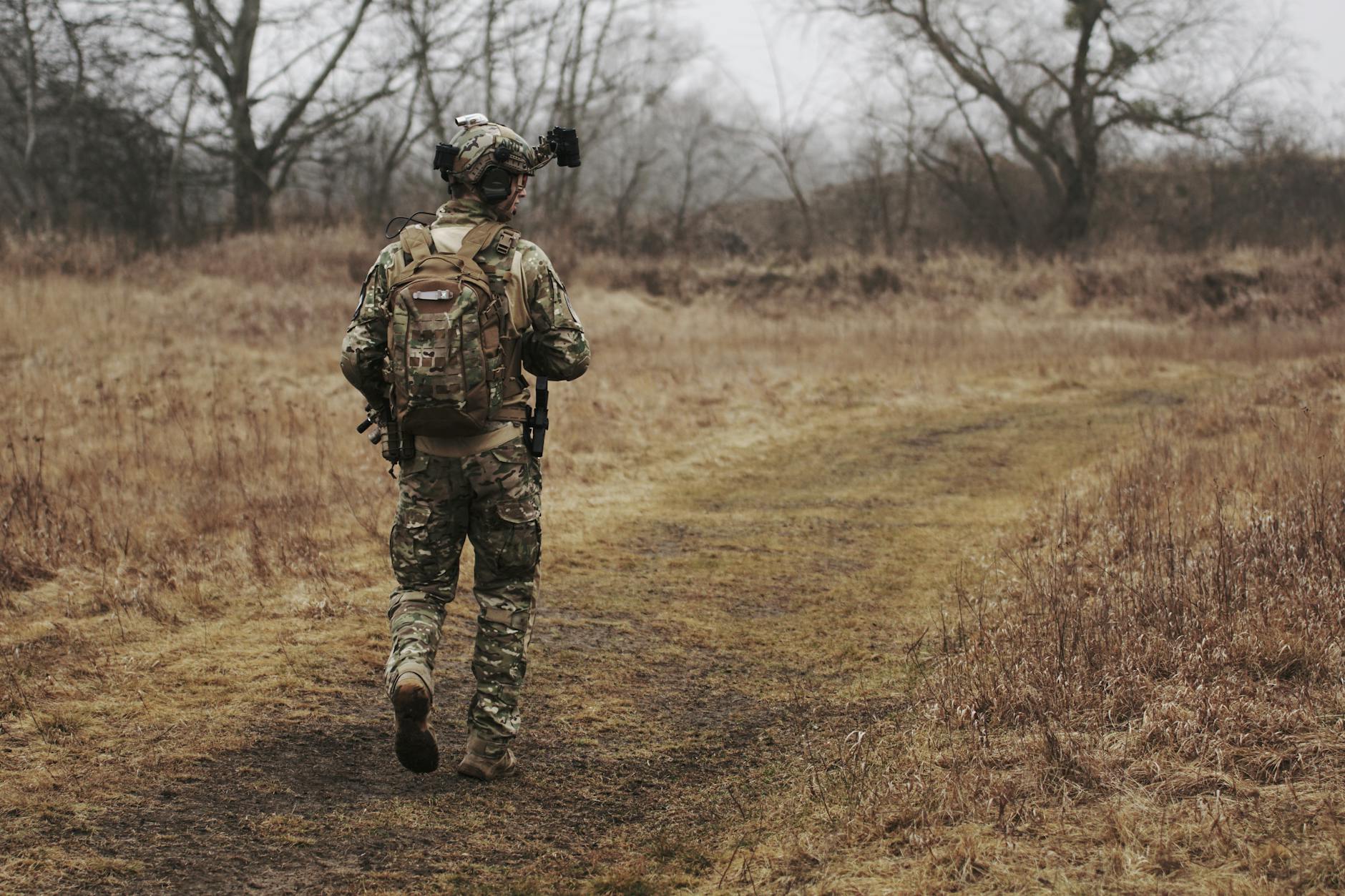
roll to roughly the size of a water bottle
- Opt for composite-toe tactical boots over steel-toe for faster airport screening
- Pack tactical shirts as your base and mid layer to eliminate redundant garments
- Keep your tactical belt in your carry-on, not worn through screening, to avoid extra inspection time
- Target a total clothing kit weight of under 8 lbs for a 5-day trip
Why Most Tactical Kits Fail the Moment You Leave Home
A recurring observation at True Tactical is that buyers who excel at outfitting themselves for a specific environment, a hunting lease, a range session, a trail weekend, often build kits that are deeply situational. Everything is optimized for one context. The minute that context changes, the kit breaks down. Boots that fit perfectly in a truck cab become a liability at an airport checkpoint. A heavy waxed field jacket performs brilliantly in cold rain but takes up a third of a carry-on bag.
The problem is not low quality. It is single-context thinking. Most tactical clothing is purchased piece by piece, each item selected for its best-case scenario, with no thought given to how the pieces interact when travel is part of the equation. A hunter might carry three separate jackets for three weather scenarios when one technically advanced softshell would cover all three. A veteran EDC carrier might pack a tactical belt that requires removal and secondary screening at every checkpoint.
Building a kit that travels well requires the same discipline as building any field loadout: identify the mission parameters first, then select gear to match all of them simultaneously, not just the easiest one.
How to Choose Tactical Boots That Clear Security and Still Perform
Tactical boots are the single heaviest and most space-consuming item in any clothing kit, and they create the most friction at airport security. Getting this choice right sets the tone for everything else.
Steel Toe vs. Composite Toe: The Airport Penalty
Steel-toe boots will trigger metal detectors at TSA checkpoints. Alloys such as aluminum will also set off a metal detector, so a composite-toe boot is the better choice. A composite toe offers the same protection as a steel toe without the need to remove boots at each checkpoint. For travelers who use TSA PreCheck, the standard guidance is that shoes do not need to be removed. However, steel-toe boots will almost certainly set off any metal detector, and TSA PreCheck guidelines state that travelers do not need to remove shoes, laptops, 3-1-1 liquids, belts, and light jackets. In practice, steel-toe wearers frequently get pulled for secondary inspection regardless of PreCheck status, adding 10 to 20 minutes to the screening process.
What the ASTM F2413 Standard Actually Means for Travelers
ASTM F2413 is the primary U.S. standard governing protective footwear, covering minimum performance requirements for impact resistance, compression resistance, metatarsal protection, electrical hazard protection, puncture resistance, and static dissipation. It is referenced by OSHA and represents the benchmark for tactical and safety boots sold in the United States. Critically for travelers, the standard applies equally to composite-toe and steel-toe designs. A boot marked ASTM F2413-compliant with a composite toe gives up nothing in protection ratings while eliminating the metal-detector problem entirely.
Tactical Boot Market Context in 2026
The global tactical footwear market reflects how seriously buyers take boot selection. According to Zion Market Research via OpenPR, the market was valued at approximately USD 2.05 billion in 2024 and is projected to reach USD 4.10 billion by 2034, growing at a compound annual growth rate of around 7.2%. Within that market, Grand View Research notes that "the boots segment dominated the tactical footwear industry, with the largest revenue share of 68.7% in 2024." The volume of buyer activity confirms that tactical boots are the anchor item in any serious gear kit. Choosing the wrong type for a travel context is a meaningful cost in time and hassle.
For travelers who want to learn more about choosing tactical boots and gear that hold up across different environments, the selection criteria extend well beyond toe material.
Put this into practice:
- Verify your boot is marked with ASTM F2413 composite-toe certification before travel
- If you hold TSA PreCheck, test your specific boot model at a low-stakes domestic flight before a time-sensitive trip
- Pack boots vertically at the sides of your bag rather than flat on the bottom to reduce screening friction
- Stuff socks inside the boot shaft to recover usable bag volume
This article was generated with LaunchMind — try it free
Get startedBuilding the Layer System: What Stays, What Gets Cut
The travel layering problem is not about warmth. It is about redundancy. Most travelers pack more layers than the temperature range of their trip actually requires, because each layer was selected independently rather than as part of a coordinated system.
The Three-Layer Discipline for Travel
A well-built travel tactical kit uses exactly three functional layers, with no garment serving only one purpose. The base layer is a moisture-wicking tactical shirt that doubles as an active shirt in warm destinations. The mid layer is a fleece or light insulating piece that compresses to the size of a softball. The shell is a softshell jacket that handles light rain and wind without the bulk of a hardshell. For a breakdown of when to use a softshell versus a hardshell shell in field conditions, the Softshell vs. Hard Shell tactical jacket comparison provides specific decision criteria.
Pants as the Multiplier
Tactical pants in a ripstop or stretch-nylon blend roll to roughly the volume of a thick paperback book. A traveler who brings two pairs of well-selected tactical pants covers every activity from hiking to a casual dinner, depending on color selection. Cargo pockets eliminate the need for a separate day bag in many environments. The criteria for selecting pants that hold up across multiple use cases are covered in detail in the guide to choosing tactical pants for work, the range, and the trail.
What Gets Cut
The garments most often packed unnecessarily are: a second shell layer, jeans (heavier and slower-drying than tactical pants), and a stand-alone casual shirt that duplicates what a tactical base shirt already covers. Removing these three items typically recovers 2 to 3 lbs of bag weight and 20 to 30 percent of usable volume in a standard carry-on.
Put this into practice:
- Lay every planned garment on a flat surface before packing; eliminate any item whose function is already covered by another
- Test-roll your pants: if a pair does not compress to under 6 inches in diameter, it is likely the wrong fabric for travel
- Limit shells to one: choose the softshell if your destination has variable weather, the hardshell only if heavy rain is certain
- Weigh your clothing stack before adding boots; aim for under 6 lbs of clothing for a 5-day trip
Tactical Gear vs. Regular Travel Gear: The Decision Matrix
The question True Tactical sees most frequently from travelers is not "which item should I bring" but "is tactical gear actually worth packing over regular outdoor or travel clothing?" The table below addresses the most common comparison points.
| Criterion | Standard Travel Clothing | Tactical Clothing Kit |
|---|---|---|
| Fabric durability (typical cycle life) | 80-120 wash cycles before degradation | 150-200+ cycles with ripstop construction |
| Pocket volume for EDC items | 2-4 small pockets, avg 8 sq in total | 6-10 pockets, avg 30-50 sq in total |
| Roll-pack volume (pants) | Medium-to-large, often 8-10 in diameter | Small-to-medium, typically 4-6 in diameter |
| TSA friction (belt) | Standard dress belt: low friction | Tactical belt with metal hardware: moderate friction if worn |
| Versatility (activities covered per garment) | 1-2 use cases | 3-5 use cases |
| Quick-dry time after washing | 6-12 hours (cotton) | 1-3 hours (nylon/polyester blend) |
The quick-dry advantage alone is operationally significant for multi-destination travel, where access to laundry may be limited or delayed by 24 to 36 hours.
Navigating Carry-On Rules With a Tactical Kit in 2026
Carry-on compliance is not optional for anyone who wants to avoid checked-bag fees and delayed gear at baggage claim. In 2026, enforcement has tightened. Gate agents are now checking size and weight much more closely than in prior years. Travelers are allowed one carry-on and one personal item, with a maximum size of 22 x 14 x 9 inches for most carriers.
What a Tactical Kit Must Fit Within
A 22 x 14 x 9-inch carry-on holds approximately 35-40 liters of gear. A well-packed tactical clothing kit for five days, two pairs of tactical pants, three base shirts, one mid layer, one softshell, socks, underwear, and one pair of boots, fits within 28 to 32 liters when garments are rolled military-style and boots are placed at the perimeter. A standard military fold reduces a t-shirt to a 6x8 inch rectangle, allowing travelers to stack items neatly and access them without disrupting the entire arrangement. This precision ensures more gear fits in less space, a critical advantage for frequent travelers.
TSA Rules Specific to Tactical Gear
Tactical pens can be brought through carry-on screening as long as they have no blade. Multi-tools with blades are strictly limited to checked bags only. A tactical belt worn through screening with a metal buckle will trigger the metal detector. The faster approach is to remove the belt before the checkpoint and place it in a bin, or pack it at the top of the carry-on for easy retrieval. TSA guidance advises avoiding clothing with excessive metal, as heavy belt buckles, steel-toed boots, and excessive jewelry will trigger additional screening.
Put this into practice:
- Measure your bag against the 22 x 14 x 9-inch limit before departure
- Place your tactical belt in the carry-on top pocket before reaching the security line
- Pack multi-tools with blades in checked luggage, not carry-on
- Use the ranger roll technique for all shirts to recover 20 to 30 percent of packing volume
Real-World Example: A Five-Day Multi-Environment Trip
Consider a law enforcement professional traveling across two time zones for a training course that runs half the days in a classroom and half in the field. The environment shifts from an air-conditioned conference room to outdoor terrain with variable weather. A single-context kit fails here. The approach True Tactical recommends for this type of trip maps out as follows:
Day bag (carry-on, 32L): Two pairs of ripstop tactical pants (rolled), three moisture-wicking tactical base shirts, one lightweight fleece mid layer, one softshell jacket, five days of socks and underwear, one pair of composite-toe tactical boots (placed vertically at the sides), and the tactical belt in the top pocket. Total estimated weight: 7 to 8 lbs of clothing and footwear.
This traveler does not check a bag. Gear is available the moment the flight lands. The composite-toe boots pass screening without secondary inspection. The softshell covers the outdoor sessions. The base shirts handle both the fieldwork and the classroom without requiring a wardrobe change. The tactical pants' cargo pockets eliminate the need for a separate day bag during training. The complete head-to-toe tactical gear guide covers how each layer category interacts in multi-environment scenarios like this one.
The total setup represents gear that costs more upfront than basic travel clothing but holds up noticeably longer in active use. True Tactical's catalog is built around this tradeoff: gear selected for durability and multi-use performance, available in sizes from M through 3XL, with free shipping across the United States.
Key Takeaways
- Composite-toe tactical boots eliminate TSA metal-detector friction while meeting the same ASTM F2413 protection standards as steel-toe designs
- A three-layer system, base, mid, softshell, covers the full temperature range of most domestic trips without redundant garments
- Military-style rolling compresses tactical shirts to 6x8-inch rectangles, recovering meaningful space in a standard carry-on
- Tactical pants in ripstop or stretch nylon dry in under 3 hours, making them practical for multi-destination travel without laundry access
- Removing a second shell, jeans, and a duplicate casual shirt typically saves 2 to 3 lbs and 20 to 30 percent of bag volume
- Tactical belts with metal hardware should be packed, not worn, to avoid secondary screening delays
FAQ
Can you wear tactical boots through airport security without getting stopped?
Composite-toe tactical boots pass metal detectors without triggering alarms, making them the correct choice for air travel. Steel-toe and aluminum-toe designs will almost always set off screening equipment, requiring removal and additional inspection even for TSA PreCheck holders. If you regularly fly with boots, switching to a composite-toe model rated to ASTM F2413 standards eliminates this friction entirely while retaining full protective performance.
How do you pack a 5-day tactical clothing kit into a carry-on?
Military-style rolling is the foundational technique: roll shirts to a 6x8-inch rectangle, roll pants tightly from the waist down, and place boots vertically at the bag's perimeter with socks stuffed inside the shaft. A 35-40 liter carry-on typically accommodates two pairs of tactical pants, three base shirts, one mid layer, one softshell, five days of socks and underwear, and one pair of boots, with volume to spare. The key discipline is eliminating any garment whose function duplicates another item already in the kit.
What TSA rules apply specifically to tactical gear in 2026?
Multi-tools with blades are restricted to checked baggage only under current TSA rules, while bladeless tactical pens are permitted in carry-on bags. Tactical belts with large metal buckles should be removed before reaching the checkpoint and placed in a screening bin to avoid secondary inspection delays. In 2026, airlines have tightened carry-on size enforcement at the gate, so verifying that your bag fits within the standard 22 x 14 x 9-inch limit before departure is essential.
How does True Tactical approach gear selection for travelers?
True Tactical's selection methodology focuses on multi-use performance across different environments rather than single-context optimization. The catalog prioritizes fabrics and construction standards that cover both active field use and the practical demands of travel, including compression-friendly materials, quick-dry performance, and composite-toe footwear options. With free shipping across the United States, a 30-day return policy, and sizing from M through 3XL, the store is structured for buyers who need gear that works in more than one context.
Why is quick-dry fabric important in a travel tactical kit?
Quick-dry nylon and polyester blends used in tactical clothing typically dry in 1 to 3 hours after washing, compared to 6 to 12 hours for cotton garments. For multi-destination travel where laundry access is limited or unpredictable, this difference is operationally significant: a tactical shirt washed in a hotel sink the night before is ready to wear by morning, while a cotton equivalent may still be damp. This single fabric characteristic allows travelers to pack fewer garments for the same trip duration, reducing bag weight and volume considerably.
Conclusion
Building a tactical clothing kit that travels well is a discipline, not a shopping list. The core decisions, composite-toe boots that clear screening, a three-layer system with no redundant garments, ripstop or nylon fabrics that compress and dry fast, and a clear understanding of 2026 TSA carry-on rules, determine whether the kit serves the mission or creates friction at every transition point.
True Tactical's approach to this problem is systematic: start with the constraints (bag size, security rules, environmental range), then select gear that meets all of them simultaneously rather than optimizing for one and ignoring the others. The result is a kit that clears security without drama, fits in an overhead bin, and performs from day one at the destination.
For travelers ready to build that kit, True Tactical's full gear catalog covers boots, pants, shirts, jackets, and belts selected for exactly this kind of multi-environment, travel-ready use.
Sources
- ASTM F2413 · Astm
- Zion Market Research via OpenPR · Openpr
- Grand View Research · Grandviewresearch
- ASTM F2413-18 Standard Specification for Performance Requirements for Protective (Safety) Toe Cap Footwear · ASTM International
- Global Tactical Footwear Market To Reach USD 4.10 Billion by 2034, Growing at 7.2% CAGR · OpenPR / Zion Market Research
- Tactical Footwear Market Size To Reach $3.25Bn By 2030 · Grand View Research
- TSA Rules 2026: The Complete Guide to Carry-On, Checked Bags, and Passing Fast · Survival Life
- Master Military-Style Folding For Efficient Travel Packing · QuartzMountain