Table of Contents
Quick Answer
A complete tactical gear guide works by matching each clothing and equipment layer to a specific environmental demand, activity level, and durability standard before any purchase is made. True Tactical sees one pattern repeat across every buyer segment: gear fails not because the market lacks options, but because buyers skip the evaluation framework and chase aesthetics instead.
- Match your outer layer (tactical jacket) to your weather rating: 5K, 10K mm waterproofness for light field use, 20K+ for sustained operations
- Verify MIL-SPEC citations: Propper International notes that "products must meet strict criteria for durability, performance, and reliability" to carry the MIL-SPEC designation
- Prioritize MOLLE/PALS compatibility on load-bearing items for modular configuration
- Build in layers: base shirt, mid layer, shell, pants, belt, boots in that order
- Size for active use, not static fit: gear tested at rest often binds, pulls, or gaps under field load
Why Most Tactical Gear Guides Get It Wrong
A law enforcement officer and a weekend hunter share an interest in durable, functional clothing. They often read the same gear lists and buy the same products. But their threat environments, activity demands, and load requirements are fundamentally different. One needs low-profile mobility in urban terrain; the other needs brush-resistant fabric and temperature regulation over a full day on the trail. A single product recommendation satisfies neither.
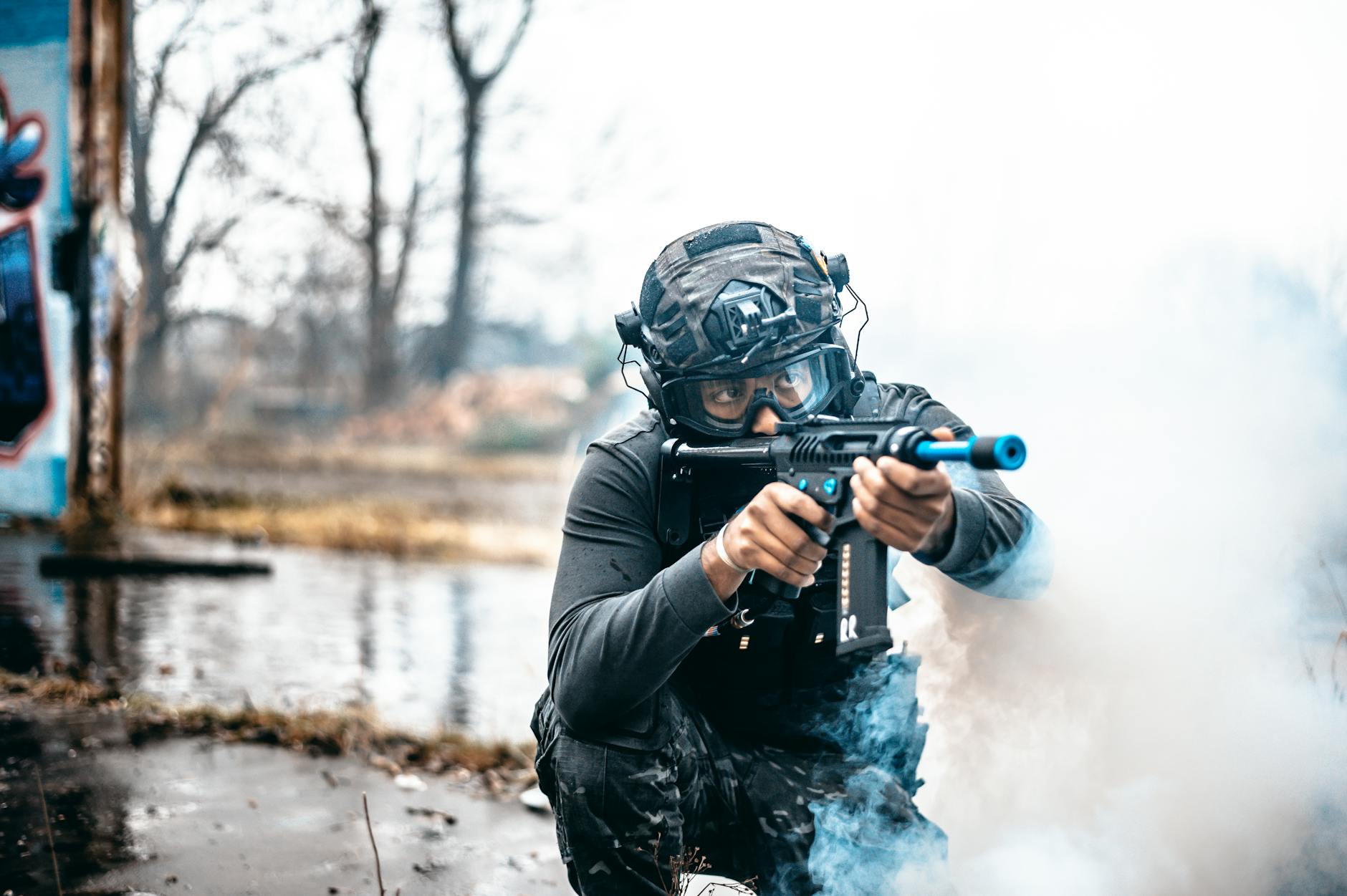
True Tactical's experience across its customer base consistently surfaces the same problem: buyers focus on tactical aesthetics, logo recognition, or price point, then discover three months in that seams are splitting, pockets are wrong for their actual carry needs, or the fit binds at the shoulder when raising arms with a loaded pack.
The global law enforcement and military clothing market was estimated at USD 2.25 billion in 2024 and is projected to reach USD 3.10 billion by 2030, growing at a compound annual growth rate of approximately 5.6%. That growth is driven in part by what Technavio's 2026 market analysis describes as "the expanding interest from civilians in outdoor recreation, adventure sports, and tactical fitness," converging with professional-grade demand. More products enter the market every year. That does not make choosing easier. It makes a structured evaluation framework more important, not less.
The guide below addresses that gap. It walks through each layer and category systematically, specifying what to verify before buying, not after the first failure.
This article was generated with LaunchMind — try it free
Get startedStep 1: Define Your Use Case Before You Look at Any Product
The most expensive mistake in building a tactical kit is buying for the worst-case scenario you will never face. A range shooter who spends three days a year in genuine cold-weather conditions does not need the same shell system as a border patrol agent working twelve-hour shifts in variable mountain weather.
Map Your Three Core Conditions
Before opening any product page, write down three things: the most extreme temperature you regularly operate in, the precipitation level (dry, occasional rain, sustained rain), and your activity intensity (sedentary patrol, moderate hiking, sustained heavy exertion). These three variables determine fabric weight, waterproof rating, and cut geometry more accurately than any feature list.
A hunter spending full days in October brush country in the Pacific Northwest needs a softshell with a DWR coating rated for sustained moisture. A range shooter in Arizona needs breathable ripstop with articulated knees and gussets, not a waterproof membrane that traps heat.
Match Standards to Reality
EN 343:2019 classifies both waterproofness and breathability on a scale of 1 to 4, with Class 4 representing the highest protection level added in the 2019 update. For professional field use in sustained rain, Class 3 to Class 4 is the relevant range. For most civilian range and trail use, Class 2 outerwear provides adequate protection at lower weight and cost.
Put this into practice:
- Write down your three operating conditions before visiting any product page
- If temperature range spans more than 30 degrees Fahrenheit regularly, plan for a three-layer system, not a single jacket
- If more than half your use is in dry or mild conditions, downgrade waterproof rating and invest the savings in fabric durability (denier count, seam reinforcement)
- If you carry a pack or belt load, add one size to your standard shirt and jacket sizing to account for range of motion under load
Step 2: Evaluate Your Tactical Jacket Against a Real Standard
The tactical jacket is the single most evaluated and most often over-specified item in any kit. True Tactical sees buyers consistently reach for the heaviest, most featured jacket available, then report that it restricts movement, traps heat, and never gets used.
Shell Type Determines Everything Downstream
Softshells use a laminated or bonded construction that prioritizes breathability and stretch, making them the correct choice for active use in mild to moderately wet conditions. Hardshells use waterproof membranes with sealed seams for genuine rain protection. Higher denier fabrics (50D and above) resist abrasion better than ultralight fabrics in the 20D to 40D range, but carry more weight. The right answer depends on your use case, not on which spec sounds most impressive.
For most buyers in the True Tactical customer base, a mid-weight softshell in the 200 to 300 gram range covers the majority of three-season use. A hardshell or insulated layer gets added for specific cold or sustained-rain conditions. Buying only one jacket and expecting it to cover all conditions is the most common overspend in this category.
Construction Quality Signals That Matter
YKK zippers are a reliable indicator of zipper quality in tactical outerwear; they are found on jackets across the $150 to $500 price range and represent a minimum threshold worth verifying. Bartack stitching at stress points (pocket corners, hem anchors, shoulder panels) is the other reliable construction signal. Reinforced stress points using bartack stitching at a minimum of 7 to 9 stitches per inch indicate a jacket built to last under repeated load.
For deeper context on matching shell type to weather severity, how True Tactical approaches field jacket selection covers the full decision matrix from shell type through insulation rating.
Put this into practice:
- Check the denier count on the shell fabric: below 50D works for urban or low-abrasion use, 100D and above for brush and sustained field contact
- Verify YKK or equivalent on all main zippers before purchasing
- Put the jacket on and simulate your actual loading: raise arms overhead, reach across chest, crouch. Restriction under load is disqualifying regardless of spec
- If the jacket needs to work over a mid-layer, buy in a size that accommodates that layer without pulling across the back
Step 3: Build Your Pants and Base Layer Around Your Load, Not Your Look
Tactical pants fail most often at the knee, crotch gusset, and cargo pocket seams, because buyers size for waist fit rather than for the range of motion their activity demands. True Tactical's return pattern confirms this: fit complaints cluster around mobility restriction at the hip and knee, not waist size.
Fabric Choice Drives Durability at the Stress Points
Ripstop nylon and ripstop cotton-poly blends are the two dominant materials in functional tactical pants. Ripstop construction uses a reinforcing grid thread pattern woven through the base fabric, limiting tear propagation. At equivalent weight, ripstop nylon outperforms cotton-poly on abrasion resistance and drying speed. Cotton-poly blends retain shape slightly better in sedentary use and are more comfortable in dry heat.
For pants that need to handle both the range and the trail, a gusseted crotch and articulated knee pattern (with integrated kneepad compatibility) are the two construction features that most directly extend service life under active use. How to choose tactical pants for work, the range, and the trail covers this in full detail.
Base Layer Function Determines Mid-Layer Choice
The base shirt worn against the skin drives moisture management for the entire system. A moisture-wicking synthetic or merino wool base moves sweat away from the body and maintains thermal regulation across a wider temperature range than cotton. Cotton absorbs moisture and holds it, reducing insulation value when wet and increasing chafe risk during sustained movement.
For a complete breakdown of how the base layer interacts with the rest of your field system, field layering fundamentals explains how to sequence each layer for real temperature and activity variables.
Put this into practice:
- Size pants for hip and thigh circumference first, not waist: tactical pants with belt loops accommodate a 1.5-inch to 2-inch size range via the belt
- Check for a gusseted crotch before buying: this single feature eliminates the most common seam failure point under squat and climb movements
- For base layers, avoid 100% cotton in any condition where you will be active for more than two hours: moisture retention reduces thermal efficiency and causes chafe
- If carrying a sidearm or tools on a belt, verify cargo pocket placement does not conflict with belt draw position before committing to a cut
Step 4: Verify Belt and Boot Standards Against Your Load
The belt and boot are the two items where underspecification creates the most acute performance failure, because both carry load directly and both fail silently until they fail completely.
Belt Width and Stiffness Must Match Your Carry Load
A 1.5-inch belt fits standard trouser loops and is adequate for EDC tools and a sidearm in a minimal setup. A 1.75-inch belt is the practical standard for law enforcement and range use where the combined load exceeds roughly 3 to 4 pounds on the belt. MOLLE specification A-A-55301 mandates Type III nylon webbing with a minimum breaking strength of at least 1,200 pounds for military-grade applications. Civilian tactical belts that reference this standard use the same nylon and stitch pattern as a meaningful durability signal, not just marketing language.
Boots Drive Everything on Terrain with Elevation Change
For trail and field use, a waterproof tactical boot with a Vibram or equivalent rated outsole and genuine ankle support (not just a high collar) is the minimum specification. Boots without lateral stability fail on uneven ground, and that failure compounds under pack weight. Choosing tactical boots that hold up covers the full construction checklist from outsole grip ratings through upper material durability.
Put this into practice:
- Weigh your intended belt load before buying: under 3 pounds, a quality 1.5-inch belt is sufficient; over 3 pounds, move to 1.75 inches minimum with a reinforced inner
- For boots, test lateral stability by standing on a slight incline and pushing your ankle outward: a boot that allows ankle roll under body weight alone will fail under pack load
- Break in tactical boots on short hikes before committing to a full day of field use: most boot failures in the first year are fit failures accelerated by unbroken-in leather or synthetic uppers
- Check for a defined outsole lug pattern: smooth or worn outsoles on tactical boots are a disqualifying signal regardless of upper quality
Step 5: Assemble Your EDC Layer to Fill the Gaps
EDC (everyday carry) gear fills the functional space between your clothing layers and your larger kit, covering the scenarios that happen without warning and without time to retrieve a full pack. The practical EDC kit for a prepared adult includes a compact multitool, a fixed or folding blade, a high-lumen flashlight with a belt or pocket clip, and a minimal first aid component.
The Weight Discipline Problem
The most common EDC failure is not under-carrying but over-carrying. A kit that weighs more than roughly 2 to 3 pounds on the belt or in pockets creates fatigue and reduces compliance over time. People stop carrying the heavy kit and end up with nothing. Prioritize items that address the three most statistically frequent everyday emergencies: minor medical (cuts, sprains), mechanical failure (fastener, zipper, strap), and low-light navigation. Everything beyond that is mission-specific.
Integration With Tactical Clothing
EDC gear integrates most effectively when the clothing system is designed to receive it. Pants with reinforced cargo pockets, a belt with integrated MOLLE webbing, and a jacket with secured internal pockets turn a functional kit into a system. Buying a premium multitool and carrying it in a flimsy trouser pocket defeats the investment at the first brush or fall.
Put this into practice:
- Weigh your daily carry before and after adding each new item: stop adding items when total belt and pocket weight exceeds 2.5 to 3 pounds for daily use
- Verify that every EDC item has a designated spot in your clothing system before purchasing it: if there is no secure home for it, you will not carry it consistently
- Check flashlight lumen output against your most frequent low-light scenario: 300 to 500 lumens is adequate for close-range navigation; tasks requiring beam distance need 800 lumens or above
- Review your EDC kit every 90 days and remove any item you have not actually used: dead weight is the enemy of compliance
Tactical Jacket Comparison: Shell Type by Use Case
| Shell Type | Waterproof Rating | Breathability | Best Use Case | Weight Range | Price Range |
|---|---|---|---|---|---|
| Softshell (DWR only) | 1,000, 5,000 mm | High | Active field use, mild rain | 280, 500 g | $80–$180 |
| Hardshell (PU laminate) | 10,000, 15,000 mm | Moderate | Sustained rain, static patrol | 350, 600 g | $150–$300 |
| Hardshell (GORE-TEX / ePTFE) | 20,000+ mm | High | Professional field ops, all-weather | 400, 800 g | $300–$600 |
| Insulated Softshell | 5,000, 10,000 mm | Low-Moderate | Cold dry conditions, limited movement | 600, 900 g | $120–$250 |
| 3-in-1 System | 10,000, 15,000 mm | Variable | Variable climate, multiple roles | 700, 1,200 g | $200–$450 |
Pro Tips: What Experienced Gear Buyers Know That Beginners Miss
Test Gear Under Your Actual Load
Wearing a jacket or pants in a store tells you almost nothing about performance under field conditions. The standard field test used by procurement professionals involves putting on the full loadout, including pack, belt, and any carried items, and running through a basic movement sequence: squat, lunge, overhead reach, and lateral step. Any binding, pulling, or gap in coverage under this sequence disqualifies the item, regardless of how well it fits at rest.
Buy Size for Activity, Not for Appearance
Tactical clothing cut for active use tends to run closer to body measurements than dress or casual clothing. Most buyers in the True Tactical customer base report sizing up at least one increment from their standard size when adding a mid-layer underneath a shell, or when the intended use involves extended periods of elevated activity. True Tactical's catalog runs from M through 3XL precisely because fit variation at this level is not a minor accommodation; it is a performance variable.
Understand That MIL-SPEC Is a Floor, Not a Ceiling
As Propper International explains, MIL-SPEC defines minimum criteria for durability and reliability, not a guarantee of best-in-class performance for every application. Civilian users doing lighter-duty work may find that a well-constructed non-MIL-SPEC garment with higher fabric denier and better pocket geometry outperforms a MIL-SPEC item for their specific use case. The standard matters most when load-bearing, abrasion resistance under sustained daily use, or interoperability with other issued gear is a requirement.
Common Mistakes to Avoid
Buying the Most Featured Jacket Instead of the Right One
A jacket with eighteen pockets, removable hood, integrated face mask, and MOLLE loops sounds maximally capable. In practice, most of those features add weight, create snag points, and go unused in the buyer's actual operating environment. True Tactical's return pattern shows a clear correlation between highest-feature-count jackets and returns citing weight and restricted mobility. More features on paper mean more failure points on trail.
Ignoring Fabric Construction for Brand Reputation
Brand recognition is a weak proxy for construction quality in tactical clothing. The construction signals that actually predict durability are specific: seam type (flat-felled or bound seams outperform simple overlocked seams), reinforcement pattern at stress points, hardware quality (zipper brand, buckle material), and fabric denier for the intended use. A less-prominent brand with verifiable construction standards will routinely outlast a well-known brand with lower-spec construction at a higher price point.
Skipping the Layering System and Buying Single Multipurpose Pieces
A single heavy jacket intended to replace a three-layer system always underperforms at the temperature extremes it is supposed to cover. Base layer, mid-layer, and shell serve distinct moisture, insulation, and weather-resistance functions that cannot be collapsed into a single garment without compromising at least two of the three. Buyers who skip the system to save money initially typically spend more replacing the single piece after it fails in conditions it was not designed for.
FAQ
What makes a tactical jacket different from a regular outdoor jacket?
A tactical jacket is engineered for functional modularity rather than pure weather protection. In addition to standard waterproofing and insulation, tactical jackets typically include sidearm access zippers, integrated MOLLE panels or loop fields for patch attachment, and multiple secured cargo pockets designed for equipment access under pressure. The key difference is that every design feature serves an operational function, not an aesthetic one. For most buyers, this means the jacket carries a higher feature density at an equivalent or lower weight than comparable outdoor jackets.
How does True Tactical approach gear selection for buyers with different use cases?
True Tactical's catalog is structured around the principle that field-tested gear must match the specific combination of environment, activity level, and load before any purchase is justified. The sizing range from M to 3XL accommodates the body composition variation found across law enforcement, military veterans, hunters, and outdoor enthusiasts, all of whom have distinctly different fit and load requirements. True Tactical's 30-day return policy exists specifically to allow buyers to test gear under their real operating conditions, not just in a warehouse or living room.
What is MOLLE and do I need it on my tactical jacket?
MOLLE (Modular Lightweight Load-carrying Equipment) is the U.S. Army's standard modular attachment system, relying on a PALS grid of 1-inch nylon webbing rows spaced 1.5 inches apart, developed by the U.S. Army Natick Soldier Research Center in the late 1990s. For most civilian buyers, MOLLE on a jacket is useful primarily for patch attachment and light accessory mounting, not full load-bearing use. If you are not mounting pouches or panels to the jacket itself, a jacket with loop fields for ID patches is usually sufficient and lighter.
What fabric standard should I look for in durable tactical pants?
Ripstop construction is the minimum fabric standard for tactical pants intended for field or trail use: the reinforcing grid thread pattern limits tear propagation at abrasion points and extends garment life significantly over plain-weave fabrics. For sustained outdoor use with kneeling, crawling, or brush contact, look for pants with reinforced or integrated kneepad channels and a gusseted crotch in addition to ripstop fabric. These three construction features together account for the majority of tactical pant service life in active use scenarios.
How do I know if my tactical gear meets real durability standards?
MIL-SPEC certification means a product meets U.S. Department of Defense technical standards for durability, performance, and reliability. For webbing and load-bearing components, U.S. specification A-A-55301 requires Type III nylon with a minimum breaking strength of at least 1,200 pounds. For clothing, verifying the seam type, fabric denier, bartack reinforcement at stress points, and zipper brand gives a more reliable durability assessment than marketing language alone. When in doubt, look for those construction-level specifications rather than brand claims.
Conclusion
Building a tactical kit that performs under real conditions is a structured decision process, not a product list. Start with use case definition, work through each layer against a verifiable standard, and size for the activity you will actually do, not for static comfort. The jacket sets your weather ceiling. The pants and base layer manage your thermal and mobility range. The belt and boots carry your load. The EDC layer fills the gaps that happen without warning.
True Tactical's full catalog of field-tested tactical essentials is built around this layered approach, with free shipping across the USA and a 30-day return window that lets buyers verify fit and performance under their actual operating conditions before committing. The gear that earns a permanent place in any kit is always the gear that was chosen for a specific job and tested in the conditions where that job gets done.
Sources
- Propper International notes · Propper
- global law enforcement and military clothing market · Grandviewresearch
- EN 343:2019 · Skanwear
- Higher denier fabrics (50D and above) resist abrasion better · Rifleconfigurator
- MOLLE specification A-A-55301 · Lqcompany
- Understanding MIL-SPEC Standards in Tactical Gear · Propper International
- EN 343: Protective Clothing - Protection Against Rain · Skanwear
- Law Enforcement and Military Clothing Market Report, 2030 · Grand View Research