Table of Contents
Quick Answer
Smart mood lighting in 2026 combines LED lamps with adjustable color temperature, control via the Matter protocol (Thread 1.4), and layered lighting designed around your natural circadian rhythm. According to MarketsandMarkets, the European smart lighting market is expected to reach USD 3.06 billion by 2030, growing at around 8.6% annually. Key takeaways:
- Matter with Thread 1.4 solves the compatibility issues that used to plague mixed-brand smart home setups
- The EN 12464-1 standard (2021 update) recommends different lighting levels across the day to support user wellbeing
- Warm light at 2200-2700 K in the evening and around 4000 K during the day creates a healthier lighting rhythm
- Smart home adoption in EU households passed the 25-30% mark in 2026
- Color-changing lamps are now one of the easiest entry points into a smart home system
Introduction
It’s the end of a long workday. You walk into the living room and want the space to instantly reflect that shift: the lights dim, the color temperature moves into a warmer glow, and the speaker goes quiet. No buttons, no fiddling with settings. In 2026, that’s no longer futuristic — it’s a realistic everyday setup for anyone who knows what to look for when buying smart lighting.

Buyers face some very real frustrations: hundreds of lighting products online, confusing protocol labels, and the fear of buying a lamp that won’t work with next year’s voice assistant update. On top of that, there’s the question everyone asks: what does it actually cost, and what do you really gain in day-to-day comfort?
Valoralight has seen a clear rise in demand for lamps with adjustable color temperature and dimming features. The most common buying mistake? Focusing on looks alone and ignoring smart home compatibility. This guide helps you avoid that problem step by step. If you want a broader look at how lighting tastes are evolving, you can also read this analysis of lighting choices in 2025.
This article was generated with LaunchMind — try it free
Get startedWhy Mood Lighting Has Become a Priority — Not a Bonus
Mood lighting is no longer just about aesthetics. It’s increasingly tied to comfort, health, and how your home supports your daily rhythm. The European EN 12464-1 standard, updated in 2021, includes Annex B on the biological effects of light and recommends using different lighting levels throughout the day — for example, 500 lux and 1000 lux in office settings — to better support natural circadian rhythms. That thinking translates directly into better mood lighting at home.
Start with Your Circadian Rhythm
People tend to sleep worse when they’re exposed to cool light above 4000 K late in the evening. In practical terms, that means the same living room lamp should give off neutral light in the morning (around 4000 K) to support alertness, then shift to a warm 2200-2700 K glow in the evening to cue the body to wind down. Smart bulbs with CCT functionality make this easy by adjusting automatically based on schedules or daylight sensors.
Layered Lighting Isn’t Decoration — It’s a Method
Interior designers have talked about layered lighting for years, but smart lamps finally make it easy to implement in an ordinary home. Instead of relying on one central ceiling fixture, an effective lighting plan uses three layers: ambient lighting (such as a ceiling light or pendant), task lighting (like a lamp over the table or a wall light beside the sofa), and accent lighting (LED strips, decorative lamps, shelf lighting). Each layer works independently, and together they create a more flexible, responsive atmosphere.
The Market Growth Reflects a Change in Habits
According to MarketsandMarkets, the European smart lighting market is valued at USD 2.02 billion in 2025 and is projected to reach USD 3.06 billion by 2030. Growth is being driven by energy efficiency regulations, decarbonization targets, and building renovation programs. Estimates from IndexBox suggest smart home adoption in EU households crossed the 25-30% threshold in 2026, with color-changing lamps serving as a popular first purchase for new users.
Put it into practice:
- Check whether your main living room light supports CCT adjustment or at least dimming
- If your room lacks accent lighting, add a single wall light or table lamp with adjustable color as a first step
- Try a one-week lighting test: set your lights to 2700 K after 8 p.m. and see whether your sleep and evening relaxation improve
- If you don’t have a smart home setup yet, one smart bulb with a mobile app is enough to get started
Matter and Thread 1.4: Why They Change Everything for Lighting Buyers
Matter is the interoperability standard for smart home devices, developed by the Connectivity Standards Alliance with support from Apple, Amazon, Google, and Samsung. In 2026, Matter-compatible lamps can work with Apple Home, Google Home, and Amazon Alexa without extra bridges or separate apps.
The End of Ecosystem Fragmentation
Until recently, the biggest problem in smart lighting was fragmentation. An Amazon Echo router and an Apple HomePod mini in the same apartment could create two separate Thread networks, leading to dropouts and delays. As explained by Data Wire Solutions, as of January 1, 2026, Thread 1.3 certification is no longer accepted for new border routers, and Thread 1.4 is now required because it standardizes credential sharing. A new border router can now join an existing network instead of spinning up its own. The result is a single unified network that works across brands.
What This Means When You Buy a Lamp
When shopping for a smart lamp in 2026, it makes more sense to look for Matter certification than to buy into a manufacturer’s closed ecosystem. Matter-certified products, including options like Nanoleaf Essentials or Philips Hue via a Matter bridge, work across major platforms. A single bulb can be added to both Apple Home and Google Home at the same time, with separate secure pairings for each ecosystem.
Quick Comparison of Smart Lighting Protocols
| Protocol | Typical range at home | Power consumption | Matter compatibility | Hub required? | Entry price (estimated) |
|---|---|---|---|---|---|
| Thread 1.4 | Whole-home mesh | Very low | Native | No (with a border router in a smart speaker or hub) | approx. 80-150 PLN per bulb |
| Wi-Fi | Router range | Moderate | Native (Matter over Wi-Fi) | No | approx. 50-120 PLN per bulb |
| Zigbee | 10-20 m per device | Low | Via bridge | Yes (approx. 70-200 PLN) | approx. 40-100 PLN per bulb |
| Bluetooth | 5-10 m | Very low | Via bridge | Yes or via gateway | approx. 30-80 PLN per bulb |
Put it into practice:
- Before buying, check the box or product page for Matter certification — look for the “Works with Matter” logo
- If you already own Alexa or a second-generation Google Nest Hub, you may already have a Thread border router built in
- If you’re starting from scratch, a setup like Aqara M200 plus a few Nanoleaf Essentials bulbs is a solid starter option
- Avoid lamps that only work through a proprietary app and don’t carry Matter certification — there’s always a real risk the brand may abandon that ecosystem later
2026 Lighting Design Trends: What Looks Right in Today’s Interiors?
The biggest design shift in 2026 is a move away from cold minimalism and toward biophilic design, warmer materials, and lighting that looks beautiful even when switched off. Natural textures, warm metals, and organic forms are replacing the sterile look that dominated the previous decade.
Warm Metals and Statement Glass
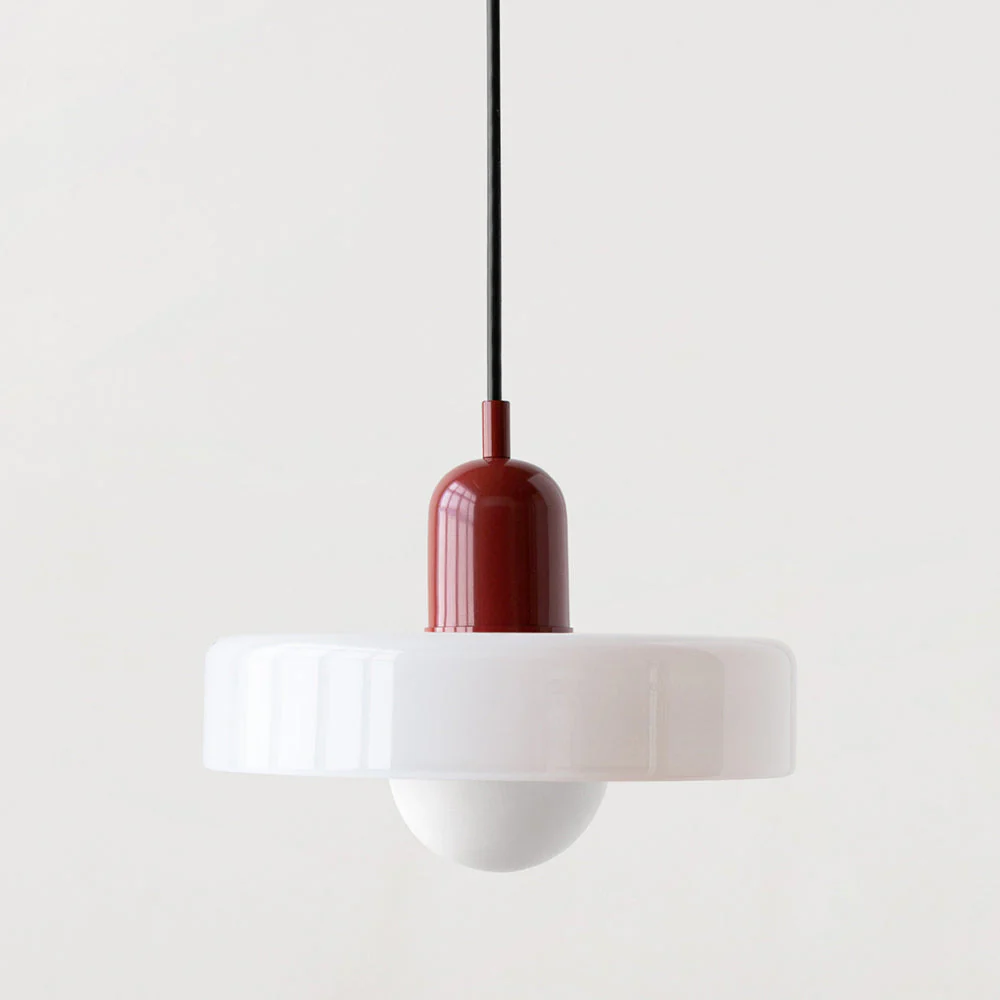
In 2026, brushed gold, matte copper, and satin black are overtaking chrome as the go-to metal finishes in lighting. Shades made from bubbled, frosted, or tinted glass act almost like sculpture, even when the lamp is off. Decorative wall lights with irregular shapes are often treated like art pieces in their own right. Valoralight reflects this direction in its range: this vintage-style DIY bedside lamp is a good example of lighting where form matters just as much as function.
Japandi and Scandinavian Style, Updated
Japandi — the blend of Japanese wabi-sabi and Scandinavian simplicity — remains strong in 2026, as does hygge-inspired styling. But there’s a new twist: clean shapes are now paired with tactile, natural materials. Woven bamboo, rattan, and seagrass shades work beautifully with wood details and warm, cozy interiors. Layered lighting in this style creates what many designers call islands of light — several softer light sources spread through the room instead of one harsh central fixture.
Lamps Are Now Part of a System
The biggest mindset shift in 2026 is that buyers increasingly see a lamp as part of a wider lighting scene, not just a standalone object. A pendant above the dining table, a wall light by the sofa, and an LED strip along a shelving unit all become part of one coordinated setup controlled with a single gesture, automation, or schedule. Valoralight has noticed that customers are asking less often about one lamp model in isolation and more often about how it fits into an existing control system. For more inspiration on layered lighting, see the guide how to create a cozy bedroom atmosphere with light.
Put it into practice:
- Ask yourself whether the lamp still looks appealing when it’s turned off; if not, choose one with a more distinctive shade or finish
- For Scandinavian interiors, look for fixtures with wood accents or shades made from natural materials
- For modern or eclectic spaces, statement glass and warm metals are a safe long-term choice in 2026
- Before buying, check whether the lamp can work with your current setup: dimmer, smart bulb, or app-based control
A Practical Example: From One Smart Bulb to a Full Lighting Setup
Imagine a homeowner with a roughly 60 m² apartment who wants to improve the atmosphere in an open-plan living and dining area. The central ceiling light provides plenty of even illumination, but in the evening the room feels more like an office than a place to relax.
Starting point: one central ceiling fixture, one 800 lm LED bulb, 4000 K, no dimmer.
Step 1: Replace the bulb with a Matter-over-Wi-Fi smart bulb with adjustable CCT (2200-6500 K). Cost: approx. 80-100 PLN. Immediate result: warm light in the evening, neutral light in the morning, and full phone control.
Step 2: Add a table lamp by the sofa with a warm 2700 K bulb. Cost: approx. 150-300 PLN for a lamp from Valoralight. Result: the first accent layer, and the room instantly feels less flat.
Step 3: Add a wall light or LED strip behind the TV for bias lighting. Cost: approx. 60-150 PLN for a smart Matter strip. Result: greater visual depth and less eye strain during evening viewing.
Outcome: three lighting layers, one Matter ecosystem, and control by voice or schedule. The investment can be spread over time, with no need to replace the whole system at once. This gradual approach — building from one bulb outward — is what Valoralight recommends to customers planning their first smart lighting upgrade at home.
Smart Lighting Benefits: What Do You Actually Gain?
The real benefits of smart mood lighting fall into three categories: everyday wellbeing, energy savings, and the visual value it adds to your interior. Before buying, it helps to understand the practical upside.
Lower Energy Use Through Automatic Dimming
The EU Energy Efficiency Directive 2023/1791 requires member states to deliver new annual energy savings of at least 1.5% of final energy consumption in 2026-2027. Smart lighting with occupancy sensors and automatic dimming is one of the tools that can help meet those targets, as confirmed by the European Commission. In practice, lighting systems that adapt to household routines can noticeably cut electricity use, especially compared with traditional bulbs running at full output with no controls.
Better Sleep and Everyday Wellbeing
Research linked to EN 12464-1 shows that aligning light color with circadian rhythms can improve sleep quality and support concentration during the day. Lamps with Human Centric Lighting (HCL) features do this automatically, adjusting color temperature by time of day without constant manual input. The benefit is especially noticeable for people working from home, where work and relaxation often happen in the same room.
Flexibility and Resale Appeal
In rental properties or homes being prepared for sale, smart lighting is increasingly seen as a selling point. The key is choosing Matter-certified devices, because they remain useful to the next owner regardless of whether they prefer Apple, Google, or Amazon. That kind of platform-neutral setup is a major advantage over proprietary systems.
Put it into practice:
- Measure real energy use before installing smart lighting; smart plugs with energy monitoring cost around 50-80 PLN
- Compare usage after a month; if the drop is smaller than expected, review your auto-off settings and occupancy sensors
- Start with rooms where lights are most often left on by mistake, such as hallways, bathrooms, or utility spaces
- Keep a record of the devices you install and the protocols they use — that list can add real value if you later sell the property
Key Takeaways
There are three big things to understand about smart lighting in 2026:
First, Matter with Thread 1.4 finally solves the ecosystem fragmentation problem. If you buy a Matter-certified lamp, you’re choosing a device that can work with the major smart home platforms now and in the future.
Second, circadian-friendly lighting has measurable effects on sleep and focus. The 2021 update to EN 12464-1 provides the scientific grounding, and smart CCT lamps make it easy to apply that knowledge automatically.
Third, a lamp in 2026 is both part of a control system and a decorative object. It should look good when it’s off and work effortlessly when it’s on. Valoralight builds its offering around that principle, combining strong design with practical compatibility so customers can build a smart lighting setup gradually without ending up with products that feel outdated too quickly.
Frequently Asked Questions
What is mood lighting, and how do you create it at home?
Mood lighting means using at least two or three independent layers of light in one room so you can adjust both brightness and color depending on the time of day and what you’re doing. To create it, you can start with your existing ceiling light and add one table lamp or wall light, with at least one source using a bulb that supports adjustable color temperature (CCT). In a living room, well-planned mood lighting can make the same space feel work-friendly by day and relaxing at night — without moving a single piece of furniture.
Do Matter smart lamps work without internet?
Matter was designed for local control, which means commands like on, dim, or change color can run inside your home network without relying on the cloud. In practice, most voice commands through Alexa, Siri, or Google Assistant still require internet access, but schedules, automations, and physical buttons can continue working locally even if your connection drops. That’s a major advantage in spaces where reliability matters, such as stairways or hallways.
How does Valoralight help you choose smart lamps for your interior?
Valoralight offers a carefully selected range of lighting fixtures, including decorative models designed to work well with smart bulbs and control systems. The Valoralight approach combines looks and function: first you choose a lamp that works as a design piece, then you pair it with the right smart bulb or dimmer. Valoralight also offers a 30-day return window, which makes it easier to test a lamp in your own home before making the final call.
Which protocol is best for your first smart lamp: Wi-Fi, Zigbee, or Thread?
Wi-Fi is the easiest place to start because it doesn’t require an additional hub; the bulb connects directly to your router and app. Thread with Matter offers lower power use and better stability in larger homes, but it does require a border router, which is often built into a smart speaker or hub. Zigbee is still cost-effective, but without a Matter bridge it’s usually limited to its own ecosystem. For most homes getting started with smart lighting, a Matter-over-Wi-Fi smart bulb is the quickest and most affordable way to begin without locking yourself into one brand.
Do smart lamps really lower electricity bills?
Smart LED lighting uses far less electricity than traditional incandescent bulbs, and features like automatic dimming and occupancy sensors reduce waste even further by preventing lights from staying on in empty rooms. Based on typical cost comparisons, with 8 hours of daily use a smart LED bulb (around 10 W) consumes roughly 6-7 times less energy than a traditional 60 W bulb. In a home with a dozen or more light points, the savings are often noticeable within the first month, and the investment in smart bulbs usually pays for itself within one to two years.
Summary
Mood lighting in 2026 is no longer just for tech enthusiasts. Matter with Thread 1.4 has made buying a smart lamp almost as straightforward as buying a standard bulb, while the comfort and wellbeing benefits are increasingly measurable. European energy regulations are helping drive the market forward, and the growing range of design-led fixtures means you no longer have to choose between style and smart functionality.
For anyone planning a lighting upgrade, a practical place to start is simple: one Matter smart bulb with adjustable CCT, one extra lamp to create a second lighting layer, and one Thread border router — often already sitting in the home as part of a smart speaker. From there, you can build gradually. You can explore a full range of design-led fixtures built for this kind of setup at valoralight.com, where each product combines solid craftsmanship with integration-ready design for the modern home.
Sources
- MarketsandMarkets · Marketsandmarkets
- IndexBox · Indexbox
- Data Wire Solutions · Datawiresolutions
- Komisja Europejska · Energy
- European Smart Lighting Market worth $3.06 billion by 2030 · MarketsandMarkets
- Matter & Thread Explained (2026): Smart Home Guide · Data Wire Solutions
- Energy Efficiency Directive · European Commission
- European Union Color Changing Table Lamp Market 2026 Analysis · IndexBox