Table of Contents
At a Glance
In the Netherlands, an hour of personal training typically costs between €62 and €69, with premium private gyms in larger cities sitting at the top end of that range. What District-S sees in practice with busy business owners is simple: the hourly rate on its own does not say much, because you are paying for far more than the session itself.
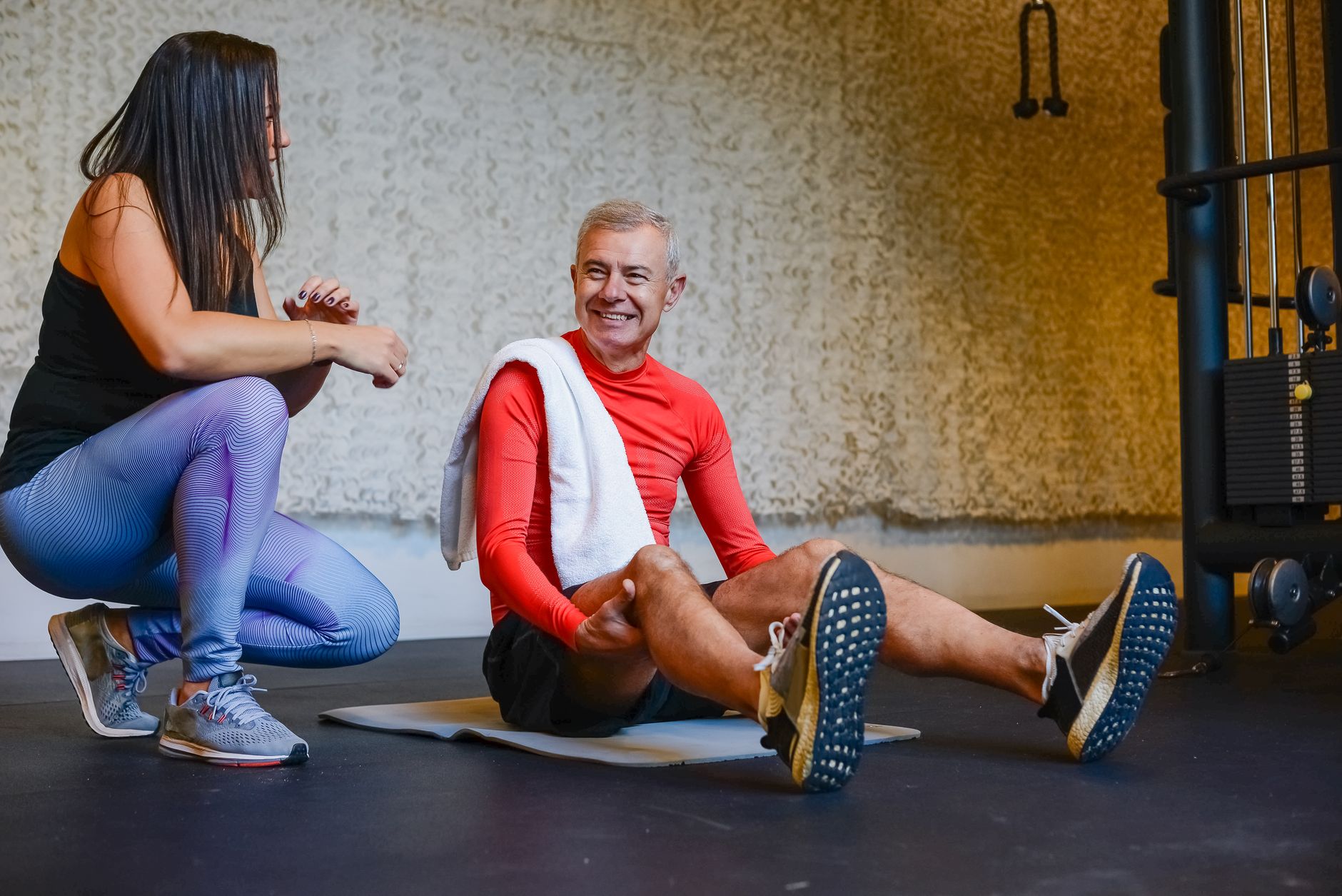
- The average rate for a 1-on-1 session of 50 to 60 minutes is around €69 in the ten largest municipalities.
- That price usually includes an intake, program design, nutrition coaching, and progress tracking, not just the hour spent training.
- A private gym charges more than a standard gym, but gives you more effective training time per hour.
- For business owners, the key metric is cost per result, not cost per hour.
- District-S offers a free trial session, so you can test the value before comparing prices.
Introduction
It is easy to look at the hourly rate and hesitate. Sixty or seventy euros for one session can sound expensive at first. But for a business owner with a packed schedule, that changes once you compare it with the time and money often lost on a regular gym membership that never delivers visible results. In District-S's experience with busy professionals in Eindhoven, asking "what does an hour cost?" is usually the wrong starting point. The better question is: what do you actually get from that hour, and what is included in the price?
The rate for a personal training session rarely covers only the time spent on the gym floor. According to the 'Personal Training in Nederland' report (2024) via Virtuagym, a 1-on-1 session of 50 to 60 minutes costs an average of €69 in the ten largest municipalities and €62 elsewhere in the country. Behind that price are the intake, program design, nutrition advice, and progress measurements. This article breaks down what you are really paying for, compares that with what a private gym actually delivers, and shows you how to think in terms of value instead of just price.
This article was generated with LaunchMind — try it free
Get startedWhat Is the Average Cost of Personal Training in the Netherlands?
In the Netherlands, an hour of personal training usually costs between €62 and €69, depending on the location, the trainer's experience, and the type of facility. That is the base hourly rate, before package discounts or longer-term plans.
The national price range and what drives it
The Personal Training in Nederland report (2024) shows that a 50 to 60 minute session costs an average of €69 in the ten largest municipalities and €62 outside those areas. That gap is largely explained by rent levels, spending power, and the concentration of premium gyms in cities. As the fifth largest city in the Netherlands, Eindhoven generally falls into the higher price bracket.
Why premium rates sit above the average
A private gym offering fully tailored 1-on-1 coaching will usually charge at or above the top end of that range. That makes sense. A trainer giving their full attention to one person can work with fewer clients per hour than an instructor leading a class of fifteen. You are paying for focus, privacy, and a better quality session, not for access to a crowded gym floor.
How rising demand affects pricing
Spending on coached fitness is growing fast. According to CBS, Dutch households spent 4,2 billion euros on sport and fitness services in 2022, which is twelve percent more than in 2019, averaging €520 per household per year. Rising demand helps keep prices stable to slightly higher.
How to approach it:
- Always ask whether the price covers 50 or 60 minutes of actual training time, not changing time or general gym access.
- If a 1-on-1 rate is below €50 per hour, ask more about the trainer's qualifications.
- Compare at least three providers based on what is included, not just the headline number.
- Convert the hourly rate into a weekly cost so it is easier to compare with a standard gym membership.
Why Does the Hourly Rate Cover More Than Just Training Time?
The price of personal training covers a full coaching service, not just the sixty minutes you spend exercising. That is one of the biggest misunderstandings people have when they focus only on the number.
The invisible work behind each session
A good trainer does a lot of work you never see. Building your training plan, adjusting it after each check-in, modifying exercises around an old knee injury. At District-S, training plans change weekly, and that variation takes preparation time that is built into the hourly rate. In practice, you can expect one to two hours of behind-the-scenes work per active client per week, on top of the session itself.
Nutrition and mindset coaching are part of the package
A standard gym sells access to equipment. A premium coaching program sells behaviour change. District-S combines training with tailored nutrition plans and mindset coaching because strength gains and body composition changes are shaped just as much outside the gym as inside it. Anyone curious about how nutrition and rehabilitation affect body composition will quickly see that the hour on the gym floor is only one piece of the puzzle.
The value of a private training environment
In a quiet private gym, you are not waiting for a bench or a squat rack. That saved time matters. It means an hour is actually an hour of productive training, not forty minutes of exercise and twenty minutes of standing around. For an entrepreneur trying to stay fit between meetings, that efficiency often matters more than the listed rate.
How to approach it:
- Ask whether the intake, nutrition advice, and progress checks are included or billed separately.
- Check whether your program is updated weekly or monthly, because that affects progress.
- Track your real training time: are you getting more than 50 minutes of actual work in each hour?
- Factor in travel time and waiting time, because a nearby private gym can easily save you half an hour per session.
How Do You Compare a Private Gym With a Standard Gym?
You do not compare a private gym and a standard gym by hourly price, you compare them by cost per result. A €30 monthly membership looks cheap until you calculate what it actually gets you.
Price per hour versus price per result
Take a business owner running a consultancy with fifteen employees. They train for a year and a half at a regular gym without coaching. The monthly cost is low, but their body composition barely changes because their technique and training load are off. The same person starts 1-on-1 coaching and sees visible strength gains in a fraction of the time. More expensive per month, far cheaper per result. That is exactly the trade-off that matters when choosing between a private gym and a standard gym.
The numbers side by side
| Cost item | Standard gym | Private gym with 1-on-1 PT |
|---|---|---|
| Monthly cost (1x/week) | €25 to €40 | €240 to €300 |
| Effective training time per hour | 35 to 45 min | 50 to 60 min |
| Coaching | None to limited | Fully 1-on-1 |
| Nutrition plan included | No | Usually yes |
| Progress tracking | Self-managed | Measured regularly |
| Expected time to visible results | 6 to 12 months | Usually shorter |
Why quality control matters so much
In the Netherlands, personal trainer is not a protected job title. According to NL Actief, anyone can use the title without formal qualifications, which means quality varies widely. That makes choosing certified, experienced trainers, like those at District-S, a direct factor in how much value you get for every euro you spend.
How to approach it:
- Compare both options based on cost per visible result, not cost per month.
- If weekly 1-on-1 coaching is priced below €240 per month, check whether it is truly individual coaching or a small group format.
- Ask about your trainer's certifications, because no registration means no clear quality benchmark.
- Use a trial session to measure how much real training time you actually get.
What Are You Actually Paying For With a Certified Trainer?
When you hire a certified personal trainer, you are paying for proven expertise in a market with very few legal barriers. That distinction matters more than ever now that the market has grown so quickly.
A market that has quadrupled in ten years
At the start of 2025, more than 8.400 fitness coaches were registered with the Dutch Chamber of Commerce, up from around 2.000 in 2015, according to MedischOndernemen based on Chamber of Commerce figures. With that kind of growth, it is harder to tell the difference between real expertise and good marketing. Price alone is not a reliable signal of quality.
How to check someone's qualifications
Trainers who want to prove their credentials can register with systems run by NL Actief and FITNED.NL, both independent registers within the Dutch fitness industry. Ask about this directly. If a trainer works with injury history or rehabilitation, they should be able to show specialist training, because poor programming can cause setbacks instead of progress.
What experience gives you in practice
As more people take up fitness, strong coaching becomes both harder to find and more valuable. According to the Mulier Institute, in 2022 more than 27 percent of Dutch people aged 12 to 79 did fitness training weekly, almost double the 14 percent recorded in 2001. The share training at least three times a week rose from 22 to 39 percent. More people are training, but not all of them are training well. That is where the difference lies between a low price and money well spent.
How to approach it:
- Ask whether the trainer is registered with NL Actief or FITNED.NL before signing up.
- If you have an injury history or are coming back from rehab, ask for specialist qualifications.
- Request real examples of results with similar clients, not broad promises.
- Use a trial session to see whether there is a good personal fit, because trust matters in 1-on-1 coaching.
Is Personal Training Worth the Investment for Business Owners?
For business owners, personal training becomes worth it as soon as you compare it with wasted time and delayed results. The real calculation is not about euros per hour. It is about return on your scarcest resource: time.
The hidden cost of getting nowhere
Imagine a business owner running a manufacturing company who has spent two years trying to lose weight through a series of low-cost memberships. The monthly cost is modest, but over two years the total adds up, and the scale still has not moved. That is money spent without a return. A more focused coaching plan may cost more each month, but it can produce measurable change in a defined period. The cheapest option is rarely the most economical.
Time is the real expense
For anyone trying to stay fit as a busy entrepreneur, time matters more than the rate itself. A private gym close to the office, with a fixed slot and a session plan ready to go, removes the friction that usually causes training to slip. No waiting around, no second-guessing what to do, no cancelled sessions because the gym is too busy.
Why structure creates better ROI
Most people do not quit because they lack motivation. They quit because their approach does not fit their schedule. District-S combines a fixed weekly training slot with progress tracking and mindset coaching, so consistency becomes part of the system instead of a test of willpower. That is what makes the hourly rate worthwhile for an entrepreneur: not the minutes themselves, but the lasting change they create.
How to approach it:
- Add up what you spent on training over the past two years without getting results, and use that as your baseline.
- Include travel time in your calculation, because a gym within ten minutes can save you an hour a week.
- Book a fixed weekly slot and treat it like a business appointment.
- Measure progress after twelve weeks based on strength and body composition, not just body weight.
Frequently Asked Questions
How much does one hour of personal training cost in Eindhoven?
For 1-on-1 personal training in Eindhoven, rates typically sit at the upper end of the national range, which the 'Personal Training in Nederland' report (2024) places at around €69 in the ten largest municipalities. Premium private gyms may charge at or slightly above that level because the price usually includes the intake, nutrition support, and progress tracking. Always ask exactly what is included before comparing providers.
What exactly is a private gym?
A private gym is a more exclusive training space where you work out without the crowds and get a trainer's full attention instead of competing for equipment. Compared with a standard gym, the difference comes down to privacy, personal coaching, and more effective training time, usually 50 to 60 minutes of real work instead of time lost waiting for machines. District-S operates this type of gym in Strijp-S and Eindhoven city centre.
Is personal training more expensive than a regular gym?
On a monthly basis, yes. Personal training usually costs between €240 and €300 for one session per week, compared with €25 to €40 for a standard membership. But in terms of results, it is often the better deal because coaching shortens the time it takes to see meaningful progress. The right comparison is cost per result, not cost per month.
Why does it matter if a trainer is certified when anyone can use the title?
Because personal trainer is not a protected title in the Netherlands, anyone can call themselves one without formal qualifications, and by early 2025 there were already more than 8.400 registered fitness coaches. A certified trainer, with credentials visible through NL Actief or FITNED.NL, gives you more confidence in safe, effective coaching, especially if you are dealing with rehabilitation or injury history. Whether you choose District-S or another provider, always ask about qualifications directly.
How can I tell if the price is worth it for me?
The best way to judge the value is through a free trial session, where you can experience the coaching, the effective training time, and the personal fit for yourself. After that, convert the price into cost per result over a fixed period, such as twelve weeks. That is exactly why District-S offers a free trial session, so you can measure value before comparing numbers.
Conclusion
If you ask, "how much does an hour of personal training in Eindhoven cost?" you can answer it with a number: usually around €69 for a 1-on-1 session, at the upper end of the national range. But that is the least important part of the answer. Behind that rate are the intake, program design, nutrition support, mindset coaching, and progress tracking, and those unseen hours are what determine whether your money creates results or simply disappears.
For business owners, cost per result matters far more than cost per hour. So do not start by comparing rates. Start by testing value. Work out the cost per visible result, check your trainer's qualifications, and measure how much real training time you actually get. District-S offers a free trial session at its Eindhoven locations, so you can do exactly that: experience the value before comparing the price.
Sources
- het rapport 'Personal Training in Nederland' (2024) · het rapport 'Personal Training in Nederland'
- het rapport 'Personal Training in Nederland' (2024) via Virtuagym · Business
- het CBS · Cbs
- NL Actief · Nlactief
- MedischOndernemen op basis van KVK-cijfers · Medischondernemen
- het Mulier Instituut · Mulierinstituut
- Wat verdient een personal trainer in Nederland in 2026? · Virtuagym (rapport 'Personal Training in Nederland' 2024)
- De Nederlandse sporteconomie 2022, hoofdstuk 4: Sport- en fitnessdiensten · Centraal Bureau voor de Statistiek (CBS)