Table of Contents
Quick Answer
A durable tactical jacket is defined by four measurable properties: abrasion-resistant fabric (nylon-cotton or Cordura construction rated to recognized standards), fully taped or welded seams, a PFAS-compliant DWR waterproof treatment, and an articulated fit that does not restrict mobility under load. Buyers who skip checking these criteria typically replace their jacket within one to two field seasons.
- Fabric: a 50/50 nylon-cotton blend achieves abrasion resistance of roughly 200,000 cycles under ISO 12947.2 testing, far outperforming standard poly-cotton
- Seams: fully taped seams are non-negotiable for sustained waterproof performance; partially taped seams fail at stress points within several months of hard use
- DWR: as of July 2023, EU regulations ban PFOA in protective clothing at concentrations above 25 µg/kg, pushing the industry toward safer fluorine-free alternatives
- Fit: articulated elbows and underarm gussets add roughly 15 to 25 percent more range of motion compared to straight-cut shells
- Market growth: the tactical and outdoor clothing segment is expected to expand by roughly USD 3 billion between 2026 and 2030, reflecting sustained demand for high-performance outerwear
Why Most Tactical Jackets Fail Faster Than They Should
A law enforcement officer, a seasoned hunter, or a military veteran buying a replacement jacket all share the same frustration: a jacket that looked right on the product page falls apart at the seams, saturates in moderate rain, or restricts shoulder movement precisely when it matters. The failure is rarely dramatic. It is usually a peeling DWR coating after three washes, a seam split under a loaded vest, or a back panel that rides up during a prone position.
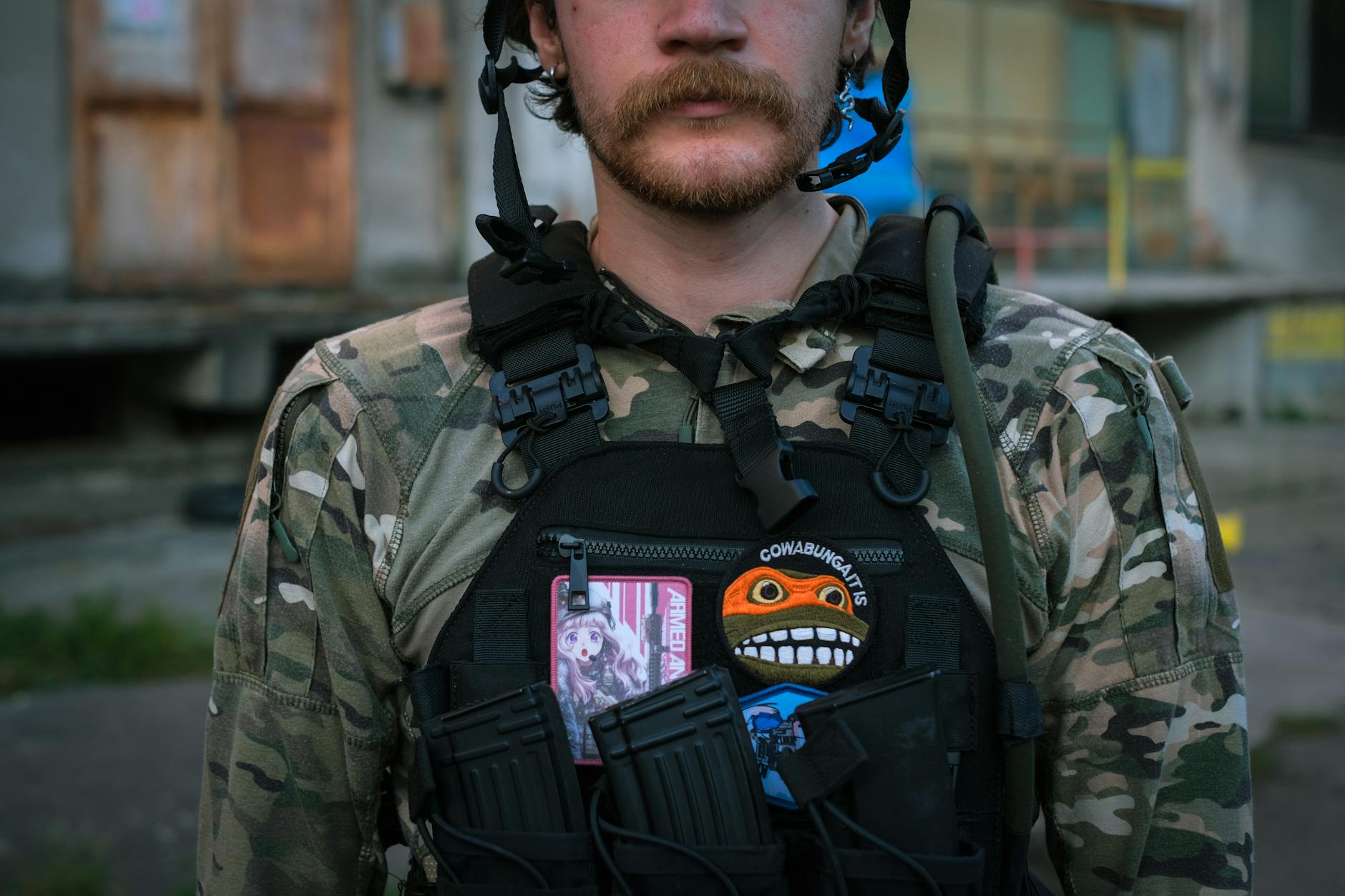
The tactical clothing market has grown significantly. According to Technavio's Tactical And Outdoor Clothing Market analysis, the segment is projected to grow by USD 3.03 billion between 2026 and 2030 at a CAGR of 6.6%, which means more products, more marketing claims, and more noise to cut through. The pattern True Tactical observes repeatedly among its customers is that buyers focus on external features, such as pocket count or camouflage pattern, while overlooking the three structural factors that actually determine longevity: fabric composition, seam architecture, and waterproof chemistry.
Understanding those three factors is the only reliable way to spend money once instead of twice. The sections below address each one in full, plus the fit variables that most jacket reviews never measure.
This article was generated with LaunchMind — try it free
Get startedDoes Fabric Composition Actually Determine How Long a Jacket Lasts?
Fabric composition is the single highest-leverage decision in tactical jacket durability because it determines abrasion resistance, moisture behavior, and how well the shell accepts a DWR coating.

The Case for Nylon-Cotton Blends
The most field-validated fabric ratio for hard-use tactical clothing is the 50/50 nylon-cotton blend. According to Deekon Textile's analysis of military combat uniform fabrics, "the 50/50 nylon-cotton blend is the 'golden ratio' for balancing durability and comfort," achieving flat abrasion resistance of at least 200,000 cycles under ISO 12947.2:2016 testing. By comparison, a standard 65/35 poly-cotton blend typically rates at around 50,000 cycles under the same test, roughly one-quarter the resistance. For a jacket worn against brush, pack straps, or vehicle door frames, that difference translates directly into service life.
Cordura and High-Denier Nylon for Shell Reinforcement
For panels exposed to the highest friction, such as elbows, shoulders, and cuffs, Cordura nylon construction is the benchmark. Deekon Textile's review of Cordura fabric standards notes that the US military standard MIL-DTL-32439 specifies four denier grades from 330D to 1000D, with 1000D fabric required to withstand at least 700 Taber abrasion test cycles under ASTM D3384. A jacket that uses 500D or 1000D Cordura on contact zones and a softer nylon-cotton blend through the body achieves both protection and wearable comfort without excessive weight.
What to Avoid
Pure polyester shells are common at lower price points. They are lighter and cheaper to produce but absorb and hold surface moisture more readily, degrade DWR coatings faster, and typically score below 80,000 abrasion cycles under ISO testing. Cotton canvas, while durable against abrasion, adds water weight and dries slowly, which makes it a poor outer shell choice for multi-day field use.
Put this into practice:
- Check the product spec for fabric composition. Look for a nylon-cotton blend of at least 50/50 or a nylon ripstop/Cordura designation.
- If abrasion resistance data is available, target 150,000+ cycles under ISO 12947.2 for primary shell panels.
- Inspect the elbow and shoulder areas specifically: these should use a heavier denier or reinforced weave than the torso.
- Avoid jackets that only list "polyester shell" without specifying denier, weave type, or blend ratio.
Are All Waterproof Ratings the Same?
Waterproof performance in tactical jackets is measured by two distinct systems: the Hydrostatic Head (HH) rating for membrane resistance, and the DWR coating rating for surface repellency. Both must work together. A jacket with a 10,000mm HH membrane but a degraded DWR coating will wet out on the surface, dramatically reducing breathability and effective warmth.
Reading Waterproof and Breathability Ratings
Some purpose-built tactical jackets feature a 5K/10K waterproof and breathable rating combined with a DWR finish for moisture protection. A 5K rating means the fabric can withstand 5,000mm of water pressure before leaking, sufficient for moderate sustained rain. A 10K or 20K rating is appropriate for heavy rain, sustained wet conditions, or high-humidity environments. The breathability figure, expressed as a moisture vapor transmission rate in grams per square meter per 24 hours, matters equally for active users: a jacket rated at 10,000g/m²/24h or above is generally considered adequate for high-output activities.
The DWR Chemistry Shift Buyers Need to Know
The DWR coating is where tactical jacket chemistry has changed most significantly. EU regulation requires that PFOA and related substances not be used in protective clothing textiles at concentrations equal to or above 25 µg/kg, effective July 4, 2023, forcing manufacturers to adopt PFAS-free alternatives. In the US, new regulations in several states have mandated a shift away from PFAS in outdoor apparel, most of which went into effect in 2025. PFAS-free alternatives now include hydrocarbon-based DWRs, fluorine-free nanocoatings, and polymer membrane systems. Hydrocarbon-based DWRs can mimic the performance of PFAS with biodegradable potential; hyperbranched polymers create a multi-layered barrier against moisture; and fluorine-free nanocoatings enhance fabric durability while maintaining breathability.
For buyers, this means the absence of PFAS chemistry is no longer a compromise: it is becoming the standard. Checking that a jacket explicitly states fluorine-free or PFAS-free DWR is now part of due diligence, both for environmental reasons and because PFAS coatings face increasing regulatory restrictions across multiple US states.
Seam Sealing: The Detail Most Product Listings Hide
Even the best fabric can fail if the seams are not properly sealed. Taped seams prevent water from seeping through the stitching, ensuring that a jacket remains waterproof. Fully taped seams cover every stitch line; critically taped seams cover only shoulder and side seams. For sustained outdoor or operational use, full taping is the only adequate specification. Critically taped jackets are appropriate for urban carry or light rain but will leak at underarm seams and pocket entry points during sustained exposure.
Put this into practice:
- Confirm the HH rating: 5K minimum for everyday field use, 10K or above for wet-climate or multi-day missions.
- Look for an explicit "fully taped" or "fully sealed seams" designation, not just "seam sealed" which may indicate critical taping only.
- Verify the DWR is labeled PFAS-free or fluorine-free, especially for any jacket purchased after mid-2023.
- After purchase, re-treat DWR coating every 10 to 15 washes using a PFAS-free aftercare product to restore water-beading performance.
Jacket Construction Standards: What Certifications Actually Mean
Construction standards for protective clothing provide an independent benchmark for performance claims, separating verified specifications from marketing language.
ISO 13688 as the Baseline
According to SATRA Technology, a UK testing and standards body, ISO 13688:2013 is the foundational international standard for protective clothing, covering "general requirements for all protective clothing requiring CE marking in Europe" and specifying ergonomics, innocuousness, size designation, ageing, compatibility, and marking. While US-sold tactical clothing is not required to carry CE marking, ISO 13688 compliance is a reliable signal that a manufacturer has engineered the garment against international performance criteria rather than self-imposed thresholds.
What the Law Enforcement and Military Market Signals
The global law enforcement and military clothing market was valued at USD 2.25 billion in 2024 and is projected to reach USD 3.1 billion by 2030, growing at a CAGR of approximately 5.6%. This growth is driven by military modernization programs that demand tighter fabric and construction specifications. Products that perform at that specification level flow into the civilian and EDC market, which is where most True Tactical customers operate. A jacket built to military-adjacent standards will typically outlast a commercial equivalent by a meaningful margin across hard-use scenarios.
Zipper and Hardware Quality
The structural integrity of a tactical jacket is only as good as its hardware. YKK zippers, particularly the AquaGuard or Vislon series, are the field-tested standard. Waterproof taped seams combined with YKK AquaGuard Vislon zippers provide the foundation for high levels of weather resistance in demanding conditions. A jacket using off-brand sliders on chest pockets or chest entry points will show hardware failure before the shell fabric degrades, particularly in cold temperatures where lower-grade plastics become brittle.
Put this into practice:
- If the jacket is marketed for law enforcement or field use, check whether the manufacturer references ISO 13688 or MIL-SPEC fabric compliance in the product documentation.
- Inspect zipper branding: YKK or equivalent rated zippers should appear on all main entry points and critical pockets.
- Verify that pocket openings are either internally sealed or rain-protected by an overhang baffles, not simply covered by a flap.
- Cross-reference the manufacturer's published fabric weight (in g/m²) against typical field-use benchmarks: outershells below 150 g/m² are generally too light for hard-use environments.
Fit Architecture: The Performance Variable No Spec Sheet Captures
Fit architecture refers to the three-dimensional cut of a jacket: how it accommodates the body in motion, under load, and across a wide range of user frames. A technically excellent fabric sewn in a straight-cut pattern will still fail the user the moment they raise a rifle, climb a fence, or shoulder a pack.
Articulation Points and Panel Construction
Tactical jacket wearers need to retain a full range of motion to effectively hike, run, climb, or work. Articulated elbows add a pre-bent seam that tracks the natural arm angle under load, eliminating the resistance a straight sleeve creates. Underarm gussets, typically triangular or diamond-shaped inserts of stretch fabric, allow full shoulder rotation without pulling the hem up. In practice, both features together typically add a meaningful improvement in overhead reach compared to a straight-cut shell of identical size. For men wearing tactical jackets over a plate carrier or vest, a slightly extended rear hem and side-zip entry points for equipment access become equally important.
Size Range and Proportional Fit
The majority of tactical jacket complaints True Tactical observes among its customer base relate not to fabric failure but to fit failure: sleeves that are too short when the torso fits, or a chest that restricts shoulder rotation because the jacket is sized for a slimmer build. True Tactical offers sizes from M through 3XL, specifically because the customer base includes a wide range of body types, and a jacket that fits poorly under load is functionally no better than no jacket at all.
For reference, a rack-focused comparison of common tactical jacket construction types:
| Feature | Softshell | Hardshell | Insulated Shell |
|---|---|---|---|
| Abrasion resistance | 80,000-120,000 cycles | 150,000-200,000+ cycles | 60,000-100,000 cycles |
| Waterproof rating | 5,000-10,000mm HH | 10,000-20,000mm HH | 5,000-10,000mm HH |
| Breathability (g/m²/24h) | 10,000-20,000 | 10,000-25,000 | 5,000-10,000 |
| Packability | Moderate | High | Low to moderate |
| Layering compatibility | Mid-layer or outer | Outer only | Outer, cold conditions |
| Best use scenario | Variable conditions | Sustained rain/wind | Static cold exposure |
Put this into practice:
- Try the jacket with your typical load. If you carry a daypack, put the pack on and check that the hem stays down and the shoulders do not bind.
- Confirm the jacket has articulated elbows and check for underarm gussets specifically, not just "stretch panels" in the back.
- For layered wear, size up by one if you regularly layer over a fleece mid-layer or vest.
- Check the size chart for sleeve length against your arm measurement, not just chest circumference.
Emerging Trends Shaping Tactical Clothing in 2025 and Beyond
Trend 1: PFAS-Free DWR as the New Default Regulatory pressure from the EU and multiple US states is forcing a full category shift. New regulations in several states have mandated a shift away from PFAS in outdoor apparel, most of which go into effect in 2025. Buyers can now expect PFAS-free DWR as standard across most reputable tactical jacket lines, with no meaningful performance trade-off based on current field testing.
Trend 2: Hybrid Shell Construction Manufacturers are increasingly combining face fabrics: heavier Cordura panels at friction zones with lighter, more breathable ripstop through the torso. Multi-fabric hybrid construction uses durable taffeta on high-wear areas, dobby fabric on low-wear areas, and grid fleece side panels for breathability, a pattern that is spreading from premium military suppliers into the broader tactical clothing market.
Trend 3: Market Consolidation Around Civilian EDC Buyers The tactical and outdoor clothing market is expanding at a CAGR of around 6.6% through 2030, and a growing share of that demand comes from civilian EDC and preparedness-minded buyers, not exclusively law enforcement or military customers. Jacket designs are adapting accordingly, with lower-profile aesthetics and cleaner pocket layouts that function equally well in urban and field environments.
Trend 4: Synthetic Insulation Over Down in Tactical Builds Synthetic insulation combines the benefits of warmth retention with enhanced water resistance and performs well in a variety of conditions, particularly in cold and wet environments. For tactical users who cannot guarantee their jacket stays dry, synthetic fill's ability to insulate even when damp makes it consistently preferable to down across most field use cases.
Trend 5: Packability as a Tactical Requirement Lightweight shells that compress into an internal pocket or stuff sack are increasingly specified in both military and civilian EDC contexts. A jacket that adds less than 500g to a load and packs to roughly the volume of a water bottle provides genuine versatility across rapid temperature changes, a scenario True Tactical's customers encounter regularly during fall and spring field activities.
For buyers looking to build a complete kit around a durable jacket, the men's tactical wear kit guide covers how each clothing layer connects to function. And for context on how jackets interact with the rest of the load, the field-tested gear buyer's guide addresses durability across the full kit.
FAQ
What fabric is most durable for a tactical jacket?
Nylon-cotton blends at a 50/50 ratio offer the strongest balance of abrasion resistance and comfort for hard-use tactical jackets. According to ISO 12947.2 testing, this blend typically achieves approximately 200,000 abrasion cycles, compared to around 50,000 cycles for standard poly-cotton. For highest-wear zones like elbows and shoulders, look for Cordura nylon reinforcement rated to 500D or 1000D denier.
What does a waterproof rating actually mean on a tactical jacket?
Waterproof ratings, expressed as Hydrostatic Head in millimeters, measure how much water pressure a fabric can resist before leaking. A 5,000mm rating handles moderate sustained rain; 10,000mm or above is appropriate for field use in heavy rain or sustained wet environments. The DWR surface coating must be maintained separately, as even a 20K membrane will feel damp if the outer coating has degraded from washing.
Are PFAS-free DWR coatings as effective as traditional fluorinated treatments?
PFAS-free DWR alternatives, including hydrocarbon-based coatings and fluorine-free nanocoatings, now perform comparably to earlier PFAS-based treatments in most field conditions. Independent testing cited by environmental review bodies has found that fluorine-free coatings keep wearers just as dry after several washing cycles. EU regulations have prohibited PFOA in protective clothing above 25 µg/kg since July 2023, making PFAS-free the regulatory direction across both European and US markets.
How does True Tactical select the tactical jackets in its catalog?
True Tactical's curation approach focuses on jackets that meet documented fabric standards, including nylon-based shell construction and verified waterproof ratings, and that cover a full size range from M to 3XL. The catalog prioritizes field-tested designs that function as part of a layered system, not standalone fashion items. Free shipping across the USA and a 30-day return policy allow customers to verify fit under real-load conditions before committing. You can review the current jacket selection at True Tactical's outerwear catalog.
What is the difference between a softshell and a hardshell tactical jacket?
Softshell jackets use a stretch-woven face fabric that offers breathability and moderate weather resistance, typically rated between 5,000 and 10,000mm HH, making them well-suited for variable weather and high-activity use. Hardshells use a stiffer laminated membrane, often rated 10,000mm HH or above, and provide superior sustained waterproofing at the cost of some breathability. For most EDC and hunting applications, a softshell performs better in mixed conditions; hardshells are preferred for sustained rain or static cold-weather exposure.
Conclusion
A durable tactical jacket is not defined by its feature list or its price point. It is defined by four verifiable properties: a high-cycle abrasion-resistant shell fabric, fully taped seams, a current-generation PFAS-compliant DWR treatment, and a fit architecture that does not fight the body under load. Each of these can be checked before purchase using publicly available standards and manufacturer specifications.
The pattern that emerges from how True Tactical approaches its jacket selection is consistent: buyers who ask the right technical questions before purchasing replace their jacket far less often than those who shop on aesthetics alone. The combination of field-tested construction standards, broad sizing (M through 3XL), free US shipping, and a 30-day return window means the decision can be made with real-world confidence rather than catalog optimism.
For those building a complete field kit, the tactical pants selection guide covers the same structural criteria applied to lower-body gear, ensuring the full kit performs as a system rather than a collection of individual purchases.
Sources
- Textile
- Technavio's Tactical And Outdoor Clothing Market analysis · Technavio
- Deekon Textile's analysis of military combat uniform fabrics · Deekontextile
- SATRA Technology, a UK testing and standards body · Satra
- EN ISO 13688: 2013 - Protective Clothing General Requirements · SATRA Technology
- How to Choose the Best Military Combat Uniform Fabric? · Deekon Textile
- Why Cordura Fabric Is the Top Choice for Tactical Bags? · Deekon Textile
- Law Enforcement And Military Clothing Market Report, 2030 · Grand View Research