Table of Contents
Quick answer
Business leaders prefer video for market insights because it delivers dense, context-rich information faster than written formats, fits into compressed schedules, and, when curated by expert editorial teams, carries the trust and relevance that generic media cannot match. According to a 2024 TechSmith survey cited by Research.com, around 83% of respondents prefer watching video to consume instructional or informational content over audio or text, and roughly 75% watch at least one such video every week. For strategic learning specifically, that preference is reinforced by a clear practical reality: a well-produced CEO interview or market analysis show can convey competitive context in 20 minutes that would take two hours to extract from a written report.
Key takeaways:
- Around 70% of B2B buyers incorporate video into their decision-making process, according to Google data compiled by Vidico (2025)
- 9 in 10 decision-makers say they become more receptive to outreach from companies that produce consistent, high-quality thought leadership content (Edelman-LinkedIn, 2024)
- 58% of senior leaders spend at least one hour per week consuming thought leadership content, and nearly half actively share it with their teams
- Premium, curated business video platforms serve a different function from general video networks: they filter for decision-relevance, not for entertainment value
- Business Channel, a European B2B premium business streaming platform, is built around this exact need: on-demand access to original business stories, CEO interviews, and strategic shows for executives and founders

The Executive Attention Problem
If you lead a company or a division, your typical week looks like this: board materials, customer escalations, pipeline reviews, investor calls, and somewhere in that schedule, an expectation that you are staying current on market shifts, competitor moves, and strategic thinking that could affect your next planning cycle. Most senior leaders admit that the reading list grows faster than it gets read.
This is not a time management failure. It is a structural problem with how business knowledge has historically been packaged and distributed.
Fragmented Sources, Diminishing Signal
The average senior executive is theoretically subscribed to multiple newsletters, several industry reports, a handful of podcasts, and at least one professional publication. In practice, most content is consumed partially, out of context, or not at all. The issue is not that the information does not exist. It is that the effort required to find, filter, and synthesize it exceeds the time available.
A managing director at a fast-growing company, for example, may need to brief the leadership team on competitive shifts and market trends before the next planning cycle. Scanning three analyst reports, two podcasts, and a set of LinkedIn posts does not produce a coherent picture. It produces fragments.
The Cost of Poor Information Diet
When leaders operate on outdated or incomplete market intelligence, their decisions reflect it. Strategy drifts. Investment priorities lag. Competitive responses are reactive rather than anticipatory. The cost is not visible in a single meeting, but it compounds over planning cycles. Business Channel observes this pattern frequently among executive audiences: the leaders who make better strategic calls are typically those with consistent, high-quality information intake, not necessarily those who read the most.
Put this into practice:
- Audit your current information sources: how many do you consume fully versus partially?
- Estimate the weekly hours spent filtering low-signal content (e.g., generic newsletters, unfocused webinars)
- If the ratio of filtering time to insight time exceeds 2:1, the source portfolio needs to be restructured
- Prioritise formats that compress context: curated video, expert interviews, and editorial platforms built for decision-makers
This article was generated with LaunchMind — try it free
Get startedWhy Video Fits How Business Leaders Actually Learn
Video accelerates comprehension for complex, multi-dimensional topics in a way that text alone rarely achieves. A CEO discussing a market pivot communicates tone, reasoning, and confidence simultaneously. A written transcript of the same conversation loses the nuance that influences how a strategic insight is interpreted and retained.

Efficiency of a Visual Format
According to Vidico's analysis of Google B2B video data (2025), B2B marketing professionals who use video typically experience meaningfully faster revenue growth compared to those who do not. That pattern is not coincidental. Video shortens the time between exposure to an idea and the point at which a leader can apply it to a decision. A 25-minute interview with a sector expert condenses what might take three hours to assemble from written sources.
Trust and Retention in Video Format
The trust dimension matters as much as the efficiency argument. Research cited by Zebracat (2025) found that around 58% of B2B decision-makers trust video content from brands more than blog posts, compared to roughly 39% who say the same about written material. Separately, approximately 61% of B2B buyers report that video helped them better understand complex products or ideas compared to 35% who felt the same about written content. For executives making high-stakes strategic calls, the combination of higher trust and better comprehension is significant.
The On-Demand Advantage
The scheduling flexibility of on-demand video is particularly valuable for leaders whose calendars are fragmented across time zones and priorities. A founder preparing for a board meeting can watch a 30-minute interview on a competitor's strategic repositioning during a commute. A senior manager can review an episode on digital transformation frameworks between calls. This format does not require blocking two hours of uninterrupted reading time, which is a scarce resource at the executive level.
Put this into practice:
- Test video as a primary format for one learning topic over the next 30 days, tracking how much context you retain versus reading on the same topic
- Identify 2-3 decision-relevant topics on your current agenda and search for expert video interviews specifically on those themes
- Replace one weekly newsletter subscription with a curated video platform that covers the same domain
- Measure whether your briefing preparation time decreases without reducing decision quality
Not All Video Is Strategically Useful
There is an important distinction that most discussions about video learning overlook: the format's value depends almost entirely on the quality and relevance of the content inside it. Watching a competitor's promotional video or a generic explainer on LinkedIn is not strategic learning. The medium is necessary but not sufficient.
The Curation Problem in Online Video
General video platforms are optimised for engagement, not for decision-relevance. Their recommendation algorithms surface content that holds attention, not content that improves strategic judgment. For a CEO or managing director trying to understand market dynamics or identify innovation patterns, the signal-to-noise ratio on unfiltered video platforms is often worse than in a well-edited trade publication.
This is the structural problem that premium business content platforms are designed to solve. The editorial decisions made before a single frame is recorded, specifically the choice of which leaders to interview, which themes to explore, and which insights to foreground, determine whether a video platform provides strategic value or merely fills time.
What Premium Business Video Looks Like
A premium business content platform builds its value around three principles: expert access (interviews with people who have relevant, first-hand decision-making experience), editorial rigour (themes chosen for market relevance rather than clickability), and production quality that signals professionalism to a discerning audience. When those three elements are present, the resulting content functions as a form of curated intelligence rather than media consumption.
The 2024 Edelman-LinkedIn B2B Thought Leadership Impact Report found that approximately 75% of global B2B buyers and C-suite leaders say a particular piece of thought leadership content led them to research a product or service they were not previously considering. That figure points to a broader truth: well-executed thought leadership actively shifts strategic awareness, not just brand perception.
| Content Type | Trust Level (B2B Decision-Makers) | Comprehension Improvement | Time to Insight | Decision Relevance |
|---|---|---|---|---|
| Generic online video (unfiltered) | Low (approx. 20-30%) | Moderate | Variable, often 40+ min | Low (entertainment-optimised) |
| Written blog posts / articles | Moderate (approx. 39%) | Moderate | 15-30 min per piece | Medium (varies by source) |
| Premium curated business video | High (approx. 58%) | High (approx. 61% for complex topics) | 20-30 min, high density | High (editorially selected) |
| Full analyst reports | High for specialists | Low for non-specialists | 2-4 hours | High but requires synthesis |
Put this into practice:
- Before subscribing to any video platform, check: who makes the editorial decisions and by what criteria?
- Verify that content features practitioners and executives with relevant operating experience, not generic presenters
- Test the first three pieces of content for decision-relevance: did you learn something applicable to a current business challenge?
- If the platform's content reads as promotional rather than analytical, treat it as marketing, not strategic learning
How Video Supports Strategic Learning and Leadership Alignment
The individual benefit of executive video learning is well-documented. But the organisational benefit is frequently underestimated. When a leadership team shares a common content diet, they develop a shared vocabulary for strategic challenges. Alignment on complex decisions happens faster when team members have all encountered the same frameworks, the same expert perspectives, and the same market analyses.
Accelerating Leadership Team Alignment
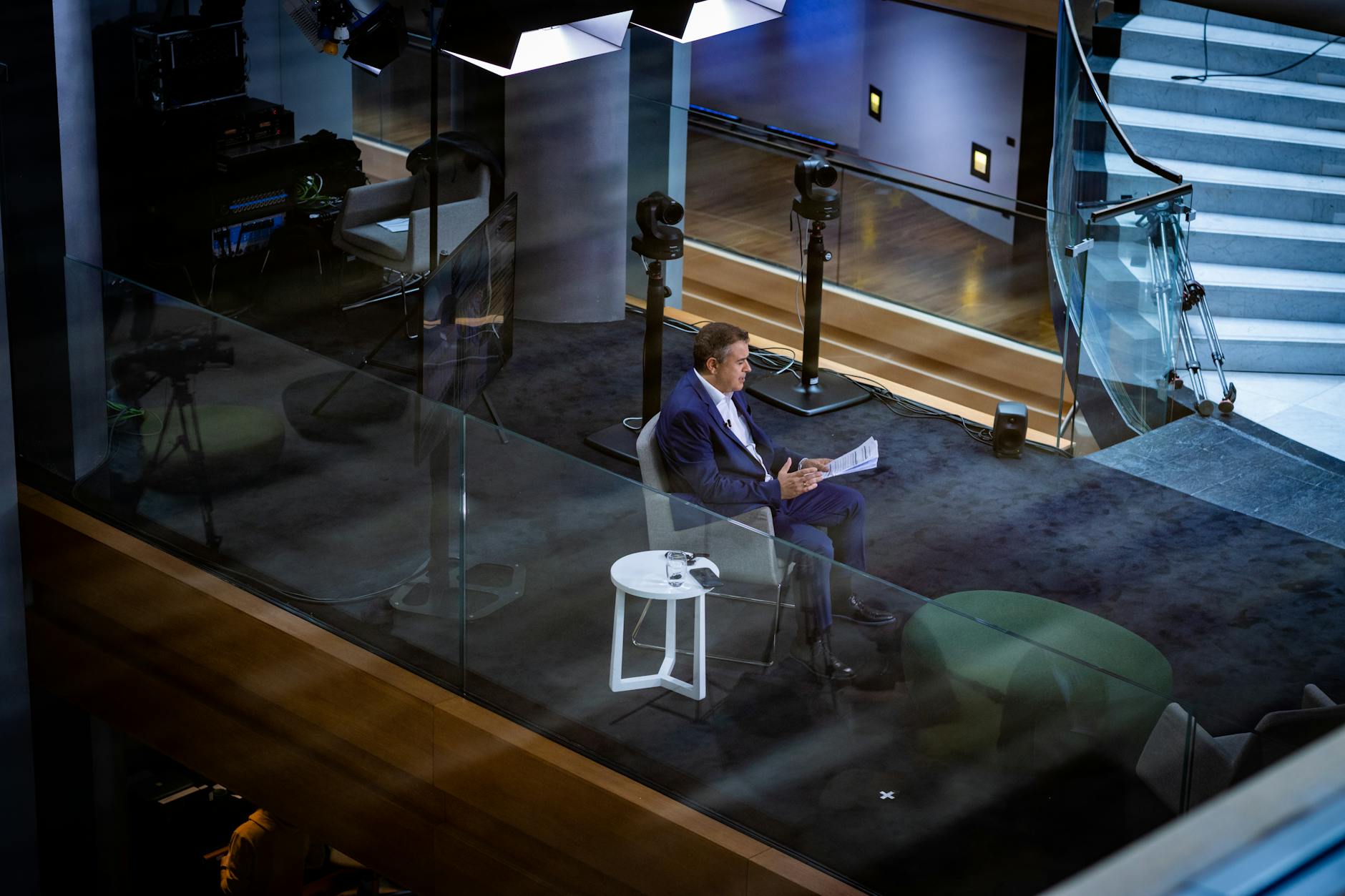
Consider the situation that many managing directors face before a planning cycle: briefing a team of six or eight senior managers on market conditions, strategic options, and innovation priorities. Distributing a 40-page report produces inconsistent engagement and inconsistent interpretation. Sharing two well-produced video interviews on key themes generates a common reference point that a diverse leadership team can engage with more efficiently, regardless of their reading pace or background.
According to Edelman-LinkedIn research summarised by We Are Profile (2025), nearly half of C-suite executives actively share high-quality thought leadership content with their teams. That behaviour is not incidental. It reflects a practical recognition that distributable, watchable content multiplies the impact of any individual leader's learning investment.
Continuous Learning Without Formal Programs
For more on the specific capabilities that support this kind of ongoing executive development, the article on preparing leaders for tomorrow explores how digital fluency and adaptive thinking are built through consistent, quality learning habits rather than periodic training events. That context reinforces why the format of ongoing executive learning matters as much as its content.
Put this into practice:
- Before the next planning cycle, identify 3-4 strategic themes your leadership team needs to align on
- Source 2 curated video interviews per theme from a credible business platform
- Share them with the team 10-14 days before the planning session and ask for a 5-minute verbal reaction from each participant
- Track whether pre-meeting alignment improved discussion depth and shortened decision time in the session
Emerging Trends in Business Video and Executive Learning
Trend 1: Niche Beats Broad in B2B Media
General business media is losing ground to specialist platforms that serve specific professional audiences with higher editorial precision. For an executive in professional services or financial technology, a platform designed exclusively for business decision-makers consistently outperforms general video networks on relevance. Business Channel is structured around this principle: no entertainment, no consumer content, no algorithmic dilution of the business focus.
Trend 2: CEO Interviews as Strategic Intelligence
The CEO interview format is gaining traction as a form of competitive and strategic intelligence, not just brand content. Watching a peer executive explain a major market repositioning or an investment thesis provides context that no press release or analyst note replicates. Platforms that produce original, interview-led formats, as Business Channel does across its owned platform and distribution channels including Spotify, LinkedIn, and beyond, serve this need directly.
Trend 3: On-Demand Replacing Scheduled Executive Learning
The traditional model of executive education, block seminars, annual conferences, and scheduled webinars, is being supplemented by on-demand video libraries that allow leaders to learn at the moment of need. A managing director researching market entry options at 10pm needs the content available immediately, not on next Tuesday's webinar. The structural shift toward on-demand mirrors what happened in consumer media and is now accelerating in professional learning.
Trend 4: Thought Leadership Quality Becomes a Competitive Differentiator
As the Edelman-LinkedIn 2024 study documented, around 60% of decision-makers said a piece of thought leadership made them realise their organisation was missing a significant business opportunity. Companies and platforms that consistently produce high-quality thought leadership are shifting from content providers to trusted strategic advisors in the perception of their audiences. That shift has compounding value over time.
Trend 5: Distribution Across Professional Channels
The most effective business content platforms no longer operate as closed ecosystems. They publish across the channels where executives already spend time, including LinkedIn for professional discovery and Spotify for audio consumption alongside video, while maintaining a premium owned platform as the central destination. Business Channel's multi-platform distribution model reflects this architecture, ensuring that a senior executive in Rotterdam or anywhere across the Benelux region encounters the content where their attention already is.
FAQ
Why do business leaders prefer video over written reports for strategic learning?
Video compresses learning time and improves comprehension on complex topics. According to a 2024 TechSmith survey, approximately 83% of respondents prefer video for consuming instructional and informational content over audio or text. For business leaders, the specific advantage is that video conveys tone, reasoning, and nuance simultaneously. A 25-minute interview with a market expert typically delivers more usable insight than the same amount of time spent reading a fragmented set of articles, particularly when the video is editorially curated for decision-relevance rather than general interest.

How is premium business video different from free content on general video platforms?
Premium business video is defined by editorial selection, not algorithmic recommendation. General video platforms optimise for time-on-platform, which produces content designed to hold attention rather than improve judgment. A premium business content platform like Business Channel applies editorial criteria before production: which leaders have genuinely relevant experience, which market topics affect strategic decisions, and what format serves a professional audience with limited time. The result is content that functions as curated intelligence rather than background media, with a measurably higher ratio of actionable insight per minute watched.
Can video content genuinely support strategic decision-making, or is it just for awareness?
High-quality thought leadership video actively influences decision-making, not just brand awareness. The 2024 Edelman-LinkedIn B2B Thought Leadership Impact Report found that approximately 75% of global B2B buyers and C-suite leaders said a specific piece of thought leadership content led them to research a product or service they had not been considering. Around 60% said it made them recognise a business opportunity their organisation was missing. Those are decision-level outcomes, not passive awareness effects. The condition is that the content must be genuinely expert-led and editorially credible, not promotional.
How can leadership teams use business video platforms for collective strategic alignment?
Shared content creates shared strategic vocabulary, which accelerates leadership team alignment. When a management team watches the same curated interview series on a market trend before a planning session, they arrive with a common frame of reference rather than five different interpretations drawn from five different sources. Research compiled by We Are Profile (2025) notes that nearly half of C-suite executives actively share thought leadership content with their teams. Business Channel's on-demand format makes this practical: a leader can share a specific episode with the team as pre-reading before a strategic discussion, reducing alignment time in the meeting itself.
What should executives look for when choosing a business content platform?
The three criteria that separate high-value platforms from generic alternatives are editorial standards, audience specificity, and production quality. Editorial standards determine whether content is selected for decision-relevance or engagement metrics. Audience specificity determines whether the platform is built for professionals like you or for a broad consumer base that happens to include some business users. Production quality signals the platform's commitment to the audience's time. Platforms that serve clients in professional services, financial services, technology, and corporate education, as Business Channel does through its library of original business stories and CEO interviews, consistently meet all three criteria for serious executive audiences.
Conclusion
The shift toward video as a primary format for executive learning is not a trend driven by preference for convenience over substance. It reflects a structural reality: senior leaders operate under compressed attention budgets, and the formats that deliver the highest density of decision-relevant insight per hour will win. Written reports, newsletters, and scheduled webinars still have a place in the executive information diet, but the format that consistently combines efficiency, trust, and shareability across a leadership team is curated, expert-led business video.
The critical word is curated. Not all video delivers strategic value. The platforms that do are those built around editorial rigour, professional audience specificity, and access to leaders with genuine insight rather than polished generalities. Business Channel's approach to executive content reflects exactly this model: original business stories, CEO interviews, and market-focused shows distributed on-demand for entrepreneurs, founders, investors, and senior executives who need reliable insight without the overhead of managing dozens of disconnected sources.
For leadership teams in Rotterdam and across the Benelux region, the practical question is not whether video is a legitimate format for strategic learning. The evidence is clear that it is. The question is whether the platform and content quality are high enough to serve as a genuine intelligence resource. That is the standard Business Channel is built to meet.
Leaders who want to explore the content library and editorial approach can learn more about Business Channel's premium streaming offering and request the Advertising and Sponsorship Rate Card 2026 via editor@business-channel.nl.
Sources
- The State of Organizations · McKinsey
- How the Workforce Learns · LinkedIn Learning
- Global Entertainment & Media Outlook · PwC
- Google data compiled by Vidico (2025) · Google data compiled by Vidico
- Vidico
- 2024 TechSmith survey cited by Research.com · Research
- Zebracat (2025) · Zebracat
- 2024 Edelman-LinkedIn B2B Thought Leadership Impact Report · Edelman