Table of Contents
Quick Answer
Choosing the right lighting for each room comes down to matching three things: light level in lux, color temperature in kelvins, and the type of fixture to the way the space is used. A living room or kitchen needs very different lighting from a bedroom or hallway.
- Living room (general lighting): around 150-200 lx, color temperature 2700-3000 K
- Kitchen (worktop/task area): around 300-500 lx, color temperature 4000 K
- Home office desk: at least 500 lx in line with PN-EN 12464-1
- Bedroom (relaxation): 50-100 lx, color temperature 2700 K
- Hallway/stairs: 50-100 lx measured at floor level
- According to CSIL Milano, LED technology now accounts for nearly 90% of the entire European lighting market
Why Choosing a Light Starts with the Room’s Purpose, Not Its Look
A lot of homeowners make the same mistake: they buy a fixture because they love the design, then realize the kitchen is too dark for cooking and the bedroom feels more like a clinic than a place to unwind. The result is the opposite of what they wanted, because the space stops working for the people who actually live in it.

The right approach—the one Valoralight uses when advising customers—starts with a simple question: what needs to happen in this room? Only after defining the room’s function, the time of day it’s used, and how many people use it do you choose the light parameters. The fixture itself comes last.
Minimum lighting levels in a home vary by room. Relaxation spaces usually need less light, while areas used for tasks need more. It sounds obvious, but it’s one of the most overlooked rules when people shop online and focus only on how the fixture looks.
There’s also a clear financial reason to think function first. A 10 W LED can produce roughly the same amount of light as a 75 W incandescent bulb, and the savings on electricity bills often become noticeable within a few months. In other words, choosing the right light source for the right place improves comfort and lowers running costs.
The article Light Designed Around Function: How to Choose Lamps for Every Interior explains layered lighting in more detail and makes a great companion to this guide.
This article was generated with LaunchMind — try it free
Get startedHow Many Lux Do You Need in Each Room?
Lux (lx) is the unit used to measure illuminance—how much light falls on one square meter of surface. It’s what tells you whether a room is bright enough for the activity taking place there.

Use Standards as a Starting Point
The Polish standard PN-EN 12464-1:2012, referenced in building technical regulations, sets lighting requirements for indoor workplaces. While it formally applies to professional environments, its recommendations are often used as a reliable reference point for residential spaces too.
PN-EN 12464-1 is mainly intended for workspaces, but its values are commonly used as practical benchmarks at home. In residential interiors, a good rule of thumb is: around 200 lx for general lighting in the kitchen, living room, or dining area, 50-100 lx in circulation spaces, and 300-500 lx wherever visual precision matters—such as the kitchen counter, a desk, or a bathroom mirror.
Key Light Levels by Activity
Hallways, staircases, and other circulation areas usually need just 50 to 100 lux measured at floor level. A kitchen counter used for meal prep should have around 300 lux. A study or work desk should ideally reach 500 lx, and if you’re doing detailed tasks like sewing or assembling small parts for longer periods, it’s worth boosting that task area to 750 lx.
Color Rendering Index (Ra): The Overlooked Spec
Light level isn’t the only thing that matters. You also want colors to look accurate under that light. The color rendering properties of a light source are described by the general color rendering index (Ra). It measures how closely the colors of objects lit by that source match the way they appear under a reference light source. The maximum possible value is 100. For living spaces and kitchens, choose light sources with Ra of at least 80. For makeup, grooming, or evaluating fabric colors, look for Ra above 90.
Put it into practice:
- Measure or estimate the size of the task area (for example, a kitchen worktop = around 1.5 m²)
- Multiply that area by the target lx value to get the required lumen output
- Check whether your chosen fixture and bulb together provide that output (this is usually listed on the packaging)
- Verify the Ra rating: below 80 is not a good fit for residential spaces
Color Temperature: Warm or Cool Light, and When to Use Each
Color temperature, measured in kelvins (K), describes the appearance of light. Lower values (2700-3000 K) create a warm, yellow-toned glow, while higher values (4000-6500 K) feel cooler, crisper, and closer to daylight.
Bedroom and Living Room: Relaxation Calls for Warm Light
In spaces meant for rest and downtime, 2700-3000 K usually works best. Warm light helps create a cozy atmosphere, supports evening wind-down, and feels gentler at the end of the day. Dimmable lamps are especially worth considering in the bedroom, where the same room often serves different purposes throughout the day—getting dressed in the morning, relaxing at night. For ideas, see how to create a cozy bedroom atmosphere with lighting.
Kitchen and Bathroom: Function Works Better with a Cooler Tone
Cooler or neutral light in the kitchen makes tasks like chopping, slicing, and prepping food easier and safer, because it improves visibility and concentration. In these areas, it’s especially important to choose lighting with a color rendering index of at least 80 so food colors look natural and freshness is easier to judge.
Home Office Desk: Neutral 4000 K Is the Sweet Spot
Working at a computer is usually most comfortable under neutral light at around 4000 K, with at least 500 lx on the desk surface. That’s the minimum value set by PN-EN 12464-1 for office workstations with computer screens. A desk lamp with adjustable brightness, positioned to the left of the monitor for right-handed users, helps reduce shadows and eye strain. One example is this elegant table lamp with dimming function, which lets you adjust brightness throughout the day.
Put it into practice:
- Bedroom, living room in the evening: 2700-3000 K, dimmed to around 30-50 lx
- Kitchen worktop: 3500-4000 K, at least 300 lx
- Desk: 4000 K, at least 500 lx on the work surface; check whether the bulb is dimmable
- Hallway with mirror: 3000-3500 K, minimum 300 lx at face height
LED vs Traditional Bulbs: What Actually Saves Money?
The question of whether LED is worth it comes up far less often than it did a few years ago, because the answer is now pretty clear. A standard incandescent bulb typically lasts 1000-2000 hours, while an LED can last up to 50 000 hours. That means replacement is needed 25-50 times less often. The cost impact is direct.

Real-World Cost Comparison at Home
The table below shows approximate differences between technologies for one light point used around 1500 hours per year (4 hours/day). The figures are estimates based on typical market parameters:
| Parameter | Traditional bulb (60 W) | LED (9 W) |
|---|---|---|
| Power consumption | 60 W | 9 W |
| Annual energy use (1500 h) | around 90 kWh | around 13,5 kWh |
| Estimated annual energy cost (1 zł/kWh) | around 90 zł | around 13,50 zł |
| Lifespan | 1 000-2 000 h | 15 000-50 000 h |
| Ra index (typical) | 100 | 80-95 (depends on model) |
| Heat buildup | high | low |
In an apartment of around 50 m² with 12 light points, each used for an average of 4 hours a day, traditional 60 W bulbs would consume more than 1000 kWh per year. Switching to 9 W LEDs cuts that demand to roughly 150 kWh annually.
Why LED Has Taken Over the Market
LED technology uses up to 85% less electricity than traditional incandescent lighting, which translates into real financial savings. The European Ecodesign directive phased fluorescent lamps out of the European market in 2023, and according to CSIL Milano, LED technology now makes up nearly 90% of the entire lighting fixture market in Europe.
When Is It Worth Paying More for a Better LED?
Not all LEDs are created equal. Cheaper models often have an Ra rating below 80, unstable output with visible flicker, and a real lifespan shorter than the one claimed on the box. Valoralight selects lamps whose technical documentation confirms the Ra rating and lumen output, because those details—not wattage alone—are what really determine everyday comfort.
Put it into practice:
- Check the packaging for lumen output (lm), color temperature (K), Ra rating, and lifespan (h)
- Avoid LEDs with no Ra listed or with Ra below 80
- For living rooms and bedrooms, choose dimmable models even if you don’t currently have a dimmer installed
- Calculate the payback point: LED price / annual energy savings = number of months until break-even
A Typical Scenario: How the Right Lighting Can Transform One Apartment
Imagine a 55 m² apartment with four spaces: a hallway, an open-plan living room with kitchen, a bedroom, and a bathroom. The owner has been relying for years on a single ceiling light in each room. The result? The living room feels as bright as a supermarket in the evening, the bedroom has that same cold white light, and the kitchen counter by the wall is left in shadow.
After a consultation with a Valoralight expert, three changes were made:
- Living room: a table lamp with a warm 2700 K LED and dimmer was added, while the main ceiling fixture kept a cooler 4000 K LED for daytime use.
- Kitchen: a 4000 K LED strip was installed under the cabinets, bringing the worktop up to around 350 lx.
- Bedroom: the main fixture was replaced with a 2700 K LED ceiling light, and two bedside lamps with adjustable brightness were added.
The result was a noticeable improvement in comfort across the whole apartment, without rewiring or major electrical work. Total installed lighting power dropped by more than half compared with the previous incandescent setup.
Key Takeaways for Choosing Lighting Room by Room
Layered Lighting Is the Golden Rule
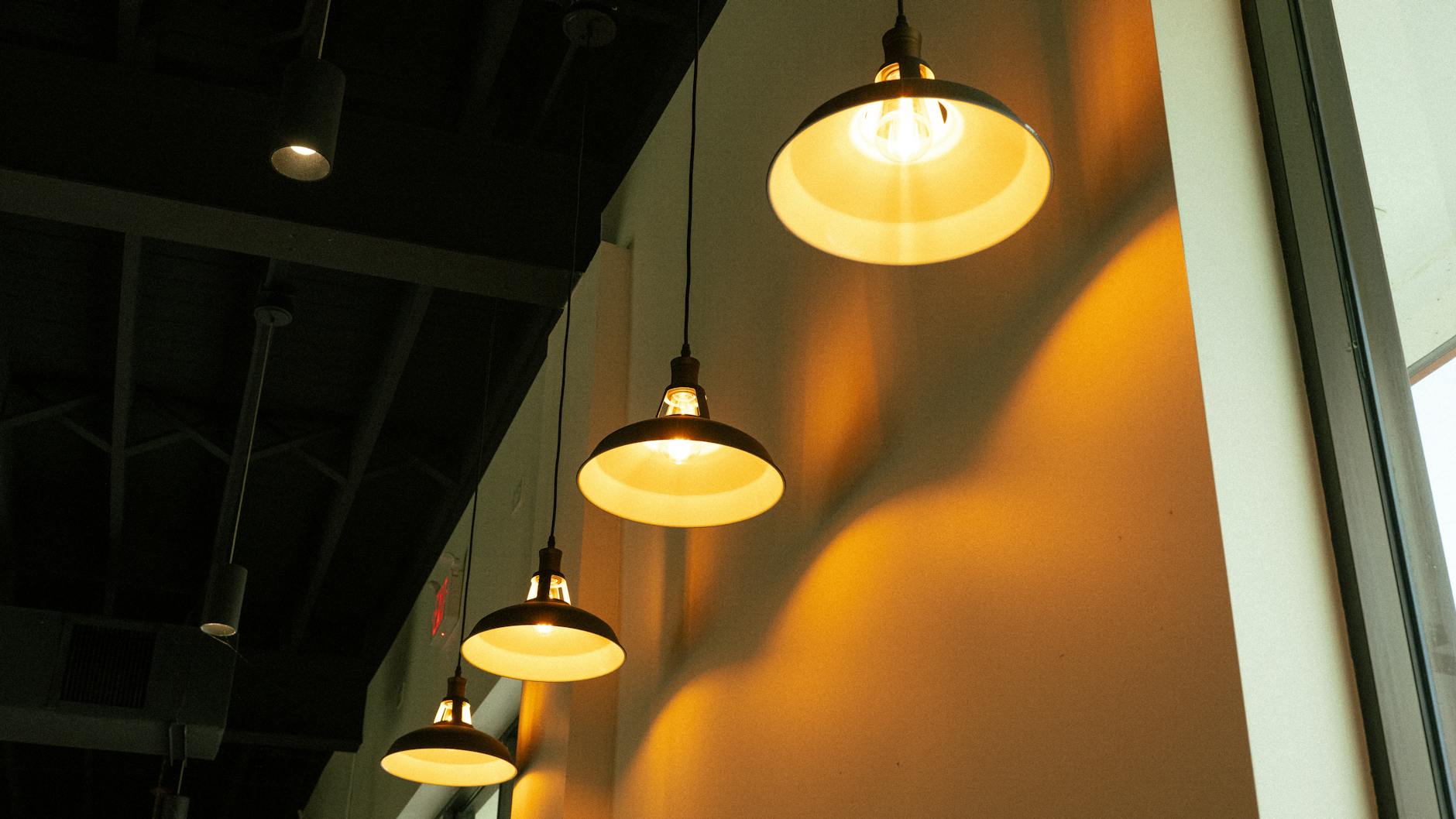
Every room should have at least two layers of light: general lighting and task or accent lighting. Bedrooms and living rooms benefit from a third layer as well—decorative lighting. This approach lets you change the feel of a space instantly, without changing the fixtures themselves.
The Most Common Lighting Mistakes
Valoralight sees a few recurring problems again and again. First: choosing a fixture with too little lumen output for a large room. Second: using the same color temperature throughout the entire home. Third: ignoring the Ra rating when buying LEDs for kitchens and bathrooms. Light that’s too weak—especially in a dark corner or while doing close-up work—strains the eyes and can make a room feel tiring to use.
Room-by-Room Planning for Homes Across Poland
Whether you’re planning lighting for an apartment in Wrocław, Warsaw, or Kraków, the same national and European standards apply. Valoralight serves customers across Poland, offering solutions aligned with current PN-EN 12464-1 guidance and Ecodesign requirements. If you’re looking for specific fixtures, browse the full range of lamps and lighting from Valoralight, where products are grouped by room type and use case.
Looking for kitchen ideas? The guide Kitchen Lighting Without Eye Strain: How to Choose Ergonomic Fixtures includes practical advice for choosing kitchen lighting.
Put it into practice:
- Sketch out your home layout and divide it into functional zones
- Assign each zone a target lx value and color temperature using the guidelines in this article
- Check your existing fixtures: can the bulbs be replaced with LED alternatives?
- Calculate the lumen output needed for each zone: target lx × zone area in m² = required lumens
Frequently Asked Questions
How many lux should a living room have?
For living room lighting, a good general target is around 150-200 lx for everyday activities like talking, relaxing, or watching TV. If you also read or work there, add task lighting to bring your armchair or desk area up to around 300-500 lx. As a rule of thumb, 150-200 lx works well for general lighting in most living spaces. A ceiling light is best paired with a table lamp using a warm LED so you can easily shift the mood.
What color temperature is best for a kitchen?
The best color temperature for a kitchen is usually 3500-4000 K. This gives you a clean, neutral light that makes food prep easier and helps colors look more accurate. Recessed downlights or slim LED panels are often used because they spread light evenly. A kitchen also needs separate task lighting over the worktop, independent from the main ceiling light, because general lighting alone rarely delivers the 300 lx minimum needed at the counter.
How does Valoralight help you choose lighting for a specific room?
Valoralight approaches lighting selection from a technical as well as aesthetic angle. Illuminance, color temperature, Ra rating, and lumen output should come before style. The Valoralight online store groups products by room type and use case, which makes it easier to narrow down the options quickly. If you’re not sure where to start, support is available via chat and email, where specialists can help match the right parameters to your space.
Are LEDs really worth it when replacing all the lighting in an apartment?
The cost-effectiveness of LED lighting across a whole apartment is well documented. While LED bulbs can seem more expensive upfront, a basic cost comparison usually shows the investment paying for itself within 1-2 years. After that, the savings are ongoing. LEDs also run much cooler than incandescent bulbs, which matters in enclosed fixtures and in lamps that may be touched by children.
What’s the difference between Ra and color temperature?
The Ra index (color rendering) tells you how accurately a light source reproduces colors compared with a reference source, on a scale from 0 to 100. Illuminance, by contrast, measures how much light falls on a surface and is expressed in lux. Color temperature describes the visual tone of the light—warm, neutral, or cool. These are separate parameters: you can have warm yellow light with poor color rendering, or cool light with excellent color rendering. For residential interiors, choose Ra of at least 80, and for kitchens or bathrooms, aim for Ra above 90.
Final Thoughts
Choosing the right lighting for each room starts with answering three questions: how many lux are needed, what color temperature suits the function of the space, and whether the light source has a high enough Ra rating. Although PN-EN 12464-1 is formally aimed at professional settings, it provides reliable reference values that can be usefully applied in homes.
LED technology is now the standard, not a premium add-on. With dramatically lower energy use and a lifespan measured in tens of thousands of hours, it’s hard to justify choosing another technology for a new lighting project. For residents of Wrocław and customers across Poland, Valoralight offers a wide range of LED fixtures in different styles and price categories, with a 30-day return policy and fast delivery. Start with the room’s purpose, choose the right parameters, and only then pick the fixture style that fits.
Sources
- PN-EN 12464-1 · Ciop
- CSIL Milano · Csilmilano
- PN-EN 12464-1:2012, przywołana obowiązkowo w rozporządzeniu o warunkach technicznych dla budynków · Portalelektryka
- Parametry oświetlenia – Oświetlenie stanowisk pracy · Centralny Instytut Ochrony Pracy – Państwowy Instytut Badawczy (CIOP-PIB)
- Normy przywołane do warunków technicznych dla budynków: wymagania wobec oświetlenia wnętrz wg PN-EN 12464-1:2012 · Portal Elektryka (portalelektryka.pl)
- Long-Term Trends in the European Lighting Fixtures Market · CSIL – Centre for Industrial Studies (Milano)
- Żarówki LED vs Tradycyjne: Które są bardziej oszczędne? · tech-led.com.pl
- Natężenie oświetlenia w pomieszczeniach – normy i wymagania dla domu · oswietleniedomu.pl