Table of Contents
Quick Answer
Ripstop fabric excels at containing tears, stopping small rips from spreading across the cloth using a woven reinforcement grid at roughly 5, 8 mm intervals. Stretch canvas delivers superior abrasion resistance and raw structural toughness, but adds weight and sacrifices breathability. Neither fabric is universally more durable: ripstop outlasts stretch canvas in high-snag, high-mobility environments, while stretch canvas typically wins in sustained ground contact and friction-heavy work.
- Ripstop: lighter (often around 6, 8 oz/yd²), tear-resistant, breathable, grid weave stops rips from spreading
- Stretch canvas: heavier (commonly 8.5, 12 oz/yd²), greater abrasion resistance, stiffer off the rack
- Stretch canvas blended with spandex (typically 2, 4%) adds mobility without fully closing the abrasion gap
- Durability testing uses ASTM D2261 and ASTM D1424 for tear resistance, ASTM D5034 for breaking strength
- The right choice depends on terrain type, activity intensity, and climate
Why the Durability Debate Actually Gets It Wrong
Most comparisons between ripstop and stretch canvas collapse the two fabrics into a simple strength contest, and that framing misses the point. Durability is not a single number, it is how a fabric fails. Two pairs of pants can both last two seasons and destroy completely differently: one gives up to a catastrophic tear, the other simply fades and abrades to a thin, structureless shell.
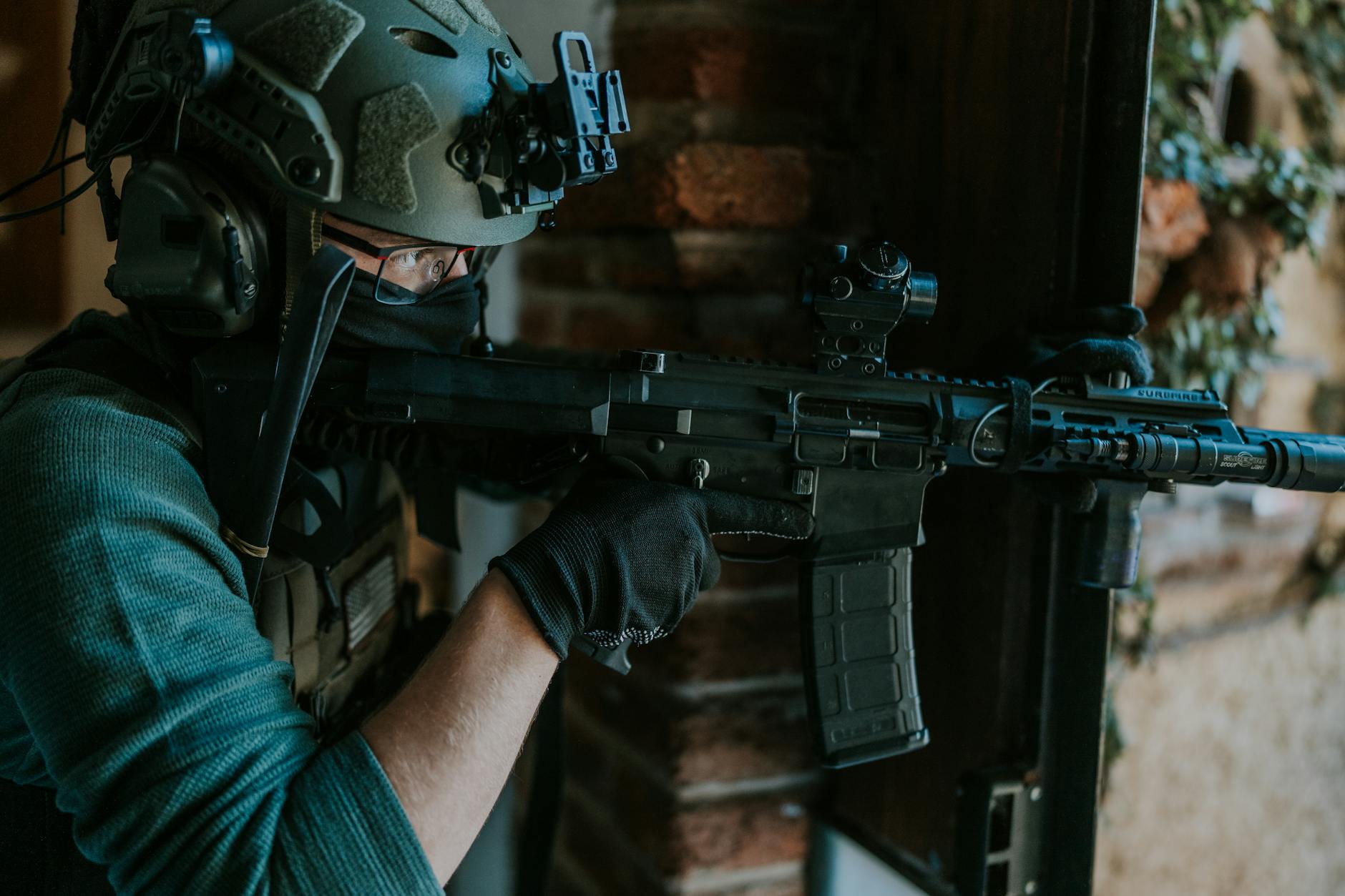
Understanding this distinction matters for anyone buying field pants with a real use case. A trail hunter crawling through brush faces different stresses than a law enforcement officer spending hours in a vehicle. A construction site supervisor kneeling on concrete all day punishes fabric in a third, entirely distinct way. The question is not which fabric is tougher in the abstract, it is which failure mode you can least afford.
True Tactical approaches this from a practical standpoint: the buyers who end up dissatisfied are usually those who chose based on marketing terms rather than fabric behavior. Ripstop is not invincible, and stretch canvas is not outdated. Both have specific strengths that map to specific activities. The guide below walks through how to identify which one matches your demands.
For a broader look at what separates genuinely durable field gear from budget-grade options that fail prematurely, the tactical gear durability buyer's guide covers the full spectrum of construction signals worth checking before you buy.
This article was generated with LaunchMind — try it free
Get startedWhat Ripstop Actually Does (and Where It Falls Short)
Ripstop fabric is a woven construction reinforced at regular intervals with thicker threads to form a crosshatch grid pattern. The engineering principle is damage containment: if the base fabric tears, the reinforcing yarns act as structural barriers that prevent the rip from propagating across the panel.
The Military Origin and What It Proves
Ripstop was developed during World War II specifically for military parachutes, with the U.S. Army filing a patent in 1962 for a design using both stretch and non-stretch ripstop configurations. The fact that parachute engineers chose this construction says something precise about what it does well: it keeps a small failure isolated so the rest of the fabric keeps doing its job. That property is directly transferable to field pants in brush, timber, or any environment with sharp edges and snag points.
How Military Testing Validates Ripstop Performance
Military-grade ripstop specifications evaluate tear resistance in both warp and weft directions. Fabrics that perform well in one direction but poorly in the other are rejected outright, even if average values appear acceptable. This bidirectional standard exists because real-world stress in field clothing arrives from every angle, not just one. Pants that perform to this spec are genuinely field-tested, not just rated on a single pull-test axis.
Where Ripstop Loses to Canvas
Canvas is tougher against abrasion; ripstop is lighter. This is the core trade-off that drives most of the debate. Canvas fabric supplies premium abrasion resistance due to its heavy, tough texture. Where ripstop struggles is in applications involving sustained friction against rough surfaces, concrete, rock faces, or gravel, because the base weave between the reinforcement threads is thinner by design. A snag stopped at a grid line does not prevent gradual surface wear from turning into thin spots over many hours of contact.
Put this into practice:
- Check your primary use case: crawling/snagging environments favor ripstop; sustained friction environments favor canvas
- Look for ripstop fabric rated in both warp and weft directions, not just one axis
- If the pants are primarily for kneeling or dragging on hard ground, verify whether the knees are reinforced with a separate layer regardless of base fabric
- Ask: does the fabric weight match the activity? Below roughly 6.5 oz, ripstop offers breathability; above 8 oz, you gain structure at the cost of heat
What Stretch Canvas Trades and What It Gains
Stretch canvas is a plain-weave, heavyweight fabric, typically cotton-dominant, blended with a small percentage of spandex or elastane, usually in the range of 2, 4%, to deliver controlled freedom of movement without abandoning the structural density that gives canvas its toughness.
The Abrasion Advantage of Dense Weave Construction
Canvas is a plain-weave fabric typically weighing over 250 GSM, made with thick yarns. It is known for its dense construction, superior strength, and rugged feel. That density is what drives abrasion resistance: more material per square inch means more fiber for friction to remove before reaching structural failure. In practical terms, a patrol officer spending long hours in a vehicle seat, or a range instructor working in sand and gravel, will often see canvas outlast ripstop on the surfaces most likely to contact the seat, thigh, and knee.
The Spandex Trade-Off in Stretch Canvas
Companies add either spandex or polyester to cotton canvas to give it stretch or extra breathability. This matters for durability in a way most buyers overlook. Brands must pilot combinations to ensure stretch gains do not inadvertently shorten product lifespan. Adding spandex to canvas reduces the fabric's total fiber density at any given weight, which means stretch canvas sits at a slight abrasion disadvantage compared to equivalent-weight non-stretch canvas. The practical gap is usually modest, and the mobility gain is real, but buyers choosing stretch canvas for heavy-friction environments should verify that reinforced panels cover the highest-wear zones.
Breathability and Seasonal Limits
Canvas fabric is not very breathable, and it can be a pain to wear in the summer months. This is a durability issue in disguise: pants worn in heat produce more sweat, which accelerates fiber degradation in cotton-heavy fabrics. Traditional 100% cotton canvas is not as breathable as nylon ripstop. Cotton by itself is not moisture wicking and does not have the capability to wick sweat away and disperse it to the outside of the garment. Polycotton stretch canvas blends (such as 65/35 polyester-cotton) address this partially, delivering better moisture management without fully surrendering canvas's density advantage.
Put this into practice:
- If your climate averages above 80°F for most of the field season, select a polycotton stretch canvas (65/35 or 60/40) rather than a cotton-dominant version
- Check that high-wear panels (knees, seat, inner thighs) carry additional layer reinforcement
- For vehicle-based or stationary work: stretch canvas is usually the stronger choice
- For high-mobility traversal through brush or timber: ripstop typically holds its structural integrity longer under repeated snag stress
How to Read the Durability Numbers Before You Buy
One of the most overlooked aspects of choosing field pants is understanding what the fabric specifications actually measure. Knowing the test names tells you immediately what a pair of pants is rated for and, crucially, what it is not.
ASTM Standards That Actually Matter
The primary ASTM standards used to evaluate tactical and canvas fabric durability include ASTM D5034 and ASTM D5035 for breaking strength, while tear resistance is assessed under ASTM D2261 (tongue tear method) and ASTM D1424 (Elmendorf method). A pair of field pants rated on ASTM D2261 tells you how much force it takes to extend a pre-cut tear across the fabric. A pair rated on ASTM D5034 tells you how much force the full fabric panel can withstand before it fails under a grab load. Both numbers together give a realistic picture; either number alone leaves gaps.
Fabric Weight as a Durability Proxy
On average, tactical pants weigh about 6.5 ounces. That baseline is useful as a reference point: pants below that average tend to favor breathability and mobility over structural resistance, while pants above it tend to prioritize raw toughness. For buyers who cannot find full ASTM test data on a product, fabric weight in ounces per yard is a practical shorthand: lighter ripstop runs roughly 6, 7 oz; mid-weight stretch canvas commonly runs 8, 9 oz; heavy-duty canvas often exceeds 10 oz.
The Berry Amendment and Supply Chain Credibility
For buyers in law enforcement or government-adjacent roles, the Berry Amendment (10 U.S.C. § 4862) restricts the Department of Defense from procuring clothing and fabrics unless they are produced in the United States. While this standard technically applies to DoD procurement, it serves as a practical credibility marker for tactical fabric supply chains: manufacturers producing Berry-compliant ripstop or canvas have met documented production and material traceability standards, which generally correlates with consistent performance across production batches.
Put this into practice:
- Look for ASTM D2261 or D1424 tear ratings in product specs, if absent, ask the retailer for lab data
- Cross-reference fabric weight against your use case: under 7 oz for high-mobility warm-weather use; 8, 10 oz for sustained friction environments
- For professional procurement, verify whether the fabric supply chain carries Berry compliance certification
- Never accept marketing language like "military-grade" without at least a fabric weight and blend specification backing it
How to Match Fabric to Mission: A Step-by-Step Decision Framework
Approaching this choice systematically prevents the most common mistake: buying based on a single property while ignoring the others that will govern how the pants wear over time.
Step 1: Identify Your Primary Failure Mode
Before comparing products, identify which failure mode your environment produces most. Snag-heavy environments (brush, timber, wire fencing) will tear ripstop's base weave but leave stretch canvas dented and scuffed. Friction-heavy environments (rock faces, concrete, vehicle seats) will abrade through a thin ripstop base well before destroying the denser canvas structure. Your primary failure mode dictates which fabric is genuinely more durable for your use.
Step 2: Check the Blend Composition
Read the full fiber breakdown, not just the marketing label. Ripstop marketed for tactical use often runs as a 65/35 polyester-cotton or 57/43 nylon-cotton blend. A 57% nylon/43% cotton ripstop NYCO mix delivers lightweight, breathable, and quick-drying performance. Stretch canvas marketed for field use typically runs 65% polyester or cotton as the base, with 2, 4% spandex providing the stretch component. The base fiber determines breathability and moisture behavior; the spandex percentage determines mobility; the fabric weight determines raw toughness.
Step 3: Verify Reinforcement Placement
Regardless of fabric choice, the durability of field pants is significantly determined by what happens at the highest-wear points. Double-layered knees and seat provide extra durability during demanding conditions. A ripstop pant with double-layer knees will outperform a stretch canvas pant with single-layer construction in most kneeling-intensive work. Reinforcement location matters as much as base fabric.
Step 4: Factor in Climate and Activity Duration
Climate is a durability variable, not just a comfort variable. In hot conditions, canvas-heavy pants generate heat and moisture that accelerates fiber degradation. For multi-hour field days in temperatures above 75°F, lighter ripstop blends deliver longer usable life because they stay drier. In cold, static conditions where abrasion is the dominant stress, canvas returns the durability advantage. True Tactical's field-tested pants selection covers both fabric profiles across a full size range from M to 3XL, designed around this climate-mission matrix rather than a one-fabric-fits-all approach.
Step 5: Apply the Construction Checklist
Features like gusseted crotches, articulated knees, and stretch panels allow for better flexibility when climbing, kneeling, crouching, or hiking over uneven terrain. These structural elements extend field life independent of base fabric. A gusseted crotch reduces the seam stress that causes split failures far faster than fabric wear in most active-use pants. Check for these construction features regardless of which fabric you select.
Step 6: Set a Budget Floor, Not a Budget Ceiling
The most common mistake True Tactical observes in buyer feedback is spending at the low end of the range and replacing pants every four to eight months, rather than investing in a well-constructed pair that lasts two or more seasons. Low-quality gear that falls apart quickly is always more expensive over time than a higher-upfront pair that holds up through extended field use. For a comprehensive framework on evaluating total cost versus short-term price, the guide to choosing tactical pants walks through how to separate genuine durability signals from overpriced branding.
Step 7: Read the Care Instructions as a Durability Signal
How a pair of pants handles laundering directly affects long-term durability. Unless blended with elastic fibers, ripstop does not stretch much. Conversely, stretch canvas pants with high spandex content require gentler wash cycles to preserve elastane recovery. Pants that require dry cleaning or delicate wash settings are a red flag for field use, genuine field pants should tolerate machine washing on regular cycles without structural degradation.
Ripstop vs. Stretch Canvas: Side-by-Side Comparison
| Property | Ripstop (Nylon/Polycotton) | Stretch Canvas (Polycotton + Spandex) |
|---|---|---|
| Typical fabric weight | 6, 8 oz/yd² | 8.5, 12 oz/yd² |
| Abrasion resistance | Moderate | High |
| Tear containment | High (grid stops propagation) | Moderate (dense weave slows tearing) |
| Breathability | High | Low to moderate |
| Mobility (unlayered) | High | Moderate (spandex blend improves) |
| Best terrain | Brush, timber, snag environments | Hard surfaces, vehicle use, kneeling work |
| Heat management | Strong (moisture-wicking blends) | Weaker (cotton absorbs sweat) |
| Typical ASTM test priority | D2261 / D1424 (tear) | D5034 / D5035 (breaking strength) |
| Long-term abrasion cycles | Lower | Higher |
| Recommended season | Warm to moderate | Cool to moderate |
Pro Tips: Getting the Most Durability from Either Fabric
Wash on cold, tumble dry low. Heat is the primary accelerant of elastane degradation in stretch canvas and spandex-blended ripstop. Even a well-constructed pair loses stretch recovery measurably faster when repeatedly dried on high heat.
Rotate between two pairs. Field pants allowed to fully dry and rest between uses typically last noticeably longer than a single pair worn daily. The mechanical stress of washing combined with daily wear degrades stitching and fiber faster than either factor alone.
Apply seam sealer to high-stress points. The crotch seam and knee panel seams are where field pants fail structurally before the base fabric gives out. A small amount of seam sealant on these joints, reapplied annually, extends useful life significantly.
For complete field kit planning that integrates pants with the right base and shell layers, the field layering guide covers how to coordinate fabric weights and properties across all three layers for real-world conditions.
Common Mistakes to Avoid
Choosing fabric based on appearance alone. Ripstop has a distinct grid texture that reads as tactical; stretch canvas looks smoother and more understated. Neither visual tells you anything about durability. Fabric weight and blend composition are the relevant specs.
Ignoring the spandex percentage in stretch canvas. Spandex and other stretch materials usually suffer in the durability department. A stretch canvas pant with 6% or more spandex has meaningfully compromised its dense-weave abrasion advantage. For field use, a blend in the 2, 4% spandex range preserves most of the canvas durability while adding useful mobility.
Assuming "military-grade" means anything specific. The approximately 25,000, 30,000 active DoD specifications governing materials include everything from textiles to footwear. A claim of "military-grade" without citing a specific MIL-SPEC number or ASTM test result is a marketing term, not a performance guarantee.
Skipping size verification for active use. A pair of field pants that fit correctly at rest but restrict movement under load causes wearers to force fabric into stress positions, accelerating failure at seams and flex points. True Tactical's size range up to 3XL is specifically designed to provide correct dimensional fit for active use, not just standing measurements.
FAQ
Which lasts longer in field conditions, ripstop or stretch canvas?
The answer depends on terrain type. In snag-heavy environments with brush, timber, or wire, ripstop's tear-containment grid keeps small damage from becoming catastrophic failure, so it typically lasts longer under those conditions. In friction-heavy terrain involving concrete, gravel, or sustained vehicle seat contact, stretch canvas's denser weave structure resists surface abrasion better, and practitioners in those roles generally see longer useful life from a well-constructed canvas pair. Neither fabric is universally more durable: the terrain and activity determine which failure mode arrives first.
What does ripstop fabric actually mean, and how does it work?
Ripstop is a woven fabric construction that integrates thicker reinforcing yarns at roughly 5, 8 mm intervals in a crosshatch pattern. When a tear begins in the base fabric, the reinforcing threads act as structural stop points that prevent the rip from propagating further across the panel. This design originated in World War II parachute engineering, where a small fabric failure that spread unchecked would mean catastrophic loss of the entire canopy. In field pants, the same principle keeps a snag or cut from becoming a full-panel tear during a single outing, extending the usable life of the garment significantly compared to standard woven fabrics.
How does stretch canvas balance durability and mobility?
Stretch canvas achieves its mobility by blending a small percentage of spandex or elastane, typically in the range of 2, 4%, into a dense cotton or polycotton plain-weave base. The canvas structure provides the abrasion resistance and structural toughness, while the elastic fiber fraction allows the weave to extend under load and recover without the fabric binding against the body during deep flexion movements like kneeling, crouching, or climbing. The trade-off is that spandex fibers degrade with high-heat laundering and repeated extreme stretching, so stretch canvas pants require slightly more careful maintenance than rigid canvas to preserve their mobility advantage over time.
How can True Tactical help me choose between ripstop and stretch canvas pants?
True Tactical curates its field pants selection around fabric profiles matched to specific use cases, covering both ripstop and stretch canvas constructions across a size range from M to 3XL with free shipping across the USA. The catalog is built for men aged 35 and older who need pants that perform across multiple seasons rather than failing after a single season of hard use. With a 30-day return policy and field-tested construction standards, buyers can verify real-world fit and performance without committing to a pair that does not match their terrain demands.
What ASTM tests should I look for when comparing field pants durability?
The most relevant ASTM standards for field pants are ASTM D2261 (tongue tear method) and ASTM D1424 (Elmendorf method) for tear resistance, and ASTM D5034 or ASTM D5035 for breaking strength and elongation under load. Tear resistance ratings tell you how well the fabric contains damage once started, which is the primary durability metric for ripstop constructions. Breaking strength ratings tell you how much force the full fabric panel can absorb before failure, which is the primary metric for evaluating canvas durability under sustained stress. A product that provides test results in both categories gives you a complete performance picture; one that provides only one or neither should be evaluated with caution.
Conclusion
Ripstop and stretch canvas are not competing answers to the same question. They are engineered responses to different durability problems. Ripstop contains and limits tear damage in high-snag environments, keeping lightweight pants functional through seasons of brush and obstacle contact. Stretch canvas resists surface abrasion in friction-heavy work, protecting against the gradual wear that ripstop's thinner base weave cannot fully stop.
The decision framework is straightforward: identify your primary failure mode, read the blend composition, verify reinforcement placement at knees and seat, and match fabric weight to climate. A ripstop pant rated in both warp and weft directions with double-knee reinforcement outperforms an unreinforced stretch canvas pant in most active field scenarios. A heavy-duty stretch canvas pair with polycotton construction and reinforced high-wear panels outperforms ripstop wherever sustained friction dominates.
True Tactical's field pants range is built around this distinction, with durable, field-tested options in both fabric profiles available in sizes up to 3XL, shipped free across the USA. For buyers who want to go deeper on building a complete kit around the right pants, the complete men's tactical wear kit guide covers how fabric selection at the pants layer interacts with base layer and shell choices for real-world field performance.
Sources
- Military-grade ripstop specifications · Szoneierfabrics
- The primary ASTM standards used to evaluate tactical and canvas fabric durability · Canvasetc
- Berry Amendment (10 U.S.C. § 4862) · Trade
- The approximately 25,000, 30,000 active DoD specifications · Fieldtexcases
- Ripstop - Wikipedia · Wikipedia
- Ripstop Nylon Clothing: Military-Grade Fabric Guide · Szonier Fabrics
- Berry Amendment · U.S. International Trade Administration
- Canvas Fabric Testing Standards Explained: ASTM & AATCC Methods · Canvas ETC